
By which routes did modern man arrive in Europe? A book reports on the latest findings.
What routes did Homo sapiens take on their way from Africa to Europe and Asia in the previous millennia? The climatic conditions changed, and with them the living conditions. The advance was hampered in some places by deserts, in others by dense forests. Over the past twelve years, a team of researchers within the framework of the Collaborative Research Center 806 “Our Way to Europe” unraveled the complex interplay of cultural innovations and environment that shaped migrations. After completion of the interdisciplinary joint project, the researchers now present a book with the most important findings under the leadership of the Universities of Bonn and Cologne.
The cradle of man is in Africa — this has been known for half a century. A decade ago, scholarly discussion was still dominated by the idea that a small group of Homo sapiens migrated from Africa to Europe about 70,000 years ago. Through anatomical and intellectual superiority, this group is said to have displaced archaic local populations as it advanced, leaving Homo sapiens as the only genetic branch of humanity to survive.
“This notion has changed fundamentally since it became clear that Neanderthals contributed at least a small part to the genome of Homo sapiens,” says paleobotanist Prof. Dr. Thomas Litt of the University of Bonn, principal editor of the book and deputy spokesman for the Collaborative Research Center. “Genetics doesn’t quite tell the same story — or a different part of the story — as paleontology and archeology.” The team therefore endeavored to better understand this controversial picture by analyzing information on the nature and environment, as well as the role of culture, of this prehistoric population dynamic. The researchers focused on different time periods: from the emergence of modern humans, their dispersal, the repopulation of Ice Age Europe, Neolithic settlement, and the migration of settled societies.
The new findings show that not only a migration wave, but several African Homo sapiens populations followed a journey of up to 5,000 kilometers to Europe and Asia. Improved radiometric dating of Homo sapiens fossils further suggests that the area of origin of modern humans includes not only East Africa, but also South and Northwest Africa. The time scale of Homo sapiens now extends back to 300,000 years. Prof. Litt’s team investigated when and where migration corridors or barriers existed from a paleoecological and paleoclimatological perspective.
No Scientific Evidence for the Western Route
Until now, science assumed that there were two possible main routes modern man could have taken to Europe: The western via the Strait of Gibraltar and the eastern via the Levant. Despite the short distance across the Strait of Gibraltar, in the past twelve years researchers were unable to find any evidence of direct cultural contact between Morocco and the Iberian Peninsula or evidence of crossing the strait during the Paleolithic. “This is one of the big question marks in the history of human settlement in the western Mediterranean,” Litt says of this surprising finding. Evidently, the Strait of Gibraltar had been more of a barrier at the time due to strong ocean currents.
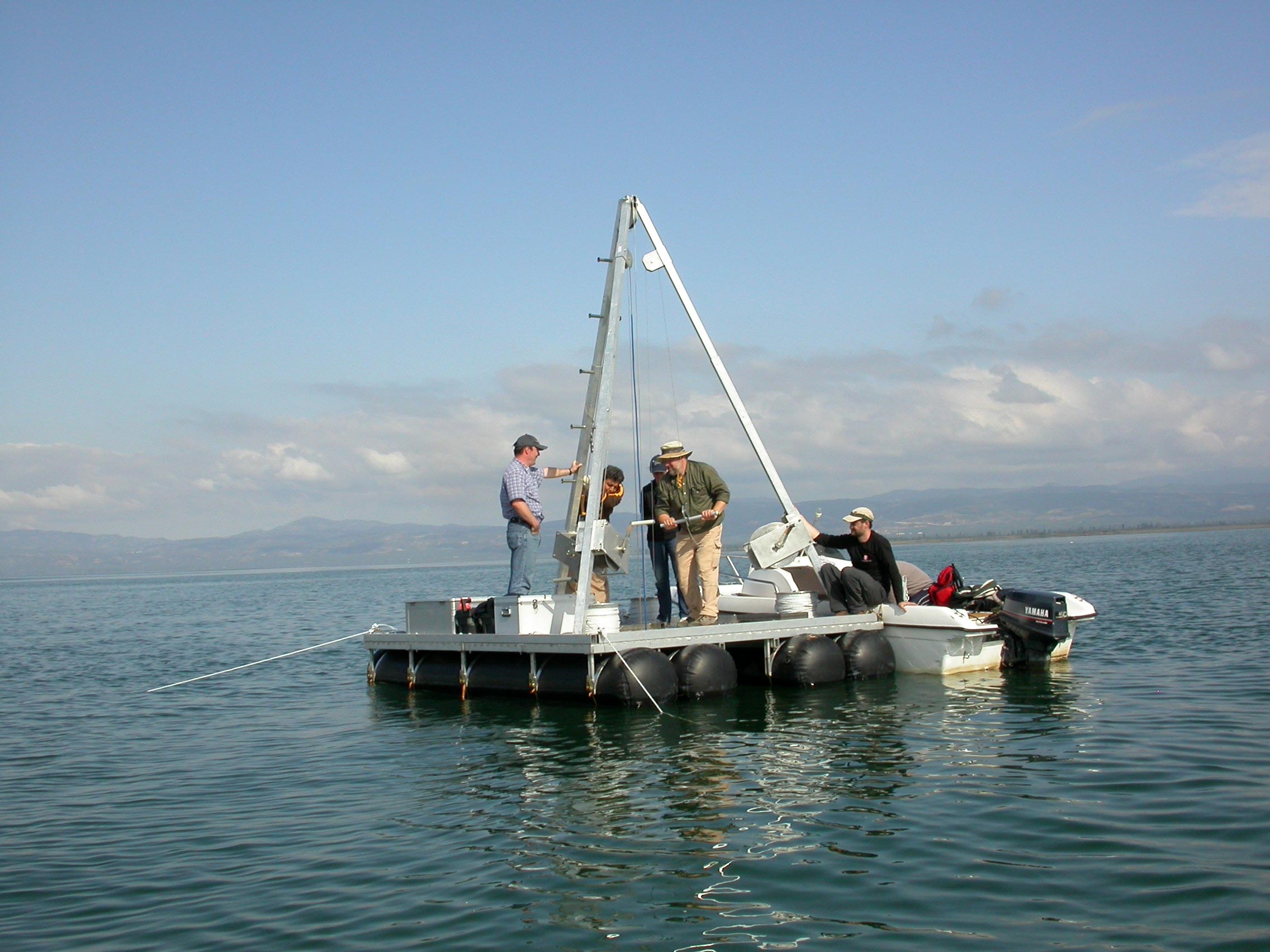
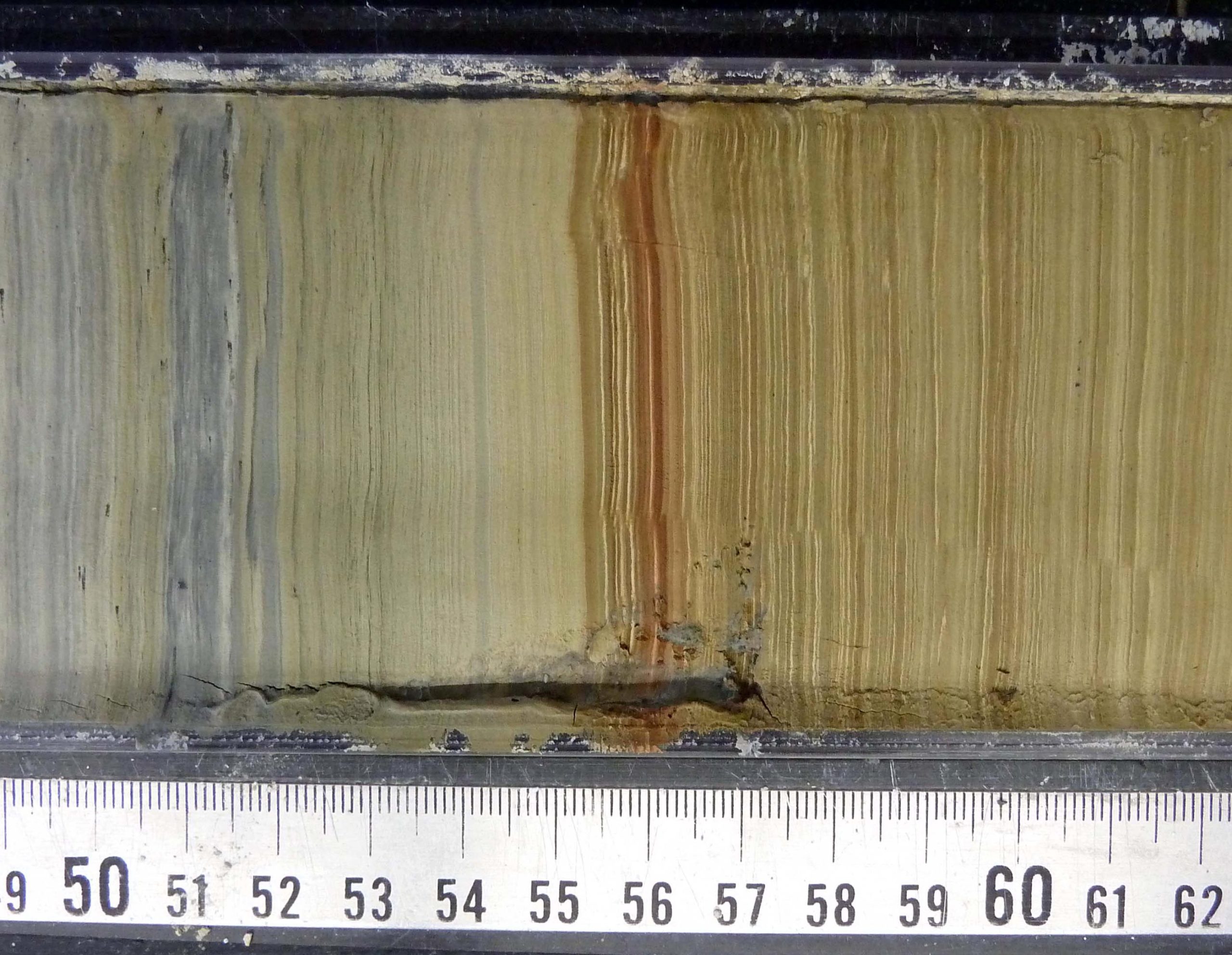
“This leaves the Levant, the only permanent land bridge between Africa and Eurasia, as the key region as a migration route for modern humans,” says Litt. His research group conducted intensive research on drill cores, for example from the Dead Sea or the Sea of Galilee, in which plant pollen is preserved. This allows changes in vegetation cover to be identified and environmental and climatic conditions to be reconstructed. Litt: “These data illustrate that the Levant could only have served as a corridor when, under more favorable conditions, for example, neither deserts nor dense forests impeded the advance.”
Almost One Hundred Researchers Were Involved
For a total of twelve years, the interdisciplinary research team from archeology, geosciences, soil science, ethnology, and geography in the Collaborative Research Center 806 “Our Way to Europe” deciphered the migrations of Homo sapiens. Around one hundred researchers were involved and many hundreds of scientific papers were published. In addition to the Universities of Cologne and Bonn, RWTH Aachen University and numerous cooperation partners from the USA, Africa, the Middle East, and Europe were also involved. The main results are now summarized in the 372-page book jointly edited by the paleobotanist Prof. Dr. Thomas Litt (Bonn), the prehistorian Prof. Dr. Jürgen Richter and the geography didactician Prof. Dr. Frank Schäbitz (both University of Cologne). “The book should be attractive and relevant to all readers interested in understanding the prehistory of our own species, its migratory routes, and motivations for migration triggered by complex interactions of its culture and environment,” says Litt.
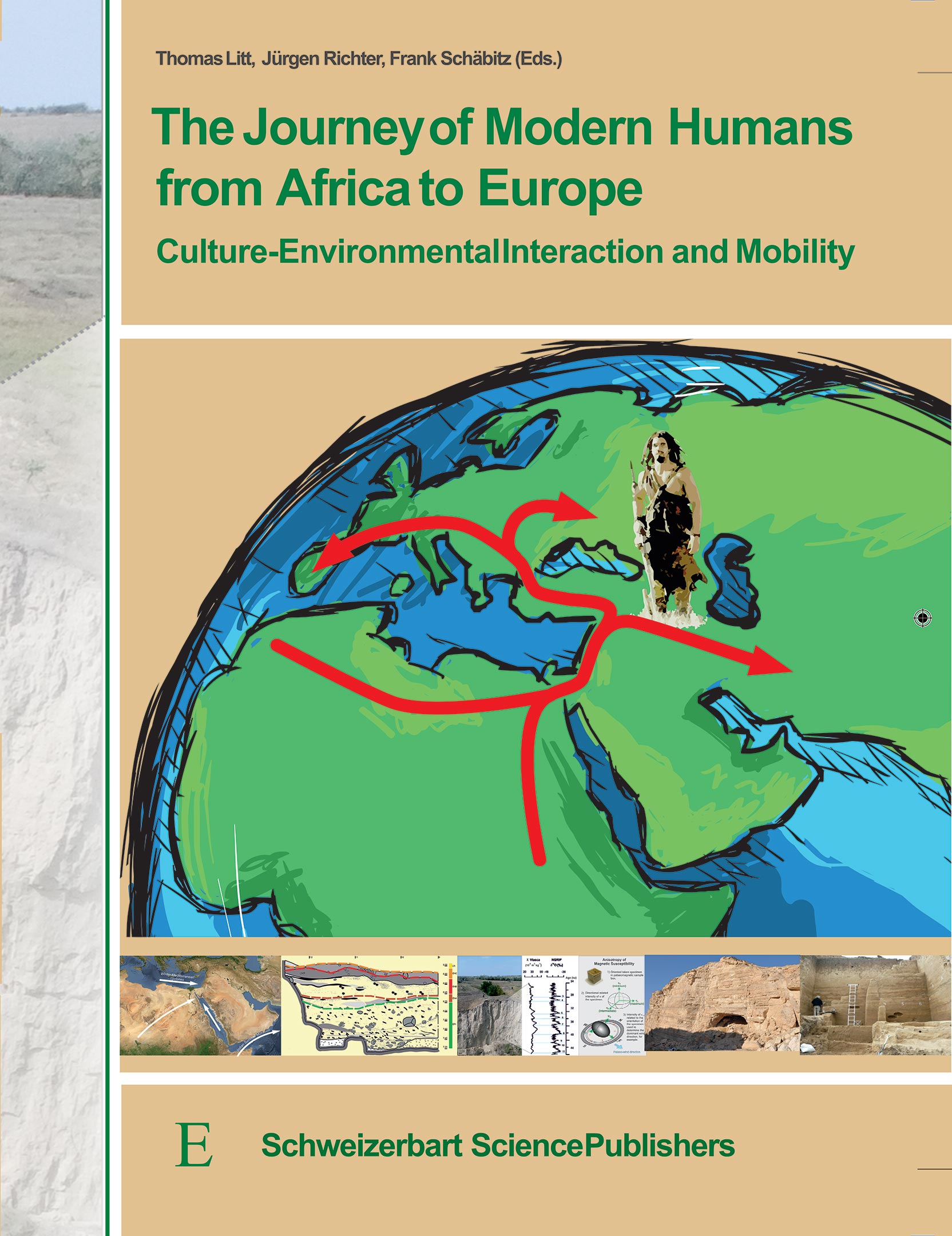
Reference: Thomas Litt, Jürgen Richter, Frank Schäbitz (eds.): The Journey of Modern Humans from Africa to Europe – Culture-Environmental Interaction and Mobility, Schweizerbart Science Publishers, 372p., EUR 39.90.
Never miss a breakthrough: Join the SciTechDaily newsletter.
Follow us on Google and Google News.
1 Comment
the straight of Gibraltar, being so narrow,it seems almost impossible that homo sapiens from africa would not have used it to venture out of africa into europe. For scientist to dismiss that this occured and was unlikely because of the heavy currents in the waters of the straight of gibralta,seems a flimsy reason to dismiss the straight of Gibraltar as the route of early humans out of Africa, and say that early man route out of Africa was only by way of another route. I mean really , come on now?, Early homo sapiens likely routed out of Africa by more he one route.