
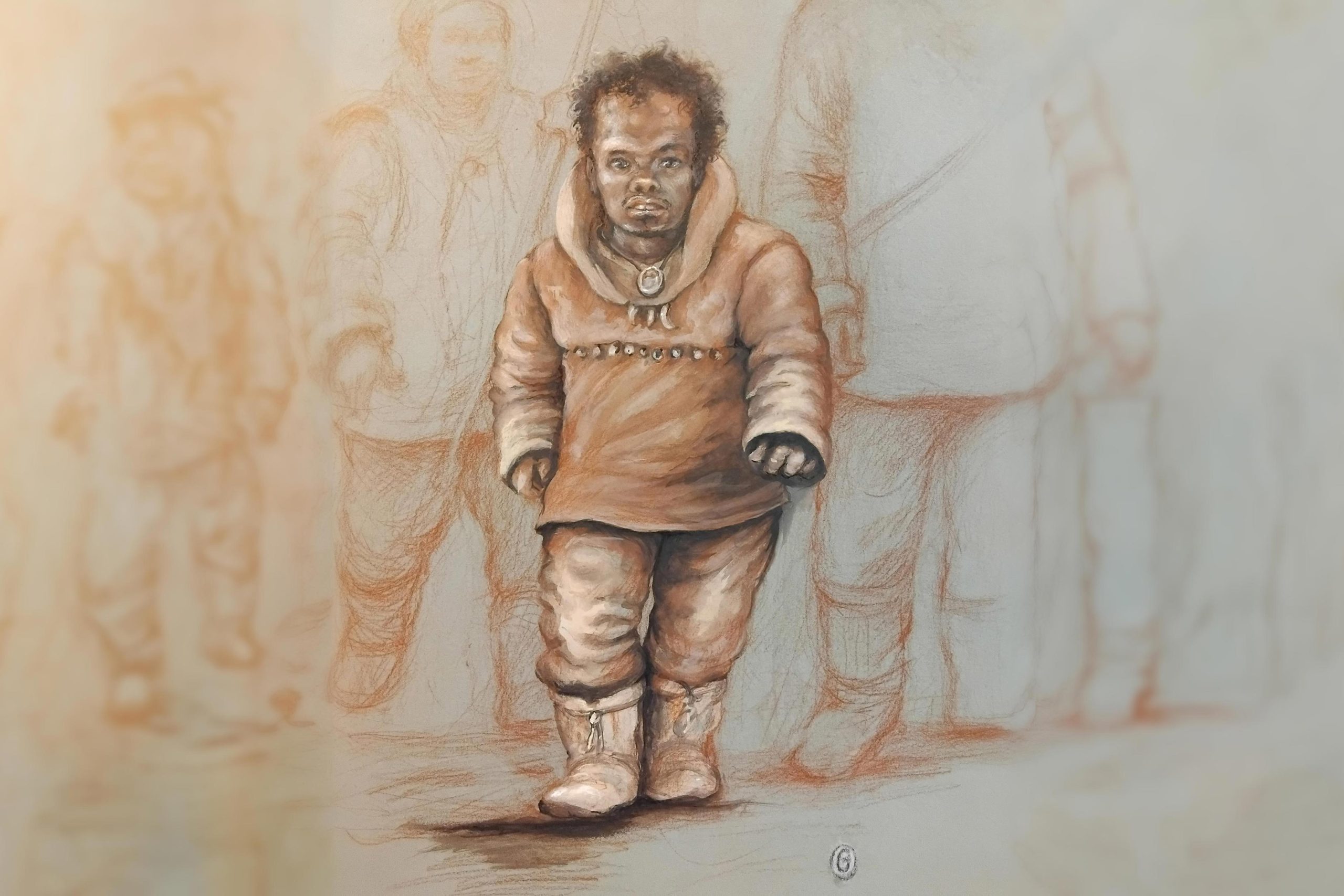
Ice Age teens experienced puberty stages akin to today’s adolescents, with new research shedding light on their health and social roles, exemplified by the unique case of “Romito 2.”
A groundbreaking new study on the timing of puberty in Pleistocene teens has bridged a knowledge gap about how early humans grew up. The study, recently published in the Journal of Human Evolution, reveals that Ice Age teens from 25,000 years ago experienced puberty stages similar to modern-day adolescents.
Researchers uncovered evidence of puberty stages in the bones of 13 ancient humans between 10 and 20 years old. They found specific markers in the bones that allowed them to assess the progress of adolescence.
Dr. April Nowell (University of Victoria, Canada) explains the surprising results of the research team’s findings. Credit: UVic Photo Services
Innovations in Paleolithic Age Research
“By analyzing specific areas of the skeleton, we inferred things like menstruation and someone’s voice breaking,” says University of Victoria (UVic) paleoanthropologist April Nowell, who co-led the study.
The technique was developed by lead author Mary Lewis from the University of Reading. Lewis’s technique evaluates the mineralization of the canines and maturation of the bones of the hand, elbow, wrist, neck and pelvis to identify the stage of puberty reached by the individual at their time of death.
“This is the first time my puberty stage estimation method has been applied to Paleolithic fossils and it is also the oldest application of another method—peptide analysis—for biological sex estimation,” says Lewis.

Insights into Prehistoric Adolescent Health
Life during prehistory was believed to be as Thomas Hobbes described: “nasty, brutish and short.” However, this new study shows these teens were actually quite healthy. Most individuals in the study sample entered puberty by 13.5, reaching full adulthood between 17 and 22 years old. This indicates these Ice Age adolescents started puberty at a similar time to teens in modern, wealthy countries.
“It can sometimes be difficult for us to connect with the remote past, but we all went through puberty even if we experienced it differently,” says Nowell. “Our research helps to humanize these teens in a way that simply studying stone tools cannot.”

The Case of Romito 2: A Unique Ice Age Teen
One of the 13 skeletons examined was “Romito 2,” an adolescent estimated to be male and the earliest known individual with a form of dwarfism. This new research on puberty assessment provides further information about Romito 2’s likely physical appearance and his social role.
Since he was mid-way through puberty, his voice would be deeper much like an adult male and he would have been able to father children; however, he may still have appeared quite youthful with fine facial hair. Due to his short height, his appearance would have been closer to that of a child, which may have had implications for how he was perceived by his community.

“The specific information about the physical appearance and developmental stage of these Ice Age adolescents derived from our puberty study provides a new lens through which to interpret their burials and treatment in death,” says archaeologist Jennifer French of the University of Liverpool, one of the co-authors of the study.
Researchers from six institutions collaborated internationally to develop this body of knowledge: UVic (Canada), University of Reading and University of Liverpool (UK), Museum of Prehistoric Anthropology of Monaco (Monaco), University of Cagliari (Italy) and University of Siena (Italy). The collaboration continues with research into the lives of Ice Age teenagers and their social roles.
Reference: “An assessment of puberty status in adolescents from the European Upper Paleolithic” by Mary E. Lewis, Jennifer C. French, Elena Rossoni-Notter, Olivier Notter, Abdelkader Moussous, Vitale Sparacello, Francesco Boschin, Stefano Ricci and April Nowell, 12 September 2024, Journal of Human Evolution.
DOI: 10.1016/j.jhevol.2024.103577
This research was supported by the Social Sciences and Humanities Research Council, in addition to Nowell’s Lansdowne Fellowship Award.
Never miss a breakthrough: Join the SciTechDaily newsletter.
Follow us on Google and Google News.
10 Comments
TF is that picture?
Hahaha they have him looking like he is in the mafia lollol
Brilliant post
So everyone back then was a black midget? Tf is wrong with you guys, is it so hard to find a white person?
Tf is wrong with you? Sounds like you ignore science and this one time you happened to read an article(that doesnt give all the details of the study, btw) you spew and project inaccurate fallacies that stem from your lack of comprehensive thinking skills. You’d be much better off taking those comments to Facebook or some other social media flag waving echo chamber.
There’s literally nothing in science that says ancient humans looked like they just came out of Kampala. That’s pure guesswork by DEI hires
25,000 years ago?? They were in the sun, Dan. Housing not common yet. They would have been a bit tanned at least. Draw your own picture / interpretation if it matters so much to you.
I feel like archeologists should realize that we’re still in the same ice age that skeleton came from…
When they start at a place of biased atheist opinions it’s easy to make nonsense claims like these scientists do. They have zero proof of anything they spout. But Lucifer is the author of confusion. Those gullible will always follow him.
Wow! Thanks to the advanced experts of the day we now know that humans of the past were quite human. Imagine that!