
Close Menu
    Facebook X (Twitter) Instagram
    SciTechDaily
    • Biology
    • Chemistry
    • Earth
    • Health
    • Physics
    • Science
    • Space
    • Technology
    Facebook X (Twitter) Pinterest YouTube RSS
    SciTechDaily
    Home»Space»NASA’s DART Spacecraft Opens Its “Eye” and Returns First Images From Space
    Space

    NASA’s DART Spacecraft Opens Its “Eye” and Returns First Images From Space

    By NASADecember 25, 20212 Comments3 Mins Read
    Facebook Twitter Pinterest Telegram LinkedIn WhatsApp Email Reddit
    Share
    Facebook Twitter LinkedIn Pinterest Telegram Email Reddit
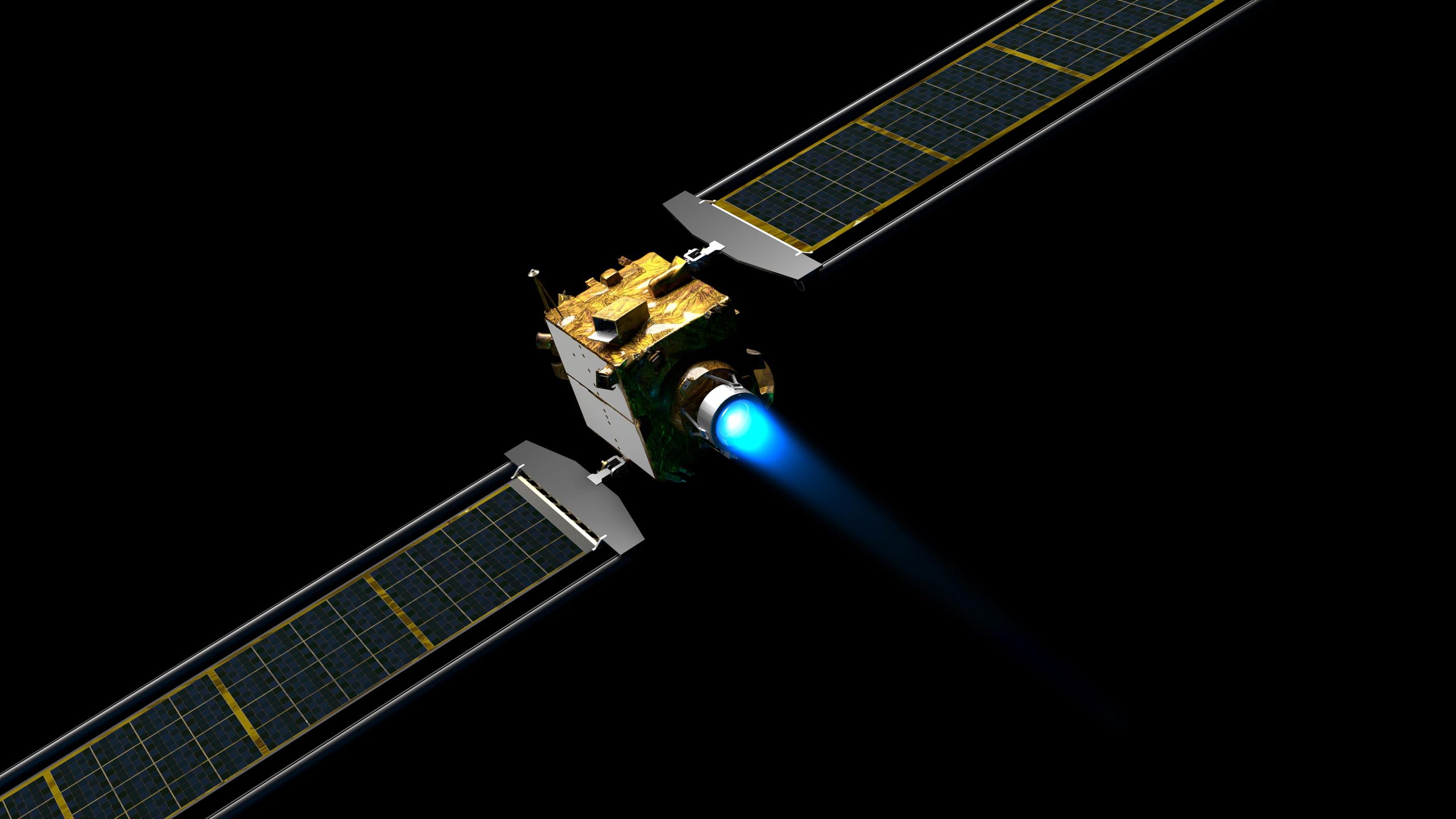
    DART Spacecraft Ion Thruster Illustration
    Illustration of the DART spacecraft. Credit: NASA/Johns Hopkins APL

    DART sends first images as it prepares for asteroid-deflection test.

    Just two weeks after launching from Vandenberg Space Force Base in California, NASA’s Double Asteroid Redirection Test (DART) spacecraft has opened its “eye” and returned its first images from space — a major operational milestone for the spacecraft and DART team.

    After the violent vibrations of launch and the extreme temperature shift to minus 80 degrees C (-112 degrees F) in space, scientists and engineers at the mission operations center at the Johns Hopkins Applied Physics Laboratory in Laurel, Maryland, held their breath in anticipation. Because components of the spacecraft’s telescopic instrument are sensitive to movements as small as 5 millionths of a meter, even a tiny shift of something in the instrument could be very serious.
    NASA DART Telescopic Imager
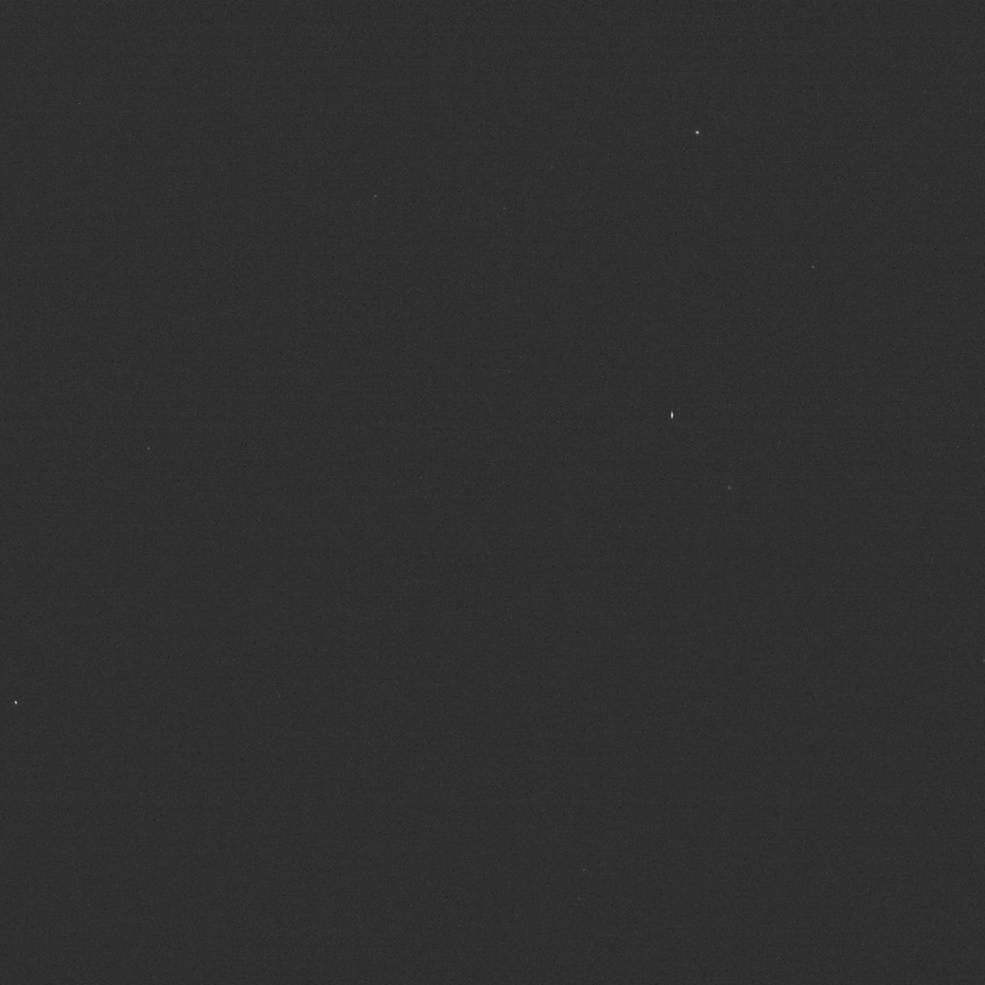
    On December 7, after opening the circular door to its telescopic imager, NASA’s DART captured this image of about a dozen stars near where the constellations Perseus, Aries, and Taurus intersect. Credit: NASA/Johns Hopkins APL

    On Tuesday, December 7, the spacecraft popped open the circular door covering the aperture of its DRACO telescopic camera and, to everyone’s glee, streamed back the first image of its surrounding environment. Taken about 2 million miles (11 light seconds) from Earth — very close, astronomically speaking —the image shows about a dozen stars, crystal-clear and sharp against the black backdrop of space, near where the constellations Perseus, Aries and Taurus intersect.
    NASA DART DRACO Camera
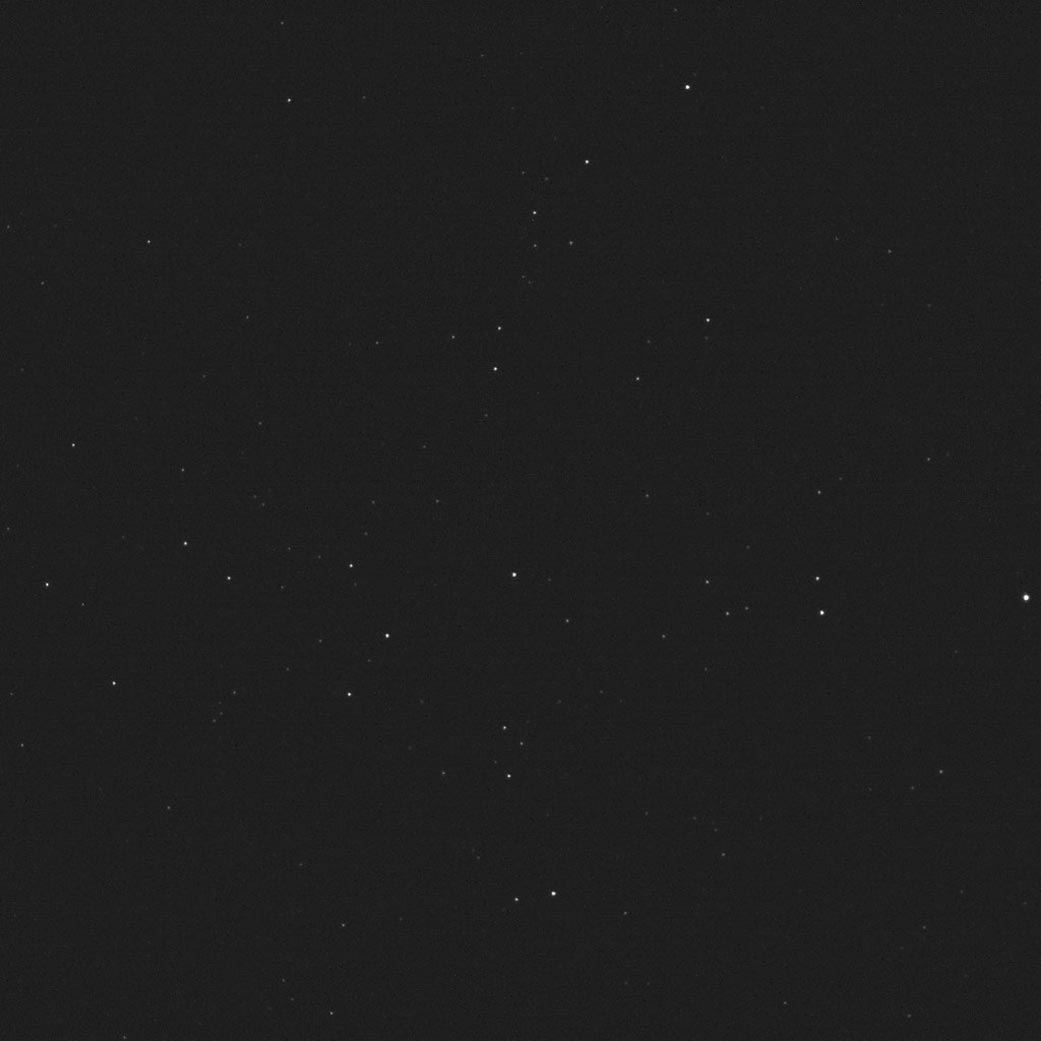
    On December 10, DART’s DRACO camera captured and returned this image of the stars in Messier 38, or the Starfish Cluster, which lies some 4,200 light-years away. Credit: NASA/Johns Hopkins APL

    The DART navigation team at NASA’s Jet Propulsion Laboratory in California used the stars in the image to determine precisely how DRACO was oriented, providing the first measurements of how the camera is pointed relative to the spacecraft. With those measurements in hand, the DART team could accurately move the spacecraft to point DRACO at objects of interest, such as Messier 38 (M38), also known as the Starfish Cluster, that DART captured in another image on December 10. Located in the constellation Auriga, the cluster of stars lies some 4,200 light-years from Earth. Intentionally capturing images with many stars like M38 helps the team characterize optical imperfections in the images as well as calibrate how absolutely bright an object is — all important details for accurate measurements when DRACO starts imaging the spacecraft’s destination, the binary asteroid system Didymos.

    DRACO (short for Didymos Reconnaissance and Asteroid Camera for Optical navigation) is a high-resolution camera inspired by the imager on NASA’s New Horizons spacecraft that returned the first close-up images of the Pluto system and of a Kuiper Belt object, Arrokoth. As DART’s only instrument, DRACO will capture images of the asteroid Didymos and its moonlet asteroid Dimorphos, as well as support the spacecraft’s autonomous guidance system to direct DART to its final kinetic impact.

    DART was developed and is managed by Johns Hopkins APL for NASA’s Planetary Defense Coordination Office. DART is the world’s first planetary defense test mission, intentionally executing a kinetic impact into Dimorphos to slightly change its motion in space. While neither asteroid poses a threat to Earth, the DART mission will demonstrate that a spacecraft can autonomously navigate to a kinetic impact on a relatively small target asteroid, and that this is a viable technique to deflect a genuinely dangerous asteroid, if one is ever discovered. DART will reach its target on September 26, 2022.

    Never miss a breakthrough: Join the SciTechDaily newsletter.
    Follow us on Google and Google News.

    Astronomy Johns Hopkins APL NASA NASA DART Popular
    Share. Facebook Twitter Pinterest LinkedIn Email Reddit

    Related Articles

    NASA’s DART: Crashing Into Discovery With World’s First Planetary Defense Test

    NASA’s DART Impact Changed Asteroid’s Shape and Orbit

    Planetary Defense: NASA Prepares To Launch DART To Deflect Asteroid With Kinetic Impact

    Major 6-Year Search of the Outer Solar System Turns Up 461 New Objects (but No Planet 9)

    First Interstellar Parallax Experiment Ever Conducted by NASA’s New Horizons

    First Space-Based Measurement of Neutron Lifetime Completed Using NASA Spacecraft

    Meet the Icy World ‘Arrokoth’ From a Billion Miles Beyond Pluto in the Kuiper Belt

    NASA’s Van Allen Probes Made Major Discoveries That Revolutionized Understanding of Near-Earth Environment

    NASA Reveals New Pluto Images from New Horizons Spacecraft

    2 Comments

    1. Steven r willmy on December 26, 2021 1:29 pm

      Thank you about (dart)>like your style .of writing ,and topics .

      Reply
    2. The Source on January 2, 2022 7:12 am

      You guys have No business trying to bring Full Spectrum Dominance in To Space, You will Never Gain by Force , Only Oneness in Human Consouseness can you Gain Access..😉

      Reply
    Leave A Reply Cancel Reply

    • Facebook
    • Twitter
    • Pinterest
    • YouTube

    Don't Miss a Discovery

    Subscribe for the Latest in Science & Tech!

    Trending News

    Massive Study Warns Marijuana Use in Teens Is Linked to Serious Mental Illness

    Scientists Discover a Completely Unexpected Way T Cells Kill Cancer

    Scientists Just Found the Solar System’s Original “Planet Factory”

    Study Warns Widely Used Food Preservatives Linked to High Blood Pressure and Heart Disease

    New Treatment Could Reverse Osteoarthritis Within Weeks

    Physicists Have Measured “Negative Time” in Bizarre Quantum Experiment

    The Deadly Tapeworm Spreading Across America Has Reached the Pacific Northwest

    Could Low Vitamin D Be Making Your Pain Worse?

    Follow SciTechDaily
    • Facebook
    • Twitter
    • YouTube
    • Pinterest
    • Newsletter
    • RSS
    SciTech News
    • Biology News
    • Chemistry News
    • Earth News
    • Health News
    • Physics News
    • Science News
    • Space News
    • Technology News
    Recent Posts
    • Scientists Discover Mysterious Creature Living in the Great Salt Lake – and It Exists Nowhere Else on Earth
    • It’s Alive? Surprising Discovery Changes What We Know About Fog
    • Simple Family Routines May Be the Secret to a Smoother Start at School
    • Brain Study Overturns Long-Held Beliefs About How Humans Learn Speech
    • Ancient Goose Fossil Challenges Long-Held Theories About New Zealand Birds
    Copyright © 1998 - 2026 SciTechDaily. All Rights Reserved.
    • Science News
    • About
    • Contact
    • Editorial Board
    • Privacy Policy
    • Terms of Use

    Type above and press Enter to search. Press Esc to cancel.