
Close Menu
    Facebook X (Twitter) Instagram
    SciTechDaily
    • Biology
    • Chemistry
    • Earth
    • Health
    • Physics
    • Science
    • Space
    • Technology
    Facebook X (Twitter) Pinterest YouTube RSS
    SciTechDaily
    Home»Earth»Sediments Suggest Lake Geneva Was Devastated by an Ancient Tsunami
    Earth

    Sediments Suggest Lake Geneva Was Devastated by an Ancient Tsunami

    By SciTechDailyOctober 29, 2012No Comments3 Mins Read
    Facebook Twitter Pinterest Telegram LinkedIn WhatsApp Email Reddit
    Share
    Facebook Twitter LinkedIn Pinterest Telegram Email Reddit
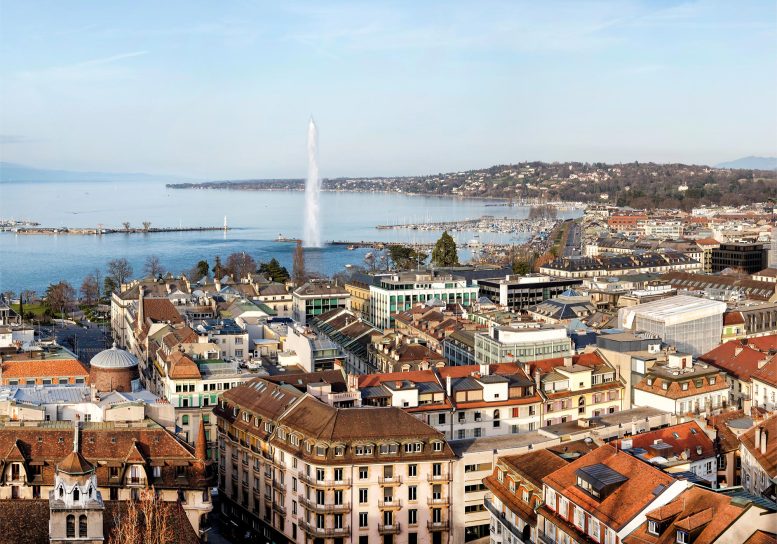
    Geneva Switzerland at Sunset
    The Swiss city of Geneva could be at risk of flooding should a major rock fall trigger a tsunami on Lake Geneva, as seems to have happened in ad 563.

    Over a century after the Romans gave up control of what’s today Geneva, Switzerland, in 563 A.D., a deadly tsunami on Lake Geneva poured over the city’s walls. It originated from a rock fall, near the place where the River Rhône enters the opposite side of the lake. The ensuing tsunami destroyed villages, livestock and killed many people, according to historical accounts.

    The scientists published their findings in the journal Nature Geoscience. This could indicate that the region is at risk today since there are about one million inhabitants living on the lake’s shores. This happened before and it will probably happen again, states geologist Guy Simpson, from the University of Geneva, one of the researchers involved in this project.
    predictive-model-tsunami
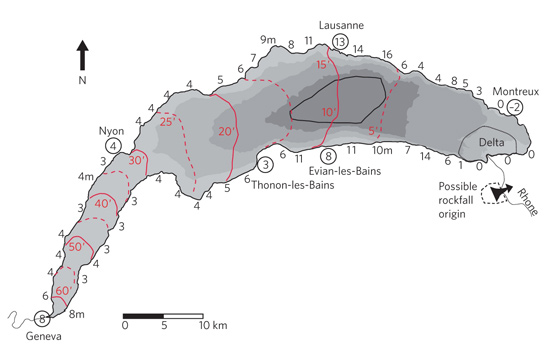
    Simulated tsunami wave height and propagation within Lake Geneva in ad 563, after a rock fall in the Rhône delta area (black dashed line). Black numbers show the varying heights of the first wave in meters; red contours show wave propagation; red numbers show time after the event in minutes; gray shades indicate water depth in 100-meter intervals; black contour highlights the area of deposited sediment. Credit: Nature Geoscience

    The team used high-resolution profiles of the sediment composition of the lake, which they gathered using seismic reflection from a ship. The technique is similar to sonar, but uses seismic waves that penetrate and reflect off sediment layers. These profiles showed a layer that had been deposited in a single event. This unusual layer was lens-shaped, averaged 5 meters (16 feet) in thickness, and covered 50 square kilometers (19 square miles).

    The 563 A.D. rock fall and tsunami are known as the Tauredunum event, and this layer could be evidence of its actual existence. The deposition happened between 381 and 612 A.D. Since the Tauredunum is the only major natural event described around that time, it seems like a match. The scientists cannot say what exactly created the tsunami, but it’s been proposed that a falling rock caused an accumulated heap of sediment in the Rhône delta to collapse. This could have launched the wave and carried the sediment from the delta to the center of the lake.

    Using predictive models, it was possible to estimate that a 13-meter (43-foot) wave hit Lausanne 15 minutes after the rock fall. An 8-meter (26-foot) wave reached Geneva after 70 minutes. Further analysis of the deeper cores will allow the team to learn more about the size and frequency of such events, and whether they were all big enough to generate tsunamis. This could help assess the risk to modern-day Geneva and other lakeside communities.

    A survey of the stability of the surrounding slopes and a more refined tsunami model could also help with the risk assessment.

    Reference: “Giant Lake Geneva tsunami in AD 563” by Katrina Kremer, Guy Simpson and Stéphanie Girardclos, 28 October 2012, Nature Geoscience.
    DOI: 10.1038/ngeo1618

    Never miss a breakthrough: Join the SciTechDaily newsletter.
    Follow us on Google and Google News.

    Geoscience Lakes Switzerland Tsunami
    Share. Facebook Twitter Pinterest LinkedIn Email Reddit

    Related Articles

    Lakes Worldwide Are Heating Up: A Climate Crisis Unfolding Beneath the Surface

    Alterations in Seawater Chemistry Linked With Past Climate Change

    Coral Reveals Lead Levels from Gasoline in the Ocean

    Ancient Antarctica Was Much Warmer and Wetter Than Previously Suspected

    Geological Record Shows Earth’s Oxygen Came from Mantle Cooling

    Earth Recovered 10 Million Years After Permian-Triassic Mass Extinction

    1930s Photos Reveal History of Greenland Glaciers

    Circumpolar Rivers are a Major Source of Mercury in the Arctic Ocean

    Billion Year Old Surface Water Found in Oceanic Plates

    Leave A Reply Cancel Reply

    • Facebook
    • Twitter
    • Pinterest
    • YouTube

    Don't Miss a Discovery

    Subscribe for the Latest in Science & Tech!

    Trending News

    These Toads Are Surviving a Deadly Fungus – Scientists May Finally Know Why

    These Brain Cells May Explain Why We Eventually Have To Sleep

    Tomatoes Contain an Invisible Ingredient With Surprising Effects on Liver Health

    World’s First Heat-Powered Cooling System Turns Waste Heat Into Cold

    Antarctica Gained a Record 695 Billion Tons of Ice in Just Two Years

    Don’t Miss: A Brilliant Venus and Glowing Harvest Moon Light Up the Sky

    New Twist on the Einstein Problem Reveals Unexpected Physics

    JWST Captures Stunning Evidence of How Supermassive Black Holes Feed

    Follow SciTechDaily
    • Facebook
    • Twitter
    • YouTube
    • Pinterest
    • Newsletter
    • RSS
    SciTech News
    • Biology News
    • Chemistry News
    • Earth News
    • Health News
    • Physics News
    • Science News
    • Space News
    • Technology News
    Recent Posts
    • Scientists Discover a Hidden Defect That Could Explain Why IBD Keeps Coming Back
    • Millions Take Blood Pressure Drugs, but Many May Be Missing Their Heart-Protective Benefits
    • Could Alien Life Be Conscious in Ways We Can’t Imagine?
    • Scientists Develop a Fruit Wash That Removes Pesticide Residues and Keeps Produce Fresh Longer
    • Scientists May Have Finally Explained Why Astronauts Get Constipated in Space
    Copyright © 1998 - 2026 SciTechDaily. All Rights Reserved.
    • Science News
    • About
    • Contact
    • Editorial Board
    • Privacy Policy
    • Terms of Use

    Type above and press Enter to search. Press Esc to cancel.