
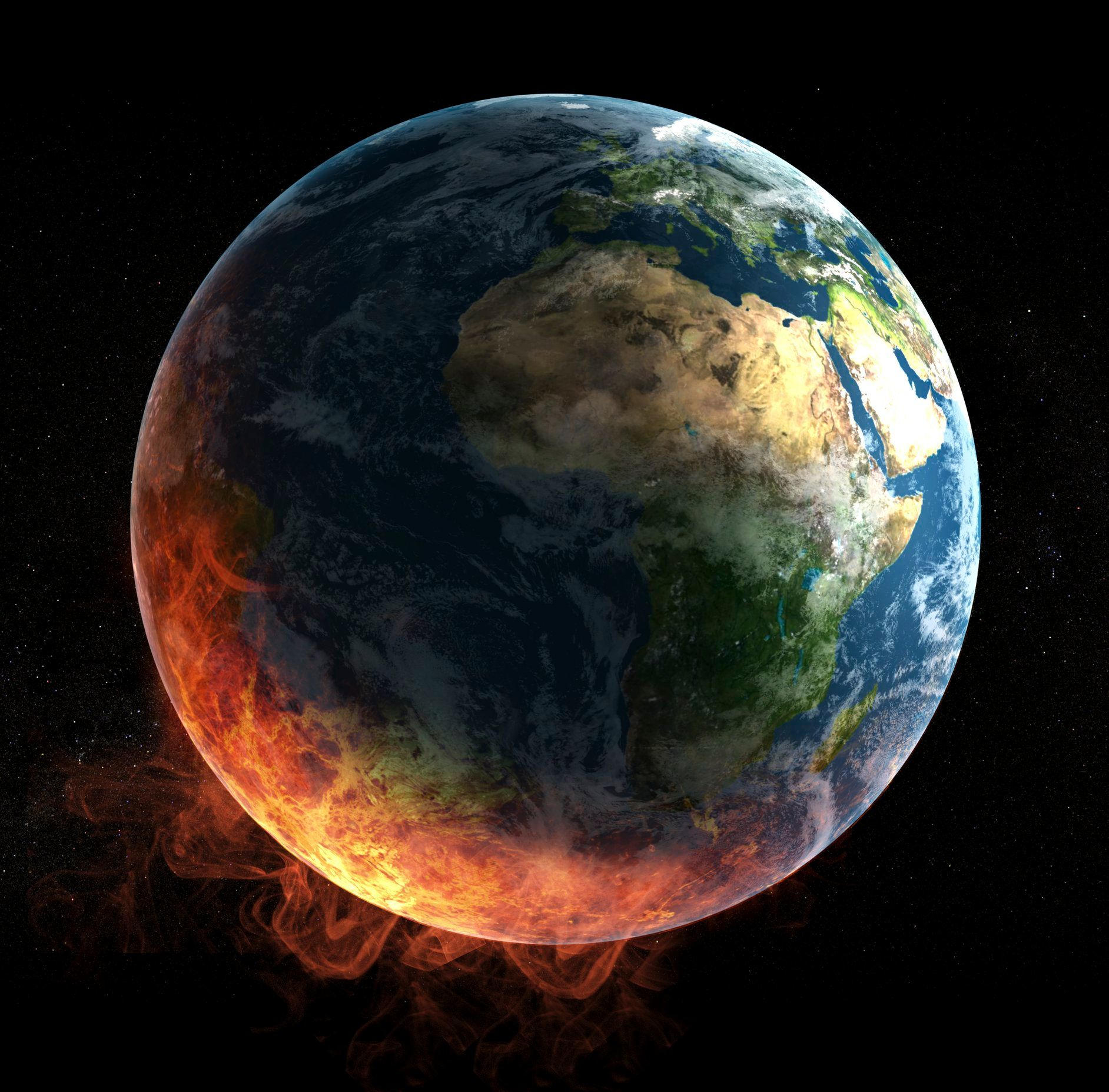
A new study shows that lakes worldwide will face unprecedented warming by the end of the century due to human-caused climate change. Tropical lakes will be the first to experience these no-analogue conditions, which will affect both surface and subsurface layers, posing severe threats to biodiversity and ecosystems.
Lakes, known for their rich biodiversity and crucial ecological functions, are facing a troubling trend: rapidly rising temperatures. A recent study in Nature Geoscience, conducted by a global team of limnologists and climate modelers, warns that if human-induced warming continues at its current pace, lakes across the globe could experience widespread and unprecedented warming at both surface and subsurface levels by the end of this century, far exceeding anything previously observed.
The study uses lake temperature data simulated by a state-of-the-art climate computer model (Community Earth System Model, version 2) covering the period from 1850-2100 CE. It is the first model of its kind, which captures the dynamics and thermodynamics of lake systems in an integrated way with the atmosphere.
Rather than running the computer model into the future only once, the scientists used an ensemble of 100 past-to-future simulations, which were run on one of South Korea’s fastest computers (‘Aleph’ at the Institute for Basic Science).

Each simulation generates a slightly different realization of natural climate variability while it also responds to the anthropogenic warming effects of increasing greenhouse gas concentrations. With this ensemble modeling approach, the scientists were able to disentangle the range of naturally occurring lake temperature variations from those caused by human interference. This allowed the team for the first time to estimate the time when lake temperatures will permanently exceed natural bounds – a situation referred to as no-analogue conditions.
Global Timing of No-Analogue Conditions
Dr. Lei Huang, the study’s lead author (now at Capital Normal University, Beijing, China) and former postdoctoral researcher at the IBS Center for Climate Physics in Busan, South Korea, emphasizes that on average lakes worldwide will face no-analogue climates by the end of this century. However, the timing of emergence varies globally. Tropical lakes, harboring rich biodiversity, will be the first to experience unprecedented conditions when global warming reaches ~2.4°C (above pre-industrial conditions).
While surface warming affects species in shallow lake layers, some organisms can migrate vertically to find more suitable thermal habitats. Therefore, it is crucial to also consider how warming penetrates the subsurface layers. “Our study reveals synchronous emergence of no-analogue conditions in tropical lake subsurface layers, driven by rapid downward transmission of warming signals during frequent lake mixing events. In contrast, high-latitude lakes partly shield subsurface layers from surface warming through stratification, delaying or sometimes even preventing no-analogue climates at depths,” says Dr. Iestyn Woolway, NERC Independent Research Fellow at Bangor University, UK, corresponding author of the study.
The consequences of no-analog lake climates are profound. “They can lead to severe future disruptions in ecosystems” comments Prof. Axel Timmermann, co-author of the study and Director of the IBS Center for Climate Physics. Compared to terrestrial and marine biota, lake organisms are often limited in their capability to migrate to climatically more optimal habitats. Understanding the timing of no-analogue emergence is therefore vital for adaptation, planning, and climate mitigation in lake ecosystems.
Reference: “Emergence of lake conditions that exceed natural temperature variability” by Lei Huang, R. Iestyn Woolway, Axel Timmermann, Sun-Seon Lee, Keith B. Rodgers and Ryohei Yamaguchi, 12 July 2024, Nature Geoscience.
DOI: 10.1038/s41561-024-01491-5
The study was funded by the Institute for Basic Science.
Never miss a breakthrough: Join the SciTechDaily newsletter.
Follow us on Google and Google News.
8 Comments
Well there’s a nonsense right in the title already. Climate is not beneath the surface. It’s above it.
“A new study shows that lakes worldwide will face unprecedented warming by the end of the century due to human-caused climate change.”
That is a bold claim, even if it is based on ensembles of supercomputer runs. Cold air can cool water, warm air can act as an insulator, but hot air is as likely to cool the water through evaporation.
“The study uses lake temperature data SIMULATED by …
A model is only as good as its design, and it is usually the unexamined assumptions that lead modelers astray. Not understanding the systems being simulated takes a toll also. The first question I asked myself when reading this was, “What does their model look like schematically?” That isn’t answered by the link provided. They claim that the models used have been verified.
Terrestrial materials warm by absorbing absorbing light that isn’t reflected diffusely. Hot sand, rocks, and pavement can warm the air by contact. The thermal imaging of the Urban Heat Island effect demonstrates this very clearly.
However, water behaves differently. First off, it reflects specularly, which means the reflectance varies with the angle of incidence, and the light that isn’t reflected is absorbed (more so near the surface), warming the water. That isn’t going to change in the future. However, the Clausius–Clapeyron relation basically says that when the air warms, it can hold more water vapor. Therefore, warmed air passing over water will allow more water to evaporate, retarding the warming of the surface water. They apparently depend on satellite remote sensing to determine the water skin temperature, which may actually be the air temperature on hot days. As happens every day in the tropics, that high-humidity air rises and eventually condenses to form albedo-increasing clouds, and shades the water below. There is a negative feedback loop that regulates temperatures.
I would expect shallow clear water to warm faster than deep water because light that isn’t absorbed fully by the water will heat the sediment on the floor of the lake, and the reflected light will have to again traverse the same water column going up as it did going down. Whereas, very deep lakes will distribute all of the heat energy derived from absorption through the water column, with little to no outgoing energy. Therefore, the deep lakes will absorb virtually all the incoming heat energy, but it will be distributed over a much larger volume of water, resulting in less heating at the surface.
They mention “thermal inertia” in passing, but don’t examine it in detail. It is possible that it plays an outsized role in biasing the 1850-1900 baseline, particularly for the larger lakes with large reservoirs of deep, cold water.
I’m dubious that the models they are using are really fit for purpose of long-range forecasting.
Lastly, under their Methods section in the linked article, they state, “The calculation of emergence of no-analogue conditions … was based on the single realization as the meteorological forcing for the lake simulation was achieved from the output of the GFDL-ESM2M model under the RCP8.5 scenario in CMIP5.” The important point here is that they are basing their prediction on the RCP8.5 scenario, which other researchers have demonstrated to be improbable given the long-term limitations of resources to support “Business as Usual.” Furthermore, historical air temperatures have been tracking intermediate scenarios, despite effectively operating under the “Business as Usual” conditions.
Lakes are not known to get warmer
That is a strange claim. Clearly, lakes where the ice has just melted in the Spring are much colder than they are when people are swimming in them in the middle of Summer. Albeit, for deeper lakes, there may be a thermocline a couple meters below the surface where there is an abrupt change in temperature.
P.S. One of the reasons it is difficult to predict surface water temperature is because if it has been windy, there will be greater mixing with the deep cold water and the surface water will be cooler. It isn’t just a matter of insolation and air temperature. The strength and duration of wind, along with the amount of precipitation, can make significant changes in surface water temperature. The same is true of ocean water. I’m surprised the authors didn’t acknowledge those confounding factors.
A few billion years ago, the Earth was next to a star other than the Sun. Water and oxygen. When the Earth was next to another star a few billion years ago, the planets of the Milky Way galaxy that hit the Earth were added. At that time, the Earth was slightly warmer than It was now, but the temperature on the earth had not reached 100 degrees and the evolution of plants had enriched oxygen and all the necessary materials for the development of bacteria and single cells were complete in oxygen. If the earth had obtained all the necessary materials in oxygen when It was not placed next to the sun. Evolution next to a star that was smaller than the sun did not continue and last in the way that evolution continued on Earth
Before I give you a pass on your incoherent paragraph, I’d like to know if English is a second language for you and in what discipline your PhD is.
English is my second language, dear Mr. Spencer, and I have a doctorate in dentistry, and I am a mathematician, a mystic, and the author of The Word of God. Thirty years ago, I taught students practical work on dentistry at Shahid Beheshti University, and the work of producing acrylic teeth is difficult, and I am the author of historical books. I am also the earth and the fate of the earth and the end of the life of the earth and 34 years ago I produced multi-layered steel molds for the production of hard polymer teeth and acrylic for mass production and dental wax and presented to the market in half kilo boxes of 7 tons I did it, but I didn’t make much profit because the capital was from my father. My name was registered as an inventor of medical engineering in the Ministry of Culture and Medical Education. I was only able to pay my debt for the production of molds that I had made and my wife divorced me and I gave her a house and now I am empty handed and at the age of sixty I have to live in my father’s house and I became a prisoner of my old father’s mother and cash I don’t have a property owned by my father, which I share with my brother and mother, in the city of Rodhan, near Tehran, and I cannot sell that house, which is not worth more than a hundred thousand dollars. Even if we sell it, I will not get much money. Thirty thousand dollars is not enough for immigration