
Close Menu
    Facebook X (Twitter) Instagram
    SciTechDaily
    • Biology
    • Chemistry
    • Earth
    • Health
    • Physics
    • Science
    • Space
    • Technology
    Facebook X (Twitter) Pinterest YouTube RSS
    SciTechDaily
    Home»Earth»Low Arctic Snow Cover Could be Trouble for Permafrost
    Earth

    Low Arctic Snow Cover Could be Trouble for Permafrost

    By SciTechDailyNovember 1, 2012No Comments3 Mins Read
    Facebook Twitter Pinterest Telegram LinkedIn WhatsApp Email Reddit
    Share
    Facebook Twitter LinkedIn Pinterest Telegram Email Reddit
    permafrost-arctic
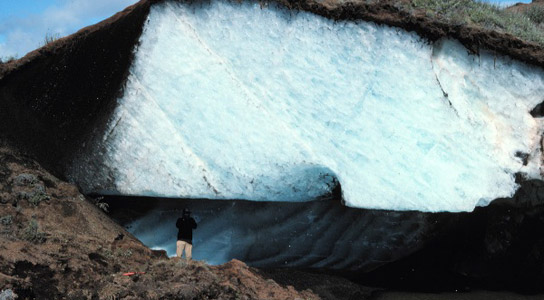
    The exposed ice core of a collapsing pingo in Canada’s Western Arctic. Credit: International Polar Foundation

    June Arctic snow cover in the Northern Hemisphere dropped by almost 18% per decade over the last 30 years. This drop in snow cover will lower the amount of sunlight reflected away from the planet, which is part of a cooling effect, and result in darker, less reflective soil being exposed to the sun’s rays.

    The researchers published their findings in the journal Geophysical Research Letters. This effect will re-emit heat into the atmosphere and this change could also warm the permafrost, alter the timing of the spring runoff to rivers and lead to earlier plant growth in spring.
    deep-permafrost
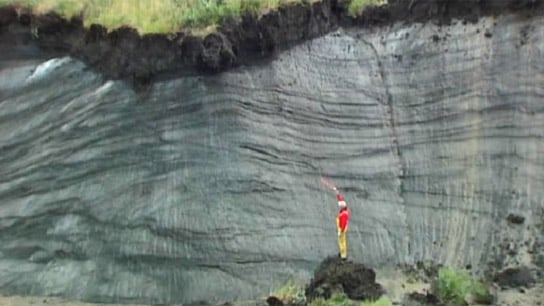
    Credit: Image by Scott Dallimore of the Geological Survey of Canada

    The swift pace of snowmelt between 1979 and 2011 exceeds the rate of decline in the Arctic sea ice, which is at 11% per decade over the same period. In September 2012, the planet had the lowest extent of sea ice in the satellite record and when this year’s data was included into these calculations, they showed that there had been a 13% decline in sea ice and a 21.5% per decade drop in snow cover.

    The link between snowmelt and Arctic sea ice loss isn’t well understood. But if you remove snow cover earlier, you’re creating the potential to send warmer air out over the ocean, which isn’t good for sea ice. Since 1980, the blanket of snow that remains in the Arctic at the end of spring has fallen by two-thirds, from 9 million square kilometers to just about 3 million square kilometers.

    This is likely to accelerate permafrost degradation, and could lead to the release of greenhouse gases trapped in the soil. The exact consequences will depend on whether a summer is hot and dry or cool and wet. If the peaty surface layers dry out, they insulate the permafrost and protect it from thawing.

    Scientists expect the snow cover to continue to diminish, but it still remains to be seen whether the decline will remain so steep. They need to understand why the observed changes do not match up with the projections of widely used models.

    Reference: “Spring snow cover extent reductions in the 2008–2012 period exceeding climate model projections” by C. Derksen and R. Brown, 10 October 2012, Geophysical Research Letters.
    DOI: 10.1029/2012GL053387

    Never miss a breakthrough: Join the SciTechDaily newsletter.
    Follow us on Google and Google News.

    Arctic Climate Change Geophysics Geoscience Permafrost Snow Cover Snowmelt
    Share. Facebook Twitter Pinterest LinkedIn Email Reddit

    Related Articles

    Arctic’s Hidden “Mercury Bomb” Threatens Millions As Temperatures Rise

    Permafrost Apocalypse: 93% Could Vanish by 2100, Warns Global Study

    Catastrophic Trend Alert: Global Warming in the Arctic Fuels Megafires on the Permafrost

    New ICESat-2 Observations Show We’re Losing Arctic Sea Ice at a “Frightening” Rate

    Thawing Permafrost Could Leach Microbes, Greenhouse Gases, and Chemicals Into Environment

    International Research Team Begins Uncovering Mystery Lurking Beneath the Arctic Ocean

    Stunning Animation Shows Permafrost Changes in the Arctic Due to Climate Change

    Arctic Melt Season Is Lengthening by Several Days Each Decade

    Carbon Locked in Arctic Permafrost Will Contribute to Global Warming

    Leave A Reply Cancel Reply

    • Facebook
    • Twitter
    • Pinterest
    • YouTube

    Don't Miss a Discovery

    Subscribe for the Latest in Science & Tech!

    Trending News

    Largest-Ever Study Finds Medicinal Cannabis Ineffective for Anxiety, Depression, PTSD

    250-Million-Year-Old Egg Solves One of Evolution’s Biggest Mysteries

    Living With Roommates Might Be Changing Your Gut Microbiome Without You Knowing

    Century-Old Cleaning Chemical Linked to 500% Increased Risk of Parkinson’s Disease

    What if Your Memories Never Happened? Physicists Take a New Look at the Boltzmann Brain Paradox

    One of the Universe’s Largest Stars May Be Getting Ready To Explode

    Scientists Discover Enzyme That Could Supercharge Ozempic-Like Weight Loss Drugs

    Popular Sweetener Linked to DNA Damage – “It’s Something You Should Not Be Eating”

    Follow SciTechDaily
    • Facebook
    • Twitter
    • YouTube
    • Pinterest
    • Newsletter
    • RSS
    SciTech News
    • Biology News
    • Chemistry News
    • Earth News
    • Health News
    • Physics News
    • Science News
    • Space News
    • Technology News
    Recent Posts
    • Challenging the Narrative: New Study Shows U.S. Life Expectancy Is Rising Across All States
    • Mystery Illness Kills 5 in Burundi As Doctors Scramble for Answers
    • Bone-Strengthening Discovery Could Reverse Osteoporosis
    • The Most Elusive Number in Physics Just Got Even More Mysterious
    • Scientists Uncover Hidden Trigger Behind Stem Cell Aging
    Copyright © 1998 - 2026 SciTechDaily. All Rights Reserved.
    • Science News
    • About
    • Contact
    • Editorial Board
    • Privacy Policy
    • Terms of Use

    Type above and press Enter to search. Press Esc to cancel.