
Close Menu
    Facebook X (Twitter) Instagram
    SciTechDaily
    • Biology
    • Chemistry
    • Earth
    • Health
    • Physics
    • Science
    • Space
    • Technology
    Facebook X (Twitter) Pinterest YouTube RSS
    SciTechDaily
    Home»Earth»Study Looks at the Role of Climate Change in Extinction
    Earth

    Study Looks at the Role of Climate Change in Extinction

    By Stony Brook UniversityOctober 17, 2012No Comments3 Mins Read
    Facebook Twitter Pinterest Telegram LinkedIn WhatsApp Email Reddit
    Share
    Facebook Twitter LinkedIn Pinterest Telegram Email Reddit
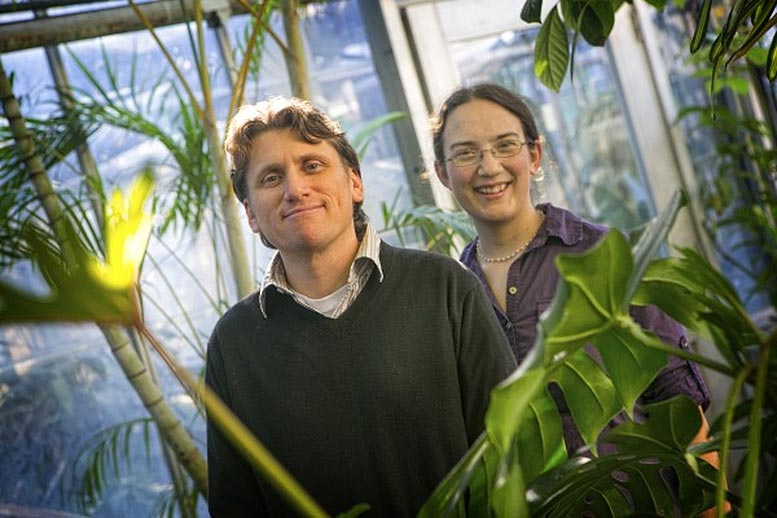
    John Wiens and Abigail Cahill
    Associate Professor John J. Wiens and PhD student Abigail Cahill, have co-authored a research paper, “How does climate change cause extinction?” published in the Proceedings of the Royal Society of London. Credit: Stony Brook University

    A newly published study examines the role of climate change in extinction, finding that very few populations have gone extinct simple because it got too hot for the plants and animals to survive, instead climate change more often leads to local extinctions and declines by influencing interactions between species.

    A new study, published online today in Proceedings of the Royal Society of London, reviewed 136 case studies to determine the underlying causes of why many populations have gone extinct due to changing climate.

    The article, entitled “How does climate change cause extinction?” describes research led by John J. Wiens, an Associate Professor in the Department of Ecology and Evolution at Stony Brook University and by PhD students Abigail E. Cahill and Matthew E. Aiello-Lammens.

    According to the authors, extinctions of plant and animal populations from human-related climate change are already widespread, but the causes of these extinctions are very poorly understood.
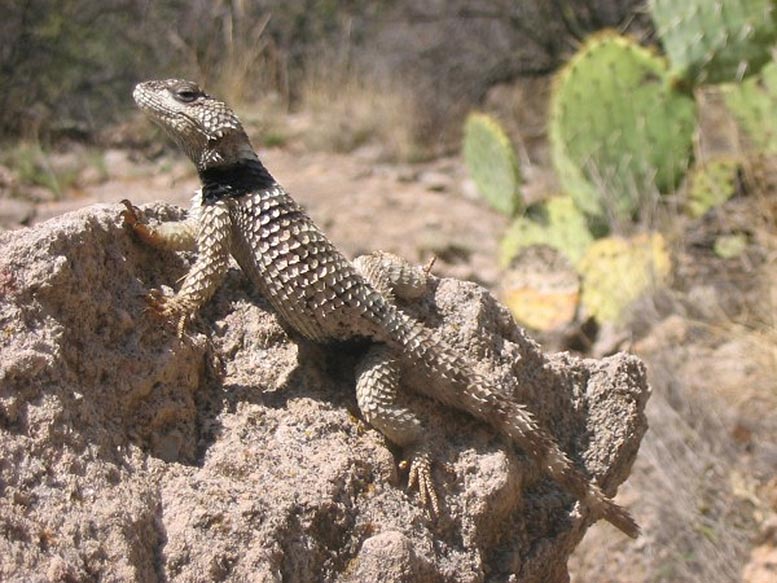
    Crevice Spiny Lizard (Sceloporus poinsettii)
    A crevice spiny lizard (Sceloporus poinsettii): widespread local extinctions in spiny lizards have been caused by anthropogenic climate change. Credit: Photo by Shea Lambert

    Contrary to expectations given global warming, the results of the study show that very few populations have gone extinct simply because temperatures got too hot for the plants and animals to survive.

    “Instead,” said Dr. Wiens, “climate change more often leads to local extinctions and declines by influencing interactions between species, such as reducing prey populations for predators. These shifting interactions may make even small climatic changes dangerous for the survival of plant and animal species. So, for example, many animals may starve to death because of climate change long before the climate gets hot enough for them to die from overheating.”

    Reference: “How does climate change cause extinction?” by Abigail E. Cahill, Matthew E. Aiello-Lammens, M. Caitlin Fisher-Reid, Xia Hua, Caitlin J. Karanewsky, Hae Yeong Ryu, Gena C. Sbeglia, Fabrizio Spagnolo, John B. Waldron, Omar Warsi and John J. Wiens, 7 January 2013, Proceedings of the Royal Society B.
    DOI: 10.1098/rspb.2012.1890

    Co-authors of the study include M. Caitlin Fisher-Reid, Xia Hua, Caitlin Karanewsky, Hae Yeong Ryu, Gena Sbeglia, Fabrizio Spagnolo, John Waldron, and Omar Warsi, all from the Department of Ecology and Evolution at Stony Brook University.

    Never miss a breakthrough: Join the SciTechDaily newsletter.
    Follow us on Google and Google News.

    Climate Change Ecology Evolution Extinction Stony Brook University
    Share. Facebook Twitter Pinterest LinkedIn Email Reddit

    Related Articles

    Can Dark Wings Save Dragonflies From Climate Change?

    Climate Crisis Is Driving Cousins of Zazu, From the Lion King, to Local Extinction

    Animals “Shapeshifting” in Response to Warming Climate

    Global Climate Dynamics Drove the Decline of Mastodonts and Elephants, Not Overhunting by Early Humans

    Earth’s Worst Mass Extinction Took Ten Times Longer on Land Than in the Water

    Species Come and Go – Their Ecosystems Persist Over Millions of Years

    Climate Regions of Earth Redefined by the Distribution of Vertebrate Animals

    Giants of Madagascar Driven to Extinction by Humans and Climate Change

    Early Human Species Likely Driven to Extinction by Climate Change

    Leave A Reply Cancel Reply

    • Facebook
    • Twitter
    • Pinterest
    • YouTube

    Don't Miss a Discovery

    Subscribe for the Latest in Science & Tech!

    Trending News

    FDA-Approved Drug Shows Promise for Reversing Osteoarthritis Damage

    11,000-Year-Old Grains Reveal a Surprise About the Origins of Agriculture

    This Common Type of Medication Is Linked to Slower Cognitive Decline

    Quantum Computer Solves a Problem in 15 Minutes That Classical Methods Can’t Practically Compute

    Taking the Stairs Could Cut Your Risk of Heart-Related Death by 39%

    Scientists Uncover a Surprising New Route for Stonehenge’s Most Mysterious Stone

    A Star Near the Milky Way’s Black Hole Is Losing Mass at an Astonishing Rate

    Scientists Solve a Vitamin B12 Mystery With an Unexpected Culprit

    Follow SciTechDaily
    • Facebook
    • Twitter
    • YouTube
    • Pinterest
    • Newsletter
    • RSS
    SciTech News
    • Biology News
    • Chemistry News
    • Earth News
    • Health News
    • Physics News
    • Science News
    • Space News
    • Technology News
    Recent Posts
    • Scientists Find a Hidden Biological Link Across Different Forms of Autism
    • Scientists Discover a 3.7-Billion-Year-Old Secret of Early Life
    • Scientists Revisited a Forest Experiment That Was Forgotten for 30 Years. What They Found Was Astounding
    • Astronomers Discover a Ghostly River of Stars That Could Reveal Dark Matter
    • NASA Is Building a Moon Base – and the First Pieces Are Already Coming Together
    Copyright © 1998 - 2026 SciTechDaily. All Rights Reserved.
    • Science News
    • About
    • Contact
    • Editorial Board
    • Privacy Policy
    • Terms of Use

    Type above and press Enter to search. Press Esc to cancel.