
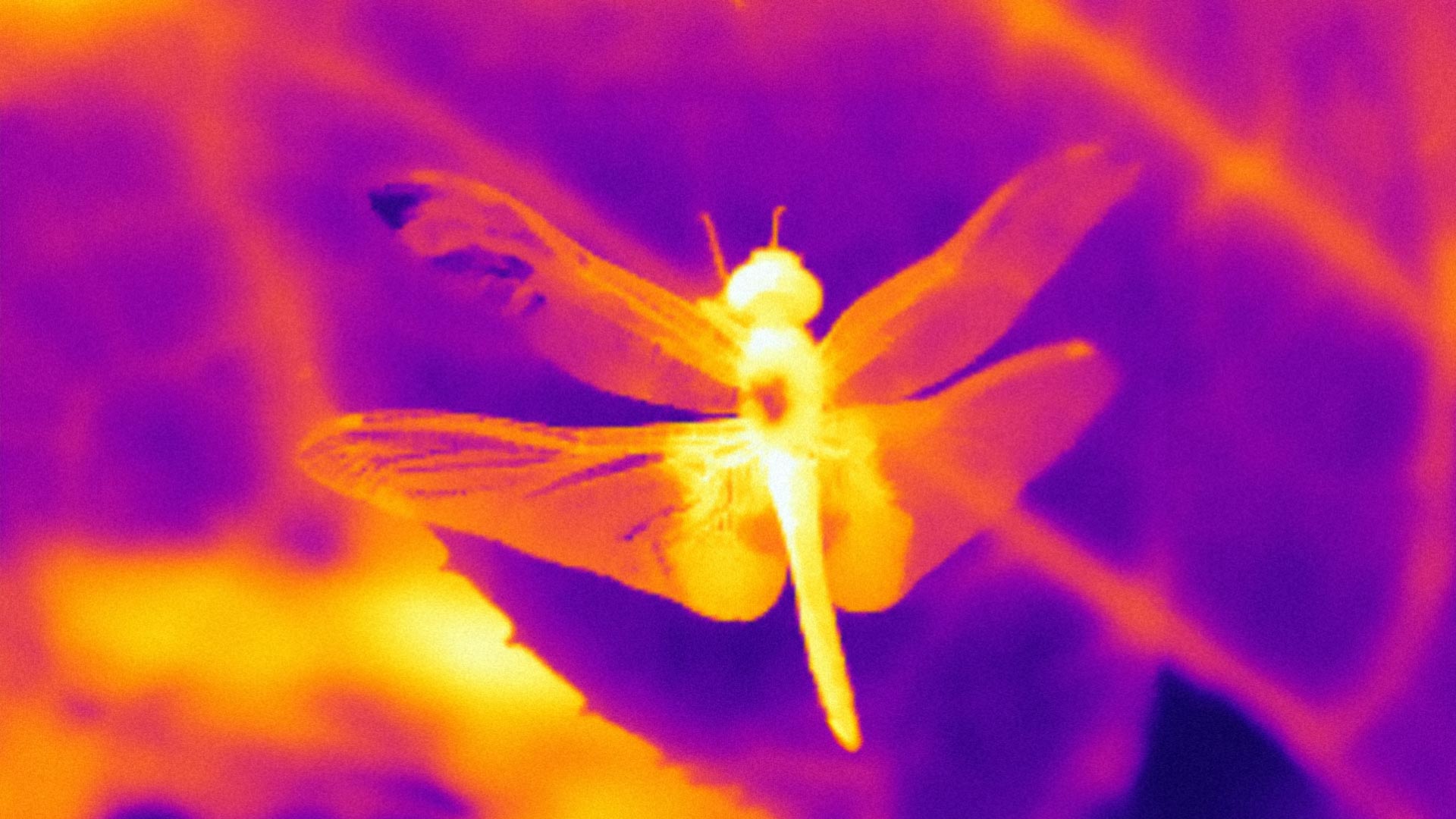
Dragonflies with dark wing patches have evolved greater heat tolerance, suggesting that these traits may help them adapt to rising global temperatures and avoid extinction.
Temperature determines where species can live and if a warming climate threatens them. Thus, biologists have long studied the impact of heat tolerance on survival. However, the effects of thermal traits on reproduction, a key factor in extinction risk, remained poorly understood.
Heat Tolerance and Sexual Signaling in Dragonflies
In a new study published in Frontiers in Ethology, researchers in the US investigated if males of dragonfly species that produce sexual signals in the form of dark coloration on their wings are more resistant to heat.
“We show that dragonfly species that have evolved dark breeding coloration on their wings have also evolved the ability to tolerate high temperatures,” said Dr Noah Leith, a biologist at the University of Pittsburgh. “This finding paves the way for a whole new field of research exploring interactions between thermal traits and sexual signals.”

Thermal Adaptations and Reproductive Cost
In dragonflies, as in many animals, sexual signals can help them effectively locate mates, identify the correct species to mate with, and decide when to back out of mating contests.
Producing extensive dark wing coloration, though, comes at a cost. Dark ornaments absorb extra heat, increasing dragonflies’ body temperature. This can cause physiological stress or lead to males abandoning reproductive territories. “We see time and time again that animals will put their lives on the line to reproduce, even if it means encountering potentially lethal temperatures,” Leith said.
Evolved Heat Resistance in Dragonflies
The researchers examined the wing coloration of 14 dragonfly species living in tropical climates and five species living in temperate climates. They found that species that possess dark, heat-absorbing wing coloration have evolved to be able to withstand higher heat stress before reaching critical thermal maxima. “This enhanced ability to tolerate high body temperatures is likely crucial for shaping how dragonflies may respond to the changing climates of the future,” Leith explained.
Implications for Climate Change Adaptation
Dark wing ornaments cause additional heating of 1°C to 2°C, which roughly equals the increased thermal maxima of ornamented species. Of the species studied, the arch-tipped glider (Tauriphila argo), a tropical species with very dark wing color patches near its core body, could tolerate the highest temperatures. Generally, this pattern of co-evolution was even stronger in tropical species.
Previous research showed that due to rising temperatures worldwide, some ornamented dragonfly species are evolving with reduced wing coloration. The present results, however, suggest that even if those species lose their coloration, they will still have a leg up on adaptation to climate change because they’ve already evolved to tolerate hotter temperatures, the researchers said.
Broader Implications for Biodiversity and Conservation
The study is one of the first to test whether thermal tolerance co-evolves with reproductive traits. “Our finding is particularly exciting because dark sexual coloration has evolved over and over across the tree of life and causes a wide variety of other animals to absorb extra heat too—from reptiles, to lions, and fruit flies,” Leith pointed out.
In a rapidly warming world, being able to predict which species are vulnerable to extinction is essential to preserving biodiversity, the researchers said. “Looking at vulnerability in only one aspect of animals’ lives is insufficient. We need a more nuanced understanding of how animals respond to changing environments as whole, complex organisms, in which their reproductive traits might influence their chances of surviving a heat wave, and vice versa,” Leith said.
While the researchers noted that looking at 19 species was plenty for their analysis, they said that there are thousands of dragonfly species. Future research should examine if similar patterns exist in other species, as well as in different types of animals. “It would be fantastic to someday test if heat tolerance co-evolves with sexual traits across life on Earth,” Leith concluded.
Reference: “Heat-absorbing sexual coloration co-adapts with increased heat tolerance in dragonflies” by Noah T. Leith and Michael P. Moore, 16 August 2024, Frontiers in Ethology.
DOI: 10.3389/fetho.2024.1447637
Never miss a breakthrough: Join the SciTechDaily newsletter.
Follow us on Google and Google News.