
Close Menu
    Facebook X (Twitter) Instagram
    SciTechDaily
    • Biology
    • Chemistry
    • Earth
    • Health
    • Physics
    • Science
    • Space
    • Technology
    Facebook X (Twitter) Pinterest YouTube RSS
    SciTechDaily
    Home»Space»Happy March Equinox, Earthlings!
    Space

    Happy March Equinox, Earthlings!

    By Lance D. Davis, NASAMarch 19, 2022No Comments2 Mins Read
    Facebook Twitter Pinterest Telegram LinkedIn WhatsApp Email Reddit
    Share
    Facebook Twitter LinkedIn Pinterest Telegram Email Reddit
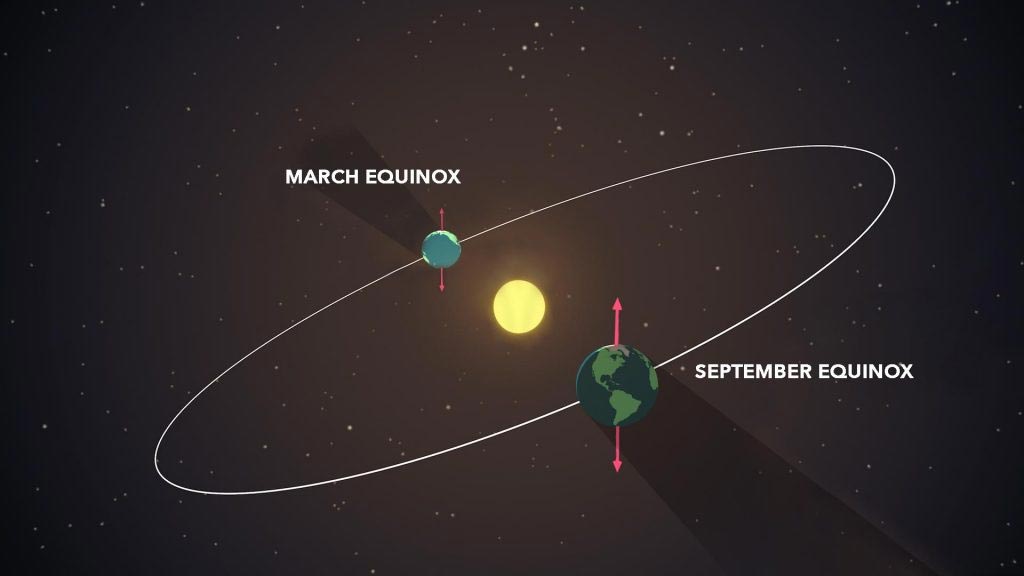
    March September Equinoxes
    An illustration of the March (spring) and September (fall or autumn) equinoxes. During the equinoxes, both hemispheres receive nearly equal amounts of daylight. (Image not to scale.) Credit: NASA/GSFC/Genna Duberstein

    March Equinox Welcomes ‘Astronomical’ Spring

    Did you know our planet has two types of seasons? They are meteorological and astronomical. What’s the difference?

    “Meteorological seasons” follow the changing of the calendar, month to month, and are based on the annual temperature cycle – seasonal temperature variations modified by fluctuations in the amount of solar radiation received by Earth’s surface over the course of a year. For instance, the meteorological season of spring begins each year on March 1 and will end on May 31.

    However, “astronomical” seasons happen because of the tilt of Earth’s axis (with respect to the Sun-Earth plane), and our planet’s position during its orbit around the Sun.

    The March equinox – also called the vernal equinox – is the astronomical beginning of the spring season in the Northern Hemisphere. Seasons are reversed in the Southern Hemisphere where it will be autumn, also known as fall. These simultaneous seasons will occur March 20, 2022, at 15:33 UTC (Coordinated Universal Time) or 10:33 a.m. CDT (Central Daylight Time).
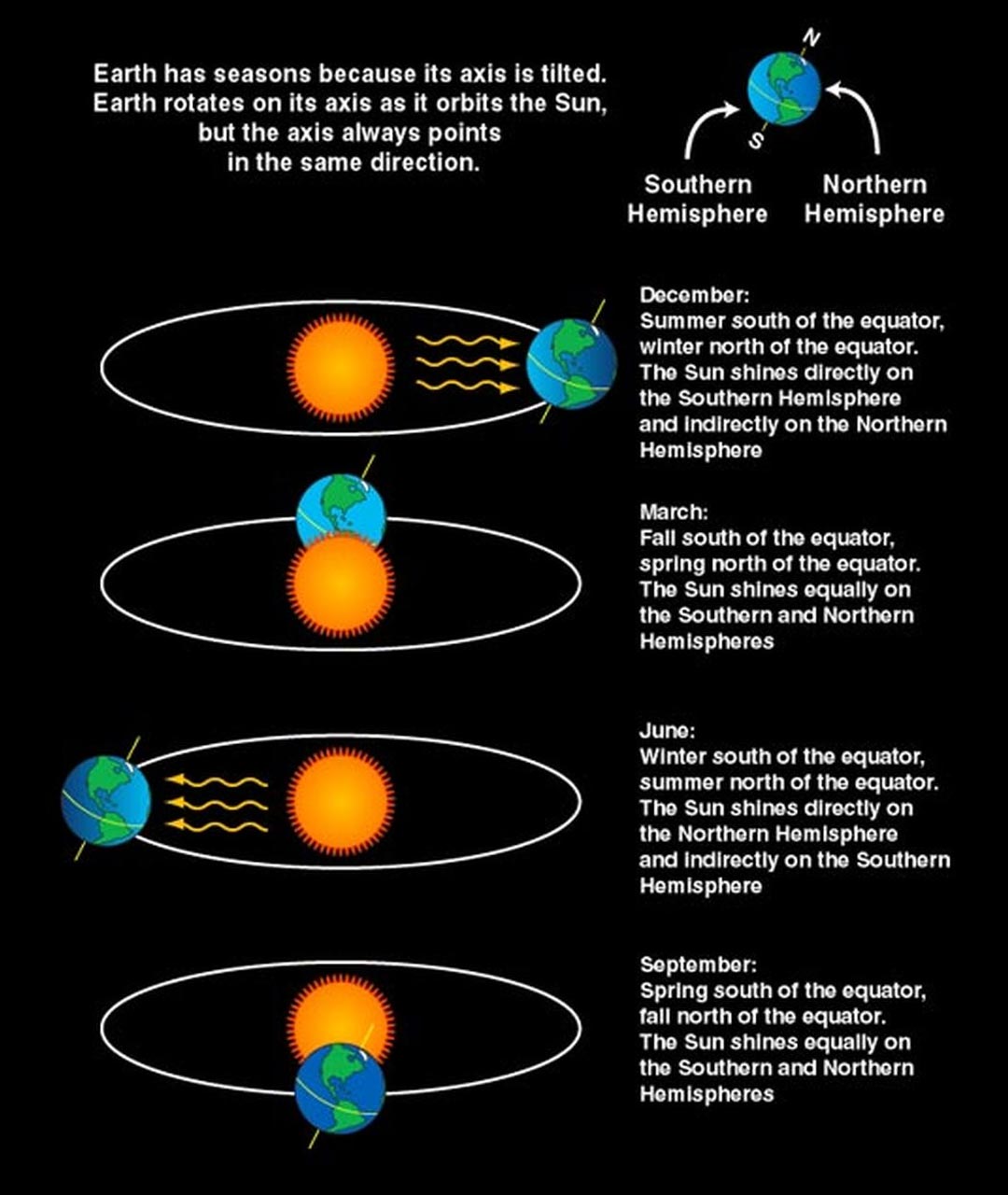
    Earth Seasons Infographic
    Credit: NASA/Space Place

    The Sun will pass directly above the equator, bringing nearly equal amounts of day and night on all parts of Earth. At the equator, an equinox results in about 12 hours of daylight and 12 hours of night.

    Equinoxes and solstices are caused by Earth’s tilt on its axis and the ceaseless motion it has while orbiting the Sun. Think of them like events happening as our planet make its journey around the Sun.

    North of the equator, the March equinox will also bring us earlier sunrises, later sunsets, softer winds, and budding plants. With the reversed season, those south of the equator will experience later sunrises, earlier sunsets, chillier winds, and dry, falling leaves.

    If you’re in the Northern Hemisphere, watch the Sun as it sets just a bit farther north on the horizon each evening until the June solstice – when the Sun reverses directions, moving back to the south. Also, get outside to enjoy the warmer weather and extended daylight!

    Happy March equinox, Earthlings!

    Never miss a breakthrough: Join the SciTechDaily newsletter.
    Follow us on Google and Google News.

    NASA Planets
    Share. Facebook Twitter Pinterest LinkedIn Email Reddit

    Related Articles

    NASA’s 38-Year-Old Voyager 2 Data Finally Solves Uranus’s Perplexing Mysteries

    NASA’s DAVINCI: A High-Tech Mission To Unveil Venus’ Lost Continents

    NASA: Potential Life Beneath Martian Ice

    NASA Finds Signs of an Io-Like Volcanic Exomoon Just 635 Light-Years Away

    Jupiter’s Great Red Spot Enigma: Unexplained Oscillations Baffle Astronomers

    Unlocking Uranus: NASA’s Dual Observations Pave the Way to Discovering New Worlds

    Mars’ Bizarre “Spiders” Now Crawling in a NASA Lab

    The Great Escape: NASA’s Hubble and MAVEN Help Solve Mystery of Mars’ Vanishing Water

    NASA’s Perseverance Mars Rover To Begin Epic Climb up Steep Martian Crater Rim

    Leave A Reply Cancel Reply

    • Facebook
    • Twitter
    • Pinterest
    • YouTube

    Don't Miss a Discovery

    Subscribe for the Latest in Science & Tech!

    Trending News

    Don’t Miss: August Brings Two Eclipses and the Perseid Meteor Shower

    Brain Waves Once Dismissed As Noise May Help Build Our Reality

    Perseverance Finds Organic Carbon Preserved Just Beneath the Martian Surface

    Tick Found in Austin Apartment Linked to Rare Relapsing Fever

    Ozempic Changes Your Body, but Does It Change Your Life? A New Study Suggests Not

    Ancient Super-Eruptions May Have Frozen Earth for Centuries

    A Common Sugar May Loosen Cancer Cells and Help Them Spread

    Scientists Discover a Major Brain Change That Starts Around Age 50

    Follow SciTechDaily
    • Facebook
    • Twitter
    • YouTube
    • Pinterest
    • Newsletter
    • RSS
    SciTech News
    • Biology News
    • Chemistry News
    • Earth News
    • Health News
    • Physics News
    • Science News
    • Space News
    • Technology News
    Recent Posts
    • Researchers Map the Hidden 3D Geometry of a Quantum Wavefunction
    • Lost in Space: Rare Cosmic Flare Exposes a Wandering Black Hole Far From Its Galaxy’s Center
    • Dark Matter May Be Leaving a Signal in Earth’s Atmosphere
    • Scientists Find Remarkable New Snail Species in Montenegro’s Mountains
    • Scientists Discover a 300-Million-Year-Old Geological Time Capsule Inside Fossilized Wood
    Copyright © 1998 - 2026 SciTechDaily. All Rights Reserved.
    • Science News
    • About
    • Contact
    • Editorial Board
    • Privacy Policy
    • Terms of Use

    Type above and press Enter to search. Press Esc to cancel.