
Close Menu
    Facebook X (Twitter) Instagram
    SciTechDaily
    • Biology
    • Chemistry
    • Earth
    • Health
    • Physics
    • Science
    • Space
    • Technology
    Facebook X (Twitter) Pinterest YouTube RSS
    SciTechDaily
    Home»Science»Canadian Park Biologists Aim to Eradicate Rats in Queen Charlotte Islands
    Science

    Canadian Park Biologists Aim to Eradicate Rats in Queen Charlotte Islands

    By SciTechDailyNovember 13, 2012No Comments2 Mins Read
    Facebook Twitter Pinterest Telegram LinkedIn WhatsApp Email Reddit
    Share
    Facebook Twitter LinkedIn Pinterest Telegram Email Reddit
    rats-trapped-cage
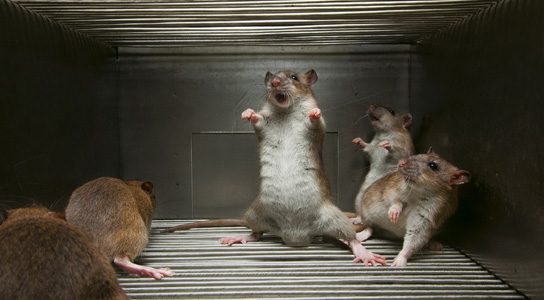
    The Queen Charlotte Islands, invaded by rats three centuries ago, are being restored to their original rat-free state to protect nesting seabirds from predation.

    The Queen Charlotte Islands are a biodiverse archipelago and Parks Canada has been trying to restore the balance in the ecosystem by getting rid of rats, which seem to be the main culprits of hobbling the ecosystem.

    The Queen Charlotte Islands were invaded by rats three centuries ago, and are being restored to their original rat-free state in a bid to save the beleaguered populations of nesting seabirds, whose eggs and chicks are eaten by the rodents.

    The whole archipelago will be free of rats in the next year. If successful, these rat eradications would be the beginning of making 16 islands rat-free.

    In late September 2012, crews on smaller islands tried to establish the minimal amount of bait needed to rid the islands of rats. The trials didn’t use rodenticide, but bait pellets laced with a biomarker named pyranine, which causes rodent urine and feces to glow green under UV light. After spreading a placebo nontoxic bait rates of 11 to 30 kg per hectare, the crew trapped the rats on the island to see whether they had taken the bait. Then they were euthanized.

    Seabird populations are especially affected by rats, and half of all seabird species have declining populations. The Queen Charlotte Islands have more unique subspecies than anywhere else in Canada.

    Rats were probably introduced by English and Spanish ships in the 1700s. With rats gone, the entire island ecosystem and nutrient cycle is expected to be restored since seabirds shift marine nutrients to forest ecosystems via their diet and defecation.

    The rodenticide that will be used might kill other small mammals like deer mice and native shrews, but wildlife surveys have shown that they are not that prevalent, and even absent on some islands or exist at very low densities, probably due to being out-competed or predated by invasive rats.

    This is the first time that rodenticide will be aerially applied in a forested North American ecosystem.

    Never miss a breakthrough: Join the SciTechDaily newsletter.
    Follow us on Google and Google News.

    Canada Ecosystems Environment Invasive Species Rats
    Share. Facebook Twitter Pinterest LinkedIn Email Reddit

    Related Articles

    Decoding Nature’s Puzzles: Scientists Uncover the Secret Behind Namibian Fairy Circles

    Traces of Oil from Deepwater Horizon May Work Their Way up the Food Chain

    Antarctic Ecosystems Threatened by Invasive Alien Species and Climate Change

    Groundwater Susceptible to Radium Contamination

    Russians Celebrate Drilling into Lake Vostok, Biggest Antarctic Subglacial Lake

    Coal-Tar-Based Sealants Emitting PAHs at Rates Possibly Greater Than Auto Emissions

    Burmese Pythons Causing Decline of Mammals in Everglades National Park

    Rats Will Help Other Rats

    Da Vinci’s Last Supper Threatened By Air Pollution

    Leave A Reply Cancel Reply

    • Facebook
    • Twitter
    • Pinterest
    • YouTube

    Don't Miss a Discovery

    Subscribe for the Latest in Science & Tech!

    Trending News

    These Toads Are Surviving a Deadly Fungus – Scientists May Finally Know Why

    These Brain Cells May Explain Why We Eventually Have To Sleep

    Tomatoes Contain an Invisible Ingredient With Surprising Effects on Liver Health

    World’s First Heat-Powered Cooling System Turns Waste Heat Into Cold

    Antarctica Gained a Record 695 Billion Tons of Ice in Just Two Years

    Don’t Miss: A Brilliant Venus and Glowing Harvest Moon Light Up the Sky

    New Twist on the Einstein Problem Reveals Unexpected Physics

    JWST Captures Stunning Evidence of How Supermassive Black Holes Feed

    Follow SciTechDaily
    • Facebook
    • Twitter
    • YouTube
    • Pinterest
    • Newsletter
    • RSS
    SciTech News
    • Biology News
    • Chemistry News
    • Earth News
    • Health News
    • Physics News
    • Science News
    • Space News
    • Technology News
    Recent Posts
    • Scientists Discover a Hidden Defect That Could Explain Why IBD Keeps Coming Back
    • Millions Take Blood Pressure Drugs, but Many May Be Missing Their Heart-Protective Benefits
    • Could Alien Life Be Conscious in Ways We Can’t Imagine?
    • Scientists Develop a Fruit Wash That Removes Pesticide Residues and Keeps Produce Fresh Longer
    • Scientists May Have Finally Explained Why Astronauts Get Constipated in Space
    Copyright © 1998 - 2026 SciTechDaily. All Rights Reserved.
    • Science News
    • About
    • Contact
    • Editorial Board
    • Privacy Policy
    • Terms of Use

    Type above and press Enter to search. Press Esc to cancel.