

Close Menu
    Facebook X (Twitter) Instagram
    SciTechDaily
    • Biology
    • Chemistry
    • Earth
    • Health
    • Physics
    • Science
    • Space
    • Technology
    Facebook X (Twitter) Pinterest YouTube RSS
    SciTechDaily
    Home»Health»Exercise Could Help Reduce Severity of Cachexia (Wasting Syndrome) – A Serious Cancer Complication
    Health

    Exercise Could Help Reduce Severity of Cachexia (Wasting Syndrome) – A Serious Cancer Complication

    By Experimental BiologyApril 3, 2022No Comments4 Mins Read
    Facebook Twitter Pinterest Telegram LinkedIn WhatsApp Email Reddit
    Share
    Facebook Twitter LinkedIn Pinterest Telegram Email Reddit
    Senior Couple Exercise Treadmill
    Exercising before developing cancer was linked to slower tumor growth and reduced the impact of a cancer complication called wasting syndrome, or cachexia.

    Mice that exercised before developing cancer showed slower tumor growth and better heart function.

    A new study has identified yet another benefit of keeping up your exercise routine. In experiments performed with mice, researchers found that exercising prior to developing cancer was associated with slower tumor growth and helped reduce the effects of a cancer complication known as wasting syndrome, or cachexia.

    Cachexia is a metabolic wasting disorder that affects up to 80% of patients with advanced cancer and is associated with about a third of all deaths from cancer. People with cachexia experience severe progressive muscle wasting, a decline in heart structure and function and an overall poorer quality of life.
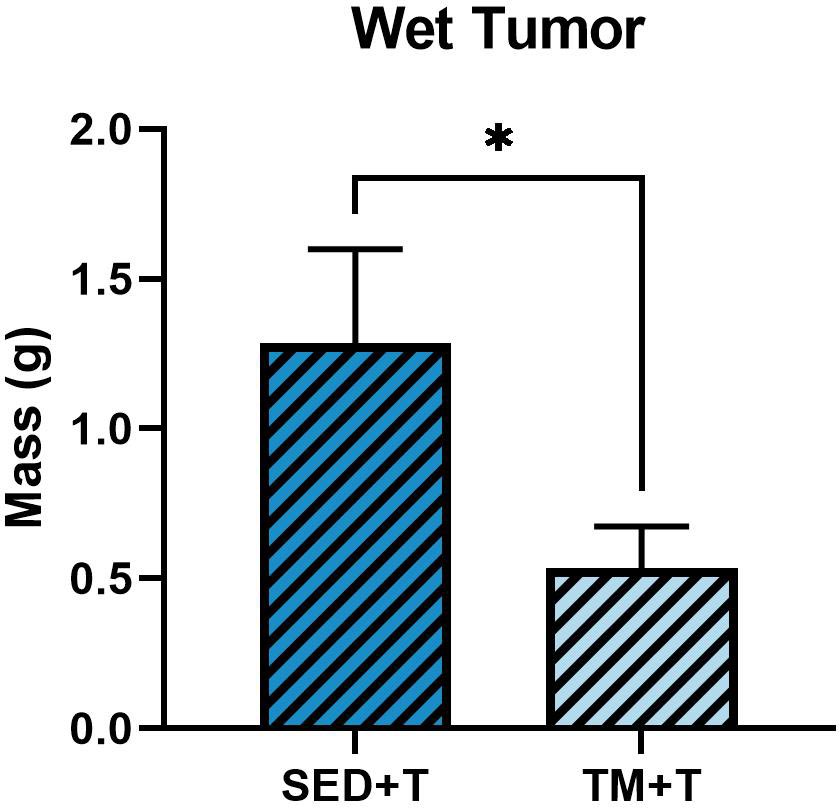
    Tumor Mass Comparison Exercise
    Comparisons of wet tumor masses between sedentary (SED) and treadmill (TM) exercised tumor (+T) bearing mice. Credit: Louisa Tichy, University of North Carolina at Greensboro

    “Most exercise, especially aerobic exercise, is easily accessible and affordable,” said Louisa Tichy, a graduate student in Traci Parry’s lab at the University of North Carolina at Greensboro. “Therefore, engaging in consistent aerobic exercise such as running is a cost-effective way to reduce the risk of cancer and cancer complications.”

    Tichy will present the new research at the American Society for Investigative Pathology annual meeting during the Experimental Biology (EB) 2022 meeting, to be held April 2–5 in Philadelphia.
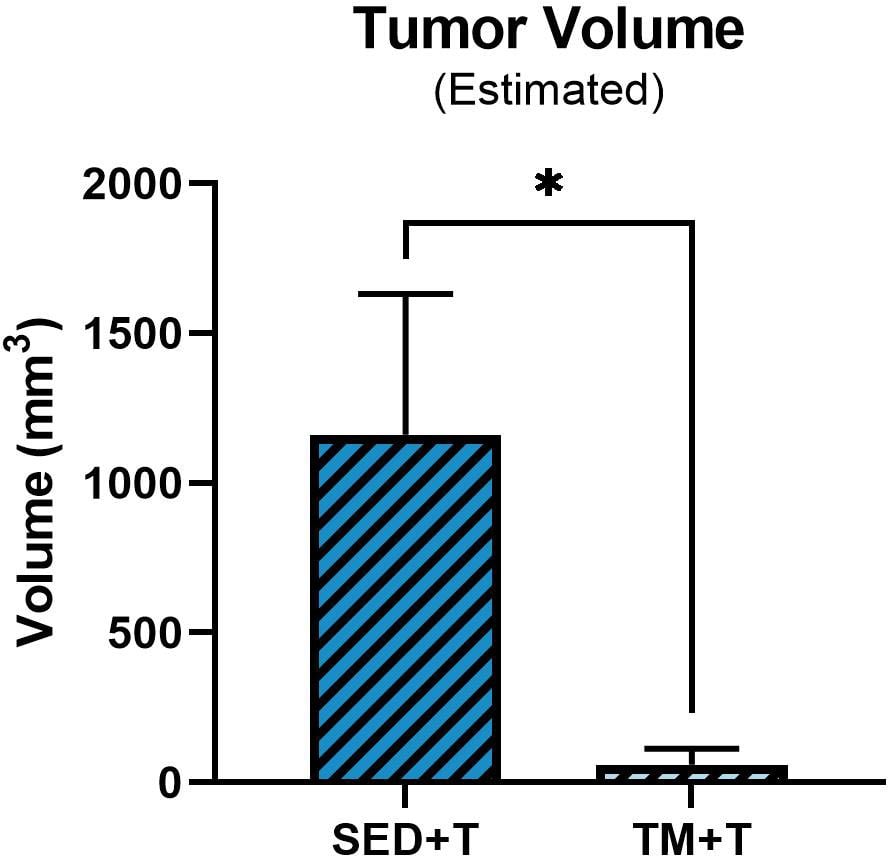
    Tumor Volume Comparison Exercise
    Tumor volume comparison between sedentary (SED) and treadmill (TM) exercised tumor (+T) bearing mice. Credit: Louisa Tichy, University of North Carolina at Greensboro

    Previous research has shown that exercise could have anti-inflammatory effects and might positively impact cancer cachexia by slowing its development and preserving cardiac structure and function. However, very few studies have focused on preconditioning.

    “Our preclinical study indicated that preconditioning — or exercise prior to tumor bearing — appears to play an important cardioprotective role during cancer cachexia by preserving cardiac structure and function,” said Tichy. “It also helped stunt tumor growth, even when animals did not exercise during the tumor-bearing period.”

    For the new study, the researchers studied mice that either exercised on a treadmill for eight weeks or did not perform any exercise. After the eight weeks, the researchers induced cancer in some of the exercised mice and some sedentary mice while keeping some mice from both groups cancer-free to act as controls.
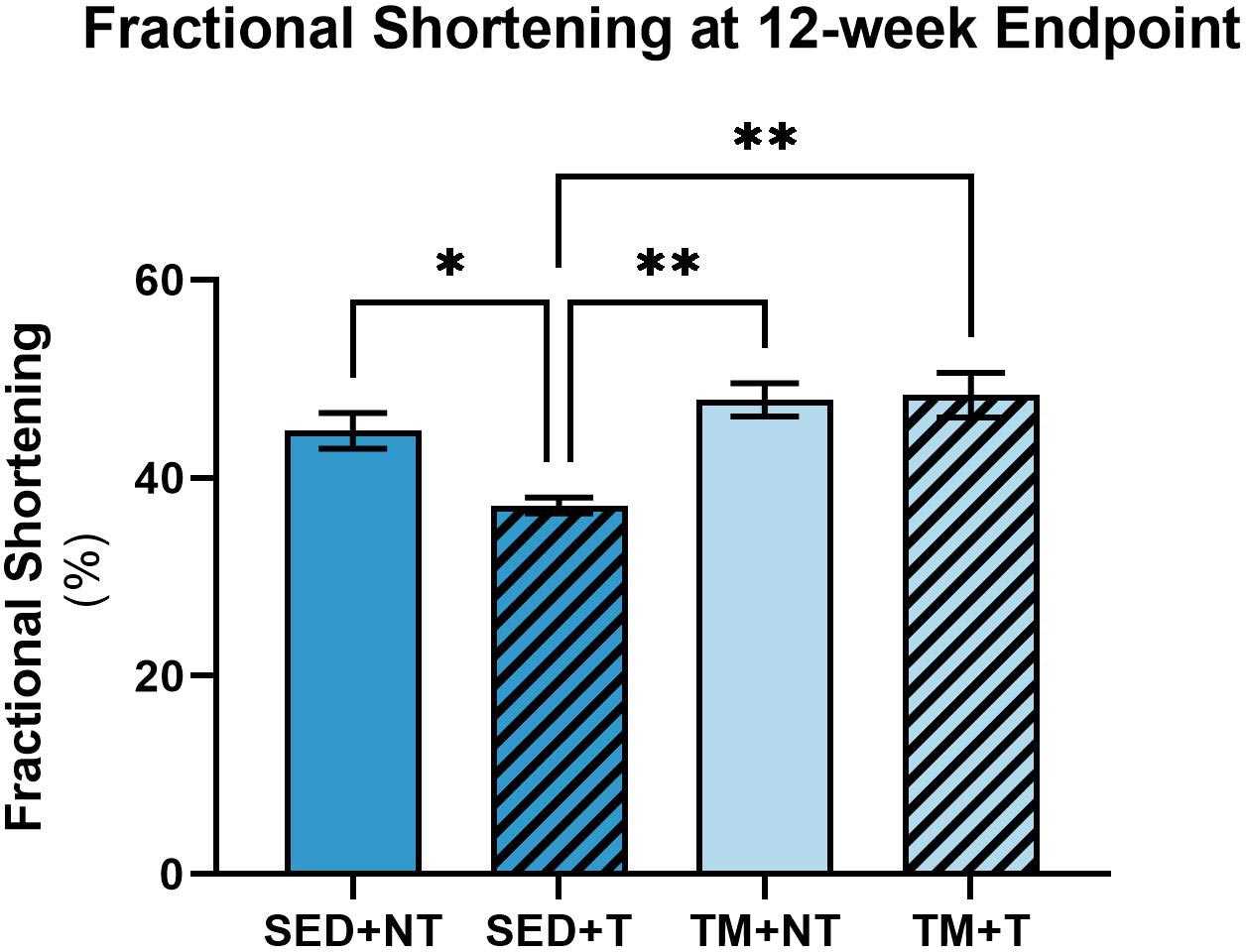
    Cardiac Function Comparison Exercise
    Comparison of fractional shortening as a measure of cardiac function between sedentary (SED) and treadmill (TM) exercised with (+T) or without (+NT) tumors. Credit: Louisa Tichy, University of North Carolina at Greensboro

    The researchers found that mice with cancer and a sedentary lifestyle had poorer heart function — as measured with echocardiography — than the mice that exercised prior to cancer induction. Also, mice in the exercised group had a smaller tumor volume and a 60% smaller tumor mass than mice in the sedentary group.

    “This data is crucial in identifying the significance of exercise and the best timing of exercise as a protective and preventative measure against the detrimental effects of cancer cachexia,” said Tichy.

    The researchers are working to understand the underlying proteins and pathways that are affected by cancer and exercise so that this information can be used to inform exercise interventions. They also point out that creating safe and effective exercise interventions for cancer patients would require evaluating the best intensity, duration and timing of exercise in preclinical models before moving to studies in people.

    Louisa Tichy will present this research will present this research at 6 p.m., Sunday, April 3, in Terrace 2/3, Pennsylvania Convention Center (abstract) and 11:45 a.m.– 12:45 p.m., Monday, April 4, in Exhibit/Poster Hall A-B (Poster Board Number D66) (abstract). Contact the media team for more information or to obtain a free press pass to attend the meeting.

    Meeting: Experimental Biology 2022

    Never miss a breakthrough: Join the SciTechDaily newsletter.
    Follow us on Google and Google News.

    Cancer Exercise Fitness
    Share. Facebook Twitter Pinterest LinkedIn Email Reddit

    Related Articles

    Healthy Lifestyle May Help Mitigate High Genetic Risk of Cancer

    Physical Activity Is Not Always Good for the Heart – Here’s What You Need to Know

    Exercising Before Breakfast Offers “Profound” Health Benefits

    No Matter How Old You Are, Regular Exercise Is Good for Your Heart

    Less Heart Damage From Chemotherapy When Cancer Patients Exercise

    Athletic Training Can Make Your Brain Tired, Not Just Your Body

    New Study Shows, It’s Never Too Late to Start Exercising

    New Study Shows Greater Health Benefits From Exercise Than Previously Believed

    Breakthrough Research May Lead to “Exercise in a Bottle”

    Leave A Reply Cancel Reply

    • Facebook
    • Twitter
    • Pinterest
    • YouTube

    Don't Miss a Discovery

    Subscribe for the Latest in Science & Tech!

    Trending News

    Breakthrough Parkinson’s Drug Targets Disease at Its Genetic Roots

    Just 4 Weeks of Simple Diet Changes Reversed Signs of Aging in Older Adults

    Scientists May Have Finally Solved Why Humans Are Right-Handed

    NASA’s Hubble Accidentally Witnesses a Comet Shattering in Space

    Researchers Discover the Body’s Hidden “Off Switch” for Inflammation

    Scientists Discover Metformin Doesn’t Work the Way We Thought

    Tea or Coffee? Your Daily Choice Could Affect Osteoporosis Risk

    Vitamin C May Fight Cancer in a Surprising Way

    Follow SciTechDaily
    • Facebook
    • Twitter
    • YouTube
    • Pinterest
    • Newsletter
    • RSS
    SciTech News
    • Biology News
    • Chemistry News
    • Earth News
    • Health News
    • Physics News
    • Science News
    • Space News
    • Technology News
    Recent Posts
    • New Research Uncovers Lithium’s Surprising Effect on Alzheimer’s
    • New Anti-Clotting Medication Prevents Strokes Without the Usual Bleeding Risk
    • Simple Fiber Supplement Cuts Knee Arthritis Pain in Just 6 Weeks, Study Finds
    • Scientists Discover the Secret Bacteria Behind Artisan Cheeses – and They May Be Good for Your Health
    • Banned Antibiotic Discovered in Fish Raises Food Safety Concerns
    Copyright © 1998 - 2026 SciTechDaily. All Rights Reserved.
    • Science News
    • About
    • Contact
    • Editorial Board
    • Privacy Policy
    • Terms of Use

    Type above and press Enter to search. Press Esc to cancel.