
Close Menu
    Facebook X (Twitter) Instagram
    SciTechDaily
    • Biology
    • Chemistry
    • Earth
    • Health
    • Physics
    • Science
    • Space
    • Technology
    Facebook X (Twitter) Pinterest YouTube RSS
    SciTechDaily
    Home»Biology»Insights Into the Dynamic Ultrastructure of the Heart – Thanks to New Ultra-High-Resolution Electron Microscopy
    Biology

    Insights Into the Dynamic Ultrastructure of the Heart – Thanks to New Ultra-High-Resolution Electron Microscopy

    By University of FreiburgApril 16, 2022No Comments3 Mins Read
    Facebook Twitter Pinterest Telegram LinkedIn WhatsApp Email Reddit
    Share
    Facebook Twitter LinkedIn Pinterest Telegram Email Reddit
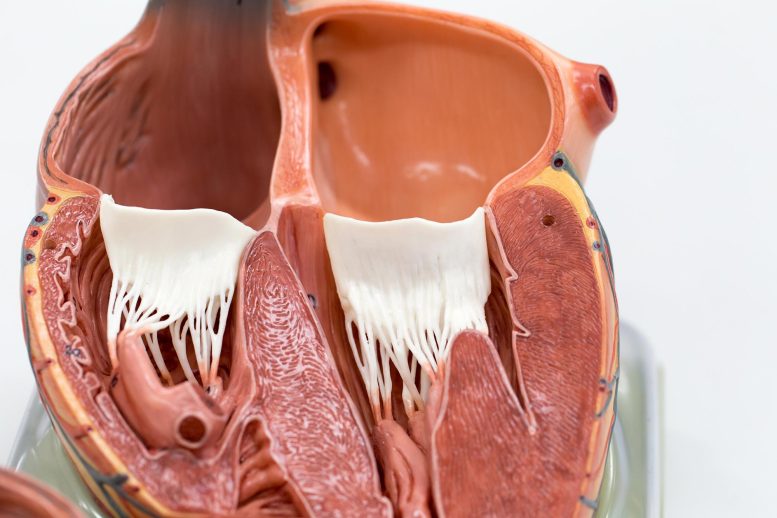
    Heart Structure Detail
    Advanced microscopic techniques give researchers a clear view of the heart’s dynamic ultrastructure.

    New microscopy techniques allow scientists to see the heart’s molecular structures in action, with AI aiding in analysis for future therapeutic developments.

    What happens below the cellular level when the heart contracts and relaxes has long been unexplored. Thanks to new ultra-high-resolution electron microscopy techniques, scientists can now watch the heart beating – almost at a molecular level. Researchers at the Medical Faculty of the University of Freiburg summarise the most important developments in cardiac electron microscopy and their significance for research in a recent publication, published in Nature Reviews Cardiology. Insight at the nanometer scale is of great importance for the development of new therapies, for example for heart attacks or cardiac arrhythmias.

    “With the high-resolution microscopy techniques developed by us and others worldwide, we gain fascinating insights into the dynamic ultrastructure of the heart,” says the study’s lead author Dr. Eva Rog-Zielinska. She heads the 4D Imaging Section at the Institute of Experimental Cardiovascular Medicine (IEKM) of the University Heart Centre at the University Medical Centre Freiburg. “We can use this insight to analyze the three-dimensional structure of heart cells with unprecedented precision. Our images are made up of cubes – so-called voxels – with an edge length of one nanometer or less. For illustration: one nanometer is the distance a fingernail grows in one second,” Rog-Zielinska explains.
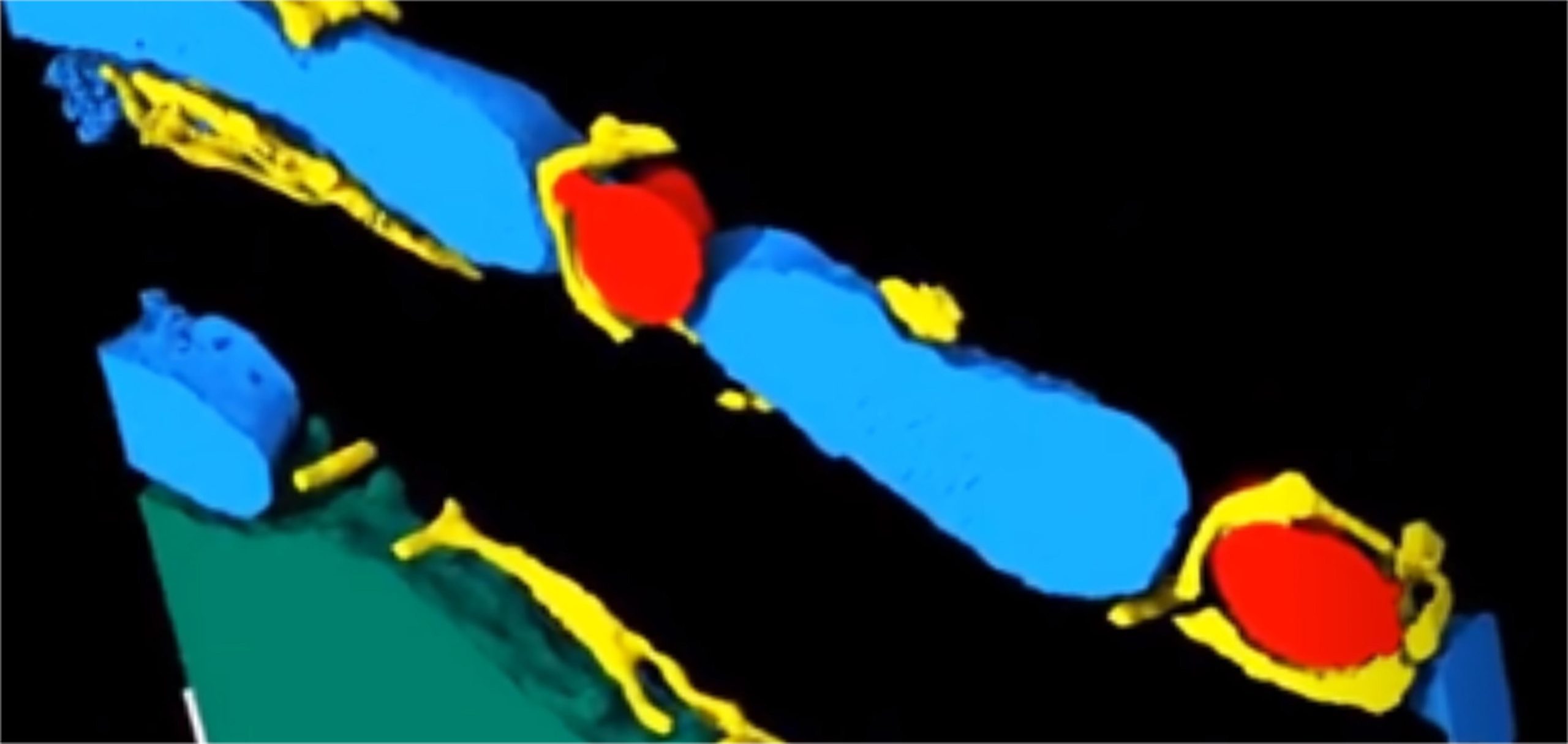
    Heart Dynamic Ultrastructure
    Based on electron tomography data, intracellular organelles of a cardiomyocyte can be imaged and reconstructed in 3D with nanometer precision. Credit: Medical Center – University of Freiburg

    Watching the heart beat in super slow motion

    A challenge is to link ultra-high resolution mapping of the heart to a moving target. “Thanks to recent advances in imaging, we now have a much better understanding of how muscle and connective tissue cells behave in the beating heart,” says co-author Prof Peter Kohl, Director of the IEKM, who is also the spokesperson of the German Collaborative Research Centre 1425 dedicated to exploring cardiac scarring.

    Electron microscopy itself, but crucially also newly developed methods for the preparation and post-processing of corresponding samples, play a central role in the generation of molecular insight. “It is particularly exciting that we can record muscle cells like individual frames in a film – thanks to millisecond-precise high-pressure freezing. This allows us to watch the heart‘s molecular structures beating in super slow motion, as it were,” says Kohl.

    Experiments, Simulations and Artificial Intelligence Intertwine

    The microscopic images are evaluated at IEKM with the help of artificial intelligence, assisted by computer simulations to depict heart function and pathological changes as realistically as possible. “Newly gained insight allows us to gain a completely new understanding of cardiac activity and, based on this, to develop new therapeutic concepts. We are looking forward to a very exciting time in heart research,” says Kohl.

    Reference: “Electron microscopy of cardiac 3D nanodynamics: form, function, future” by Peter Kohl, Joachim Greiner and Eva A. Rog-Zielinska, 8 April 2022, Nature Reviews Cardiology.
    DOI: 10.1038/s41569-022-00677-x

    Never miss a breakthrough: Join the SciTechDaily newsletter.
    Follow us on Google and Google News.

    Artificial Intelligence Cardiology Cell Biology Electron Microscopy Heart University of Freiburg
    Share. Facebook Twitter Pinterest LinkedIn Email Reddit

    Related Articles

    The Sex of Your Cells Matters When It Comes to Heart Disease

    Heart Clocks: Scientists Uncover a Circadian Rhythm in Heart Cells That Affects Their Daily Function

    Heart Recovery After Heart Attack Mapped in Great Detail

    Detailed Cellular Map of the Human Heart Created – Could Guide Personalized Cardiac Treatments

    Scientists Demonstrate How Auxin Reaches Its Destination

    Researchers Compile First Atlas of the Healthy Human Heart

    New Yale Studies Explore the Science of Cardiovascular Diseases

    Protein Makes Old Hearts Younger, Reverses Some Effects of Aging

    Human Cardiac Cells Derived From Stem Cells Could Repair Damaged Hearts

    Leave A Reply Cancel Reply

    • Facebook
    • Twitter
    • Pinterest
    • YouTube

    Don't Miss a Discovery

    Subscribe for the Latest in Science & Tech!

    Trending News

    A Woman Who Lived 30,000 Years Ago Is Changing What We Know About Ice Age Europe

    A Rare Radioactive Element Reveals a Hidden Secret About the Heaviest Atoms

    Breakthrough Cancer Treatment Wipes Out Deadly Brain Tumors in Every Mouse Tested

    Something Remarkable Is Happening to Dogs Living Near Chernobyl’s Nuclear Plant

    Hubble Uncovers a Mysterious 93-Billion-Mile Structure Hiding in a Nearby Star System

    Earth’s Oceans Were Slowly Suffocating Millions of Years Before a Devastating Mass Extinction

    Why Are Men Twice As Likely To Develop Parkinson’s? Scientists Discover a Hidden Clue in the Brain

    Scientists Finally Identify Mysterious Creature Nearly 90 Years After It Was First Found

    Follow SciTechDaily
    • Facebook
    • Twitter
    • YouTube
    • Pinterest
    • Newsletter
    • RSS
    SciTech News
    • Biology News
    • Chemistry News
    • Earth News
    • Health News
    • Physics News
    • Science News
    • Space News
    • Technology News
    Recent Posts
    • A New Era of Bionic Vision? AI Helps Scientists Unlock the Brain’s Visual Cortex
    • Scientists Spent 7 Years Studying Moth Wings and Discovered Something Unexpected
    • Scientists Discover Crows Make Decisions Twice As Fast as Humans
    • A Tiny, Jelly-Like Implant Could Change How We Treat High Blood Pressure
    • Less Sugar in Early Life Could Protect Your Mental Health Decades Later
    Copyright © 1998 - 2026 SciTechDaily. All Rights Reserved.
    • Science News
    • About
    • Contact
    • Editorial Board
    • Privacy Policy
    • Terms of Use

    Type above and press Enter to search. Press Esc to cancel.