
Yale University scientists detail how basic science research insights are key to future breakthroughs in cardiovascular disease.
Professor of cardiology Martin A. Schwartz led two recently published studies that advance knowledge of the underlying biology of cardiovascular diseases, which are among the most common causes of chronic illness and death worldwide.
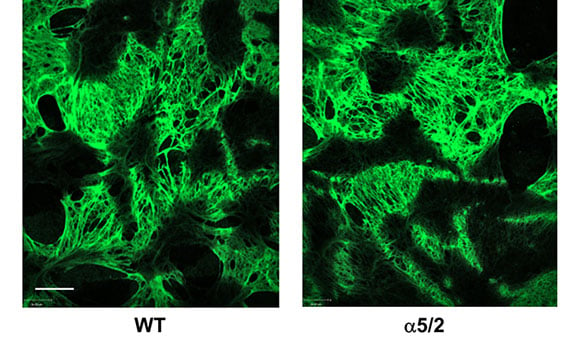
The first study, published in Nature Cell Biology, examined the process that leads to the formation of the atherosclerotic plaques that clog arteries and cause heart attacks and strokes. Atherosclerosis research and therapies have focused mainly on lipids and inflammation as causing disease. Schwartz and colleagues instead asked whether it might be considered as a form of “remodeling,” in which the cells reorganize the structure of the tissue. In the study, the Yale-led research team focused on the link between remodeling of the extracellular matrix — the fibrous tissue around the cells — and inflammation. They found that in mice, altering the signals from the receptors that bind the extracellular matrix reduced inflammation and atherosclerosis. By revealing how matrix remodeling controls inflammation, the work identifies a possible new target for atherosclerosis.
The second study was a collaboration with the lab of Anne Eichmann, also in cardiology. The Eichmann lab studies a condition called hereditary hemorrhagic telangiectasia (HHT) in which blood vessels are malformed, leading to bleeding in the skin, nose, and other organs. HHT is due to mutations in two cell receptors for proteins in the blood called BMPs. This research team found that how these receptors signal strongly depends on both the BMPs and the force from flowing blood. HHT patient blood vessels are poorly formed because they do not respond properly to blood flow. The results deepen our general understanding of how blood vessel structure is regulated, and point to potential therapeutic targets for HHT and other common vascular diseases, they said.
References:
“Interaction between integrin α5 and PDE4D regulates endothelial inflammatory signalling” by Sanguk Yun, Madhusudhan Budatha, James E. Dahlman, Brian G. Coon, Ryan T. Cameron, Robert Langer, Daniel G. Anderson, George Baillie and Martin A. Schwartz, 5 September 2016, Nature Cell Biology.
DOI: 10.1038/ncb3405
“Defective fluid shear stress mechanotransduction mediates hereditary hemorrhagic telangiectasia” by Nicolas Baeyens, Bruno Larrivée, Roxana Ola, Brielle Hayward-Piatkowskyi, Alexandre Dubrac, Billy Huang, Tyler D. Ross, Brian G. Coon, Elizabeth Min, Maya Tsarfati, Haibin Tong, Anne Eichmann and Martin A. Schwartz, 19 September 2016, Cell Biology.
DOI: 10.1083/jcb.201603106
Never miss a breakthrough: Join the SciTechDaily newsletter.
Follow us on Google and Google News.
1 Comment
Blood vessels are also living tissues which are themselves fed by another tiny capillaries for their growth. We should consider this as a separate organ in our body whose shape and structures are decided by a set of genes in the DNA. We know the two methods to manipulate these blood vessels to overcome blood pressure. First we have ARB`s which are Angiotensin II Receptors Blockers and the other as ACE inhibitors which are Angiotensin I converting enzymes inhibitors which are generally called vasodilators. In addition to that Nature has given C-Peptides to produce Nitrous oxide to dilate the narrow capillaries and allow free blood flow. We have been so far been concentrating on formation of the atherosclerotic plaques that clog arteries and cause heart attacks and strokes. Now is the time to study the morphology of this vital organ called blood vessels and try to mend their malformation and malfunction in a different way to treat heart attacks. I am always holding the view that fatal heart attack comes not from the previous blood clots which does harm partially but always by a fresh clot coming minutes before the attack and doing the deluge. That is why most of the fatal heart attacks are sudden and unmanageable by repeated behaviour of the blood vessel to leak and cause damage instantly. Thank You.