
Close Menu
    Facebook X (Twitter) Instagram
    SciTechDaily
    • Biology
    • Chemistry
    • Earth
    • Health
    • Physics
    • Science
    • Space
    • Technology
    Facebook X (Twitter) Pinterest YouTube RSS
    SciTechDaily
    Home»Technology»Surprising Bacterial Nanowire Discovery May Lead to Living and Self-Repairing Electrical Circuits
    Technology

    Surprising Bacterial Nanowire Discovery May Lead to Living and Self-Repairing Electrical Circuits

    By Yale UniversityMay 11, 20221 Comment2 Mins Read
    Facebook Twitter Pinterest Telegram LinkedIn WhatsApp Email Reddit
    Share
    Facebook Twitter LinkedIn Pinterest Telegram Email Reddit
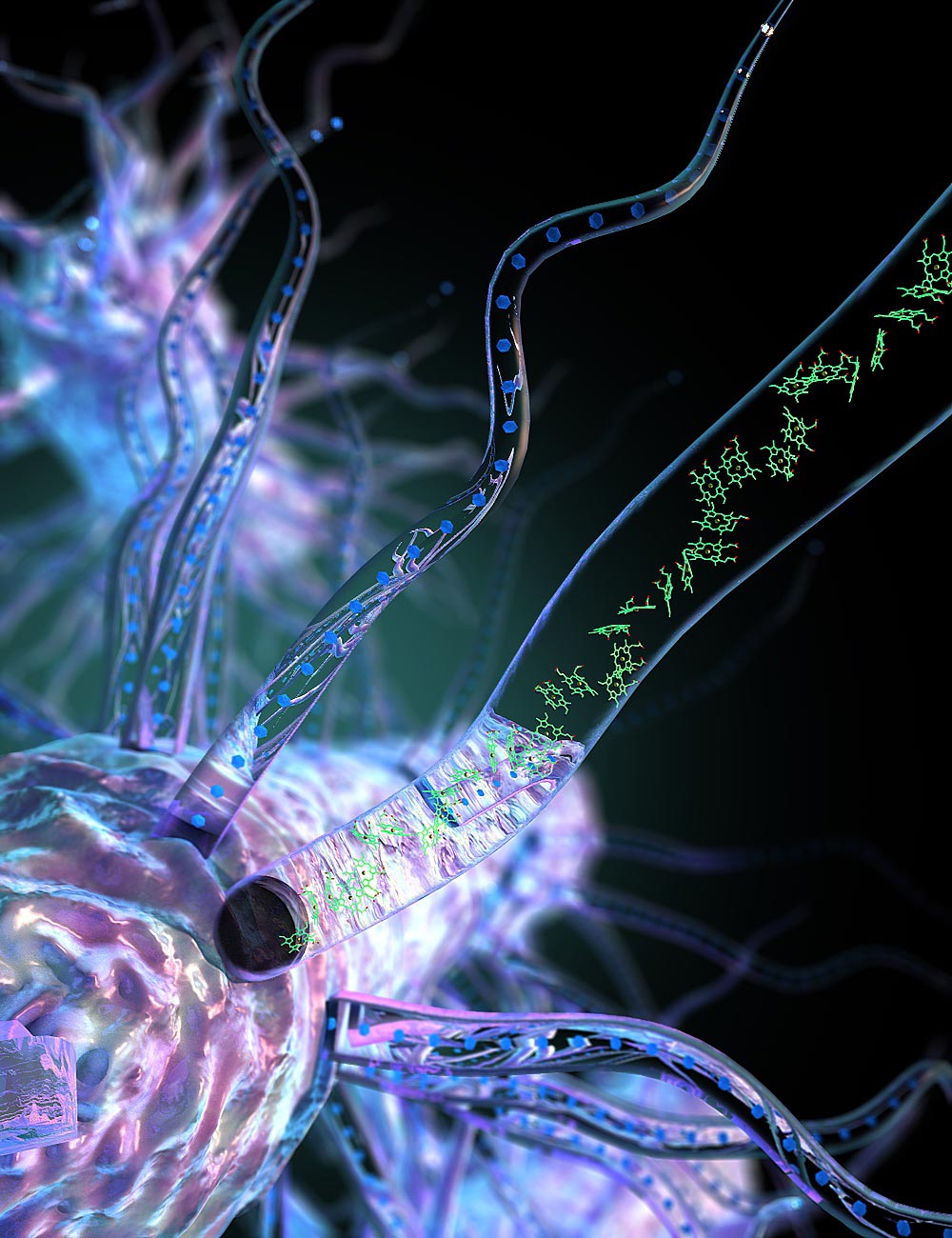
    Bacteria Producing Cytochrome OmcS Nanowires
    Bacteria producing nanowires made up of cytochrome OmcS. Credit: Ella Maru Studio

    Cooling Speeds Up Electrons in Bacterial Nanowires

    The ground beneath our feet and under the ocean floor is an electrically-charged grid created by bacteria “exhaling” excess electrons through tiny nanowires in an oxygen-depleted environment. By identifying the mechanism of electron flow, Yale University researchers have been studying ways to improve this natural electrical conductivity within nanowires 1/100,000th the width of a human hair.

    In a new study published today (May 11, 2022) in Science Advances, a team led by graduate student Peter Dahl with Nikhil Malvankar, Assistant Professor of Molecular Biophysics and Biochemistry in the Microbial Sciences Institute, and Victor Batista, Professor of Chemistry, found that nanowires move 10 billion electrons per second without any energy loss. This research explains the remarkable capacity of these bacteria to send electrons over long distances.

    The researchers also found that cooling the environment around the nanowires of the bacteria Geobacter from room temperature to freezing increases conductivity 300-fold. This is very surprising because cooling typically freezes electrons and slows them down in organic materials. By combining experiments with theory, the researchers found that colder temperatures restructure hydrogen bonds and flatten heme proteins within nanowires, thus enhancing the flow of electricity.

    Leveraging this naturally occurring electrical grid might one day lead to the development of living and self-repairing electrical circuits, new sources of electricity, and bioremediation strategies.  

    Reference: “300-fold conductivity increase in microbial cytochrome nanowires due to temperature-induced restructuring of hydrogen bonding networks” by Peter J. Dahl, Sophia M. Yi, Yangqi Gu, Atanu Acharya, Catharine Shipps, Jens Neu, J. Patrick O’Brien, Uriel N. Morzan, Subhajyoti Chaudhuri, Matthew J. Guberman-Pfeffer, Dennis Vu, Sibel Ebru Yalcin, Victor S. Batista and Nikhil S. Malvankar, 11 May 2022, Science Advances.
    DOI: 10.1126/sciadv.abm7193

    Other authors include Sophia Yi, Yangqi Gu, Catharine Shipps, Jens Neu, Patrick O’Brien, Dennis Vu and Sibel Ebru Yalcin from the Malvankar Lab, and Atanu Acharya, Uriel Morzan, and Subhajyoti Chaudhuri from the Batista Lab.

    Never miss a breakthrough: Join the SciTechDaily newsletter.
    Follow us on Google and Google News.

    Biotechnology Nanowires Popular Yale University
    Share. Facebook Twitter Pinterest LinkedIn Email Reddit

    Related Articles

    New Study Solves Longstanding Nanowire Mystery

    Research Shows Advanced Biofuels Can Be Produced Extremely Efficiently

    Yale Engineers Create a New Kind of Metallic Glass

    TrueNorth Computer Chip Emulates Human Cognition

    New Bioprinting Technique Shows Potential for Tissue Repair and Regenerative Medicine

    Genomically Recoded Organisms Ensure GMOs Can Be Safely Confined in the Environment

    Yale Physicists Observe Quantum Information While Preserving Its Integrity

    Double-Walled Silicon Nanotube Battery Shows Promise

    Nanoscale Biological Coating Instantly Stops Bleeding

    1 Comment

    1. Frosted Flake on May 14, 2022 5:12 pm

      Has anyone asked the bacteria? We’ve all seen the Star Trek episode. We have all been through this before. It’s not a mystery. We don’t have to figure it out.

      Reply
    Leave A Reply Cancel Reply

    • Facebook
    • Twitter
    • Pinterest
    • YouTube

    Don't Miss a Discovery

    Subscribe for the Latest in Science & Tech!

    Trending News

    Scientists Warn That This Common Pet Fish Can Wreck Entire Ecosystems

    Scientists Make Breakthrough in Turning Plastic Trash Into Clean Fuel Using Sunlight

    This Popular Supplement May Interfere With Cancer Treatment, Scientists Warn

    Scientists Finally Solved One of Water’s Biggest Mysteries

    Could This New Weight-Loss Pill Disrupt the Entire Market? Here’s What You Should Know About Orforglipron

    Earth’s Crust Is Tearing Open in Africa, and It Could Form a New Ocean

    Breakthrough Bowel Cancer Trial Leaves Patients Cancer-Free for Nearly 3 Years

    Natural Compound Shows Powerful Potential Against Rheumatoid Arthritis

    Follow SciTechDaily
    • Facebook
    • Twitter
    • YouTube
    • Pinterest
    • Newsletter
    • RSS
    SciTech News
    • Biology News
    • Chemistry News
    • Earth News
    • Health News
    • Physics News
    • Science News
    • Space News
    • Technology News
    Recent Posts
    • Ancient Roman Ship Coating Reveals Secrets Hidden for 2,200 Years
    • Enormous Prehistoric Insects Puzzle Scientists
    • College Student Identifies Bizarre New Carnivorous Dinosaur Three Times Older Than T. rex
    • The Most Effective Knee Arthritis Treatments Aren’t What You Expect
    • Scientists Develop Bioengineered Chewing Gum That Could Help Fight Oral Cancer
    Copyright © 1998 - 2026 SciTechDaily. All Rights Reserved.
    • Science News
    • About
    • Contact
    • Editorial Board
    • Privacy Policy
    • Terms of Use

    Type above and press Enter to search. Press Esc to cancel.