
Close Menu
    Facebook X (Twitter) Instagram
    SciTechDaily
    • Biology
    • Chemistry
    • Earth
    • Health
    • Physics
    • Science
    • Space
    • Technology
    Facebook X (Twitter) Pinterest YouTube RSS
    SciTechDaily
    Home»Space»Hubble Spots a “Small” Sombrero – Just 80,000 Light Years Across
    Space

    Hubble Spots a “Small” Sombrero – Just 80,000 Light Years Across

    By NASAMay 14, 2022No Comments2 Mins Read
    Facebook Twitter Pinterest Telegram LinkedIn WhatsApp Email Reddit
    Share
    Facebook Twitter LinkedIn Pinterest Telegram Email Reddit
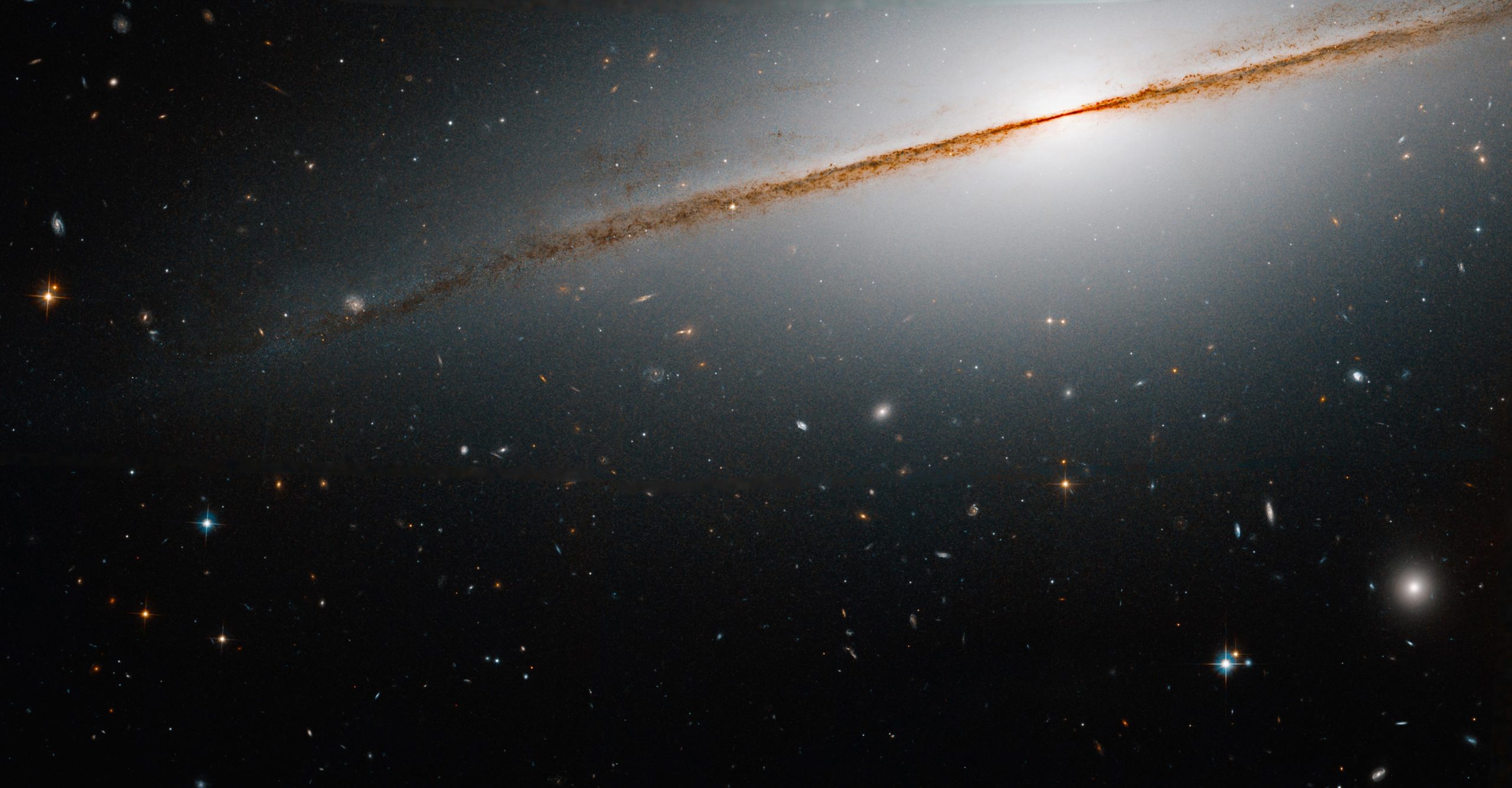
    Little Sombrero Galaxy NGC 7814 Caldwell 43
    Hubble Space Telescope image of galaxy NGC 7814, known as the “Little Sombrero.” Credit: NASA, ESA, and R. de Jong (Leibniz-Institut fur Astrophysik Potsdam); Image processing: G. Kober (NASA Goddard/Catholic University of America)

    NASA’s Hubble Space Telescope has allowed astronomers to view galaxies of all shapes and sizes from nearly every angle. When a galaxy is seen edge-on, the mesmerizing perspective reveals a dazzling slice of the universe. The “Little Sombrero,” also known as NGC 7814 or Caldwell 43, is one such galaxy.

    Set against a speckled backdrop of more remote galaxies, the Little Sombrero features a bright central bulge, a thin disk full of dust, and a glowing halo of gas and stars that sprawls out into space. It is located roughly 40 million light-years from Earth, stretches 80,000 light-years wide, and is billions of years old.
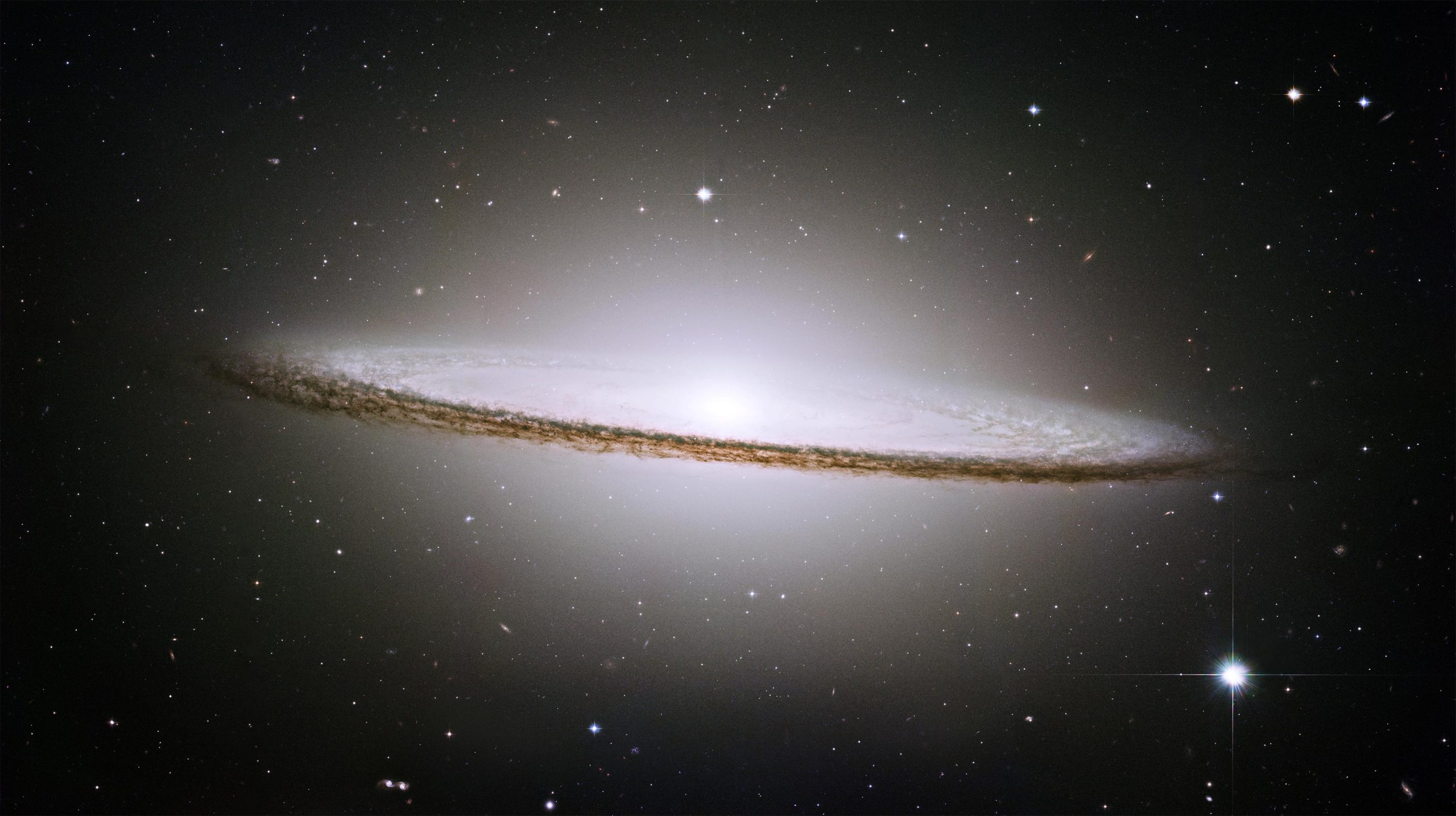
    Majestic Sombrero Galaxy (M104)
    NASA’s Hubble Space Telescope has trained its razor-sharp eye on one of the universe’s most stately and photogenic galaxies, the Sombrero galaxy, Messier 104 (M104). The galaxy’s hallmark is a brilliant white, bulbous core encircled by the thick dust lanes comprising the spiral structure of the galaxy. As seen from Earth, the galaxy is tilted nearly edge-on. We view it from just six degrees north of its equatorial plane. This brilliant galaxy was named the Sombrero because of its resemblance to the broad rim and high-topped Mexican hat. Credit: NASA and The Hubble Heritage Team (STScI/AURA)

    The dusty spiral is named after the grander-appearing Sombrero galaxy (image above), which resembles a broad-brimmed Mexican hat. Also viewed from its edge, the Sombrero galaxy is located just 28 million light-years away and looks larger than the Little Sombrero. In reality, they are nearly the same size, but the Sombrero appears bigger because it is closer.

    This image of the Little Sombrero is a combination of visible and infrared observations captured by Hubble’s Advanced Camera for Surveys in 2006. The observations were taken to assist astronomers in studying the galaxy’s stellar populations, and to help shed light on the evolution of this galaxy and others like it.

    Never miss a breakthrough: Join the SciTechDaily newsletter.
    Follow us on Google and Google News.

    Astronomy Hubble Space Telescope NASA
    Share. Facebook Twitter Pinterest LinkedIn Email Reddit

    Related Articles

    Hubble Reveals a Star Disk Three Times Hotter Than the Sun’s Surface

    A Star’s Unexpected Heatwave: FU Orionis Challenges Astrophysics Models

    NASA’s Hubble Reveals How the LMC Defied Galactic Destruction

    Legendary Star’s Smooth Disk Mystifies Astronomers, Challenges Planet Formation Theories

    Cosmic Horror Unveiled: NASA Reveals “Blood-Soaked Eyes” Staring From Deep Space [Video]

    Spanning 248 Billion Miles: Stunning Hubble Timelapse Captures a Star’s Violent Eruptions

    Jupiter’s Great Red Spot Enigma: Unexplained Oscillations Baffle Astronomers

    Unlocking Uranus: NASA’s Dual Observations Pave the Way to Discovering New Worlds

    Astronomers Baffled by Black Hole Jets Igniting Star Explosions

    Leave A Reply Cancel Reply

    • Facebook
    • Twitter
    • Pinterest
    • YouTube

    Don't Miss a Discovery

    Subscribe for the Latest in Science & Tech!

    Trending News

    Giant Plasma Waves May Be Stripping Away Mars’ Atmosphere

    Scientists Thought SuperAgers Had Lucky Genes. They Were Wrong

    Astronomers Find Ancient Black Holes Shining With the Power of a Trillion Suns

    Researchers Solve Mystery Behind Contradictory Weight-Loss Drug Paradox

    Long-Lost Megalodon Fossils Found Hiding on a Museum Shelf

    Experimental Eye Drops Restore Sight in Blind Mice

    Scientists Discover the Brain May Enter a New Biological Phase Between 50 and 75

    New Research Reveals Autistic Brains Process Faces Differently

    Follow SciTechDaily
    • Facebook
    • Twitter
    • YouTube
    • Pinterest
    • Newsletter
    • RSS
    SciTech News
    • Biology News
    • Chemistry News
    • Earth News
    • Health News
    • Physics News
    • Science News
    • Space News
    • Technology News
    Recent Posts
    • Lost in Space: Rare Cosmic Flare Exposes a Wandering Black Hole Far From Its Galaxy’s Center
    • Dark Matter May Be Leaving a Signal in Earth’s Atmosphere
    • Scientists Find Remarkable New Snail Species in Montenegro’s Mountains
    • Scientists Discover a 300-Million-Year-Old Geological Time Capsule Inside Fossilized Wood
    • Why Are Wasps Disappearing This Summer?
    Copyright © 1998 - 2026 SciTechDaily. All Rights Reserved.
    • Science News
    • About
    • Contact
    • Editorial Board
    • Privacy Policy
    • Terms of Use

    Type above and press Enter to search. Press Esc to cancel.