

Close Menu
    Facebook X (Twitter) Instagram
    SciTechDaily
    • Biology
    • Chemistry
    • Earth
    • Health
    • Physics
    • Science
    • Space
    • Technology
    Facebook X (Twitter) Pinterest YouTube RSS
    SciTechDaily
    Home»Technology»On the Edge: New Magnetic Phenomenon Discovered With Industrial Potential
    Technology

    On the Edge: New Magnetic Phenomenon Discovered With Industrial Potential

    By The Hebrew University of JerusalemMay 15, 2022No Comments3 Mins Read
    Facebook Twitter Pinterest Telegram LinkedIn WhatsApp Email Reddit
    Share
    Facebook Twitter LinkedIn Pinterest Telegram Email Reddit
    Edge Magnetism Discovered in CrGeTe3
    Illustration of edge magnetism discovered in CrGeTe3 using nanoscale magnetic microscopy. Credit: Ori Lerman

    Working with the tiniest magnets, Hebrew University discovers a new magnetic phenomenon with industrial potential.

    For physicists, exploring the realm of the very, very small is a wonderland. Totally new and unexpected phenomena are discovered in the nanoscale, where materials as thin as 100 atoms are explored. Here, nature ceases to behave in a way that is predictable by the macroscopic law of physics, unlike what goes on in the world around us or out in the cosmos.

    Dr. Yonathan Anahory at Hebrew University of Jerusalem (HU)’s Racah Institute of Physics led the team of researchers, which included HU doctoral student Avia Noah. He spoke of his astonishment when looking at images of the magnetism generated by nano-magnets, “it was the first time we saw a magnet behaving this way,” as he described the images that revealed the phenomenon of “edge magnetism.”

    Nano Magnets: Magnetism at the Edge

    The images showed that the magnetic material the HU researchers were studying only retained magnetism on its edge—in fact only within 10 nanometers of the edge (remember a human hair is around 100,000 nanometers). Their results were recently published in the prestigious journal Nano Letters.
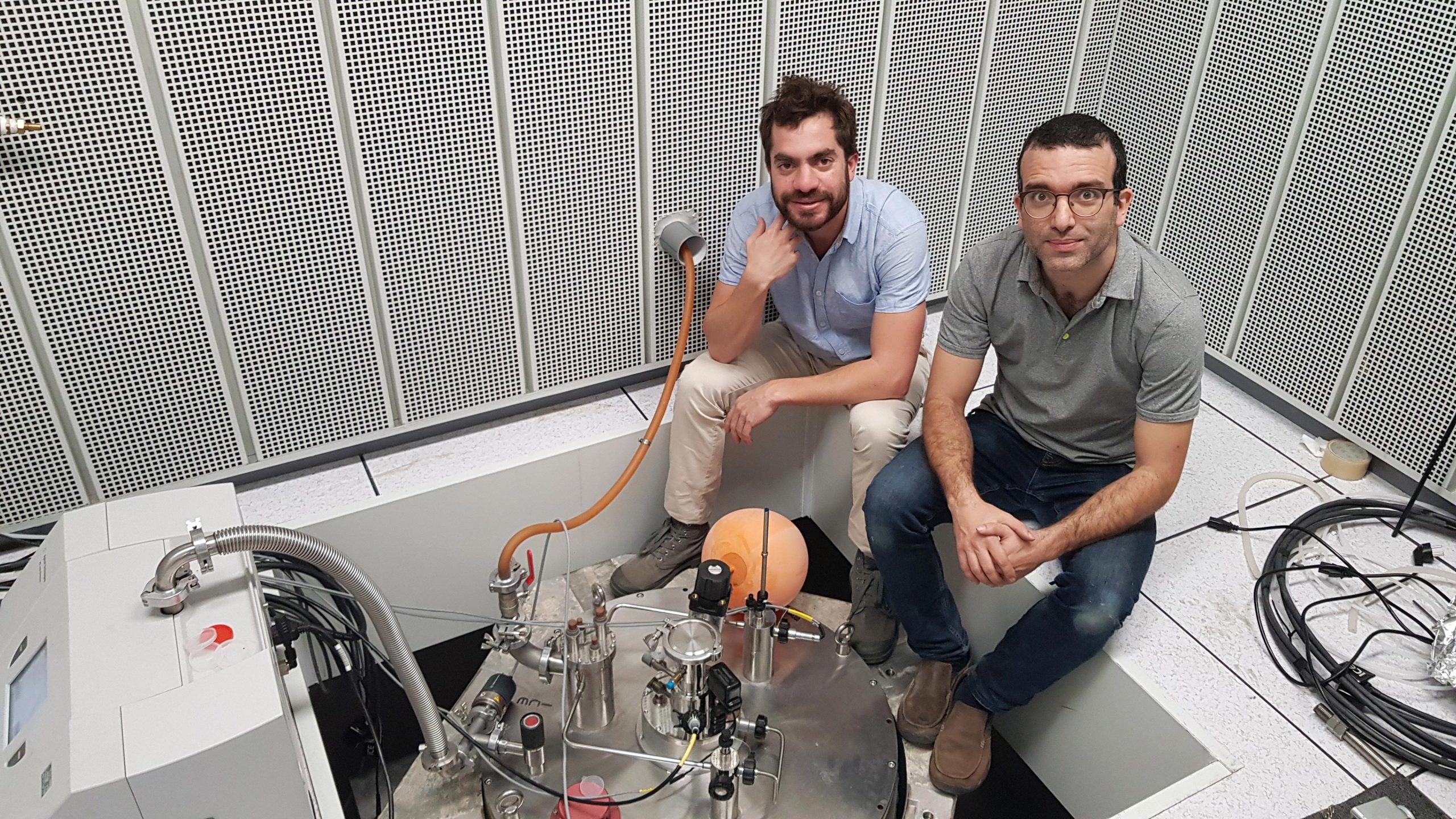
    Avia Noah and Yonathan Anahory
    Left to right: HU’s Avia Noah and Yonathan Anahory. Credit: Hebrew University

    This nano-effect, although very small, could actually have wide applications in our daily lives. “In today’s technological race to make every component smaller and more energy efficient, effort is focused towards small magnets with different shapes,” Anahory shared. The new edge magnetism offers the possibility of making long wire magnets only 10 nanometers thick, which could curve into any shape. “It could revolutionize the way we make spintronics devices,” added Anahory, referring to the next-generation nano-electronic devices with reduced power consumption and increased memory and processing capabilities

    Serendipity and Advanced Imaging Techniques

    The actual discovery of edge magnetism was somewhat serendipitous: Anahory decided to have a look at a new magnetic nano-material (CGT) produced by his colleague at the Universidad Autónoma de Madrid, in Spain. The discovery ultimately relied on images produced by a new type of magnetic microscopy developed in Israel, which can measure the magnetic field of a single electron. Discovering new phenomena relies on highly sophisticated new technologies. Further, the phenomena themselves will be at the heart of even more advanced technologies as edge magnetism has demonstrated.

    Reference: “Interior and Edge Magnetization in Thin Exfoliated CrGeTe3 Films” by Avia Noah, Hen Alpern, Sourabh Singh, Alon Gutfreund, Gilad Zisman, Tomer D. Feld, Atzmon Vakahi, Sergei Remennik, Yossi Paltiel, Martin Emile Huber, Victor Barrena, Hermann Suderow, Hadar Steinberg, Oded Millo and Yonathan Anahory, 10 March 2022, Nano Letters.
    DOI: 10.1021/acs.nanolett.1c04665

    Never miss a breakthrough: Join the SciTechDaily newsletter.
    Follow us on Google and Google News.

    Magnetic Fields Magnets Nanomaterials Nanotechnology Popular The Hebrew University of Jerusalem
    Share. Facebook Twitter Pinterest LinkedIn Email Reddit

    Related Articles

    “Wonder Material” Graphene Verified Safe in Groundbreaking Human Study

    Revolutionary 3D Printing Technology a “Game Changer” for Discovering and Manufacturing New Materials

    Caltech Engineers Have Developed an Unusually Tough New Material

    Nanotech Scientists Created Something Unexpected: Tiny Metallic Snowflakes

    Pivotal Discovery of Nanomaterial for LEDs: New Low-Cost, Energy-Efficient Light Source

    Tougher Than Kevlar and Steel: Ultralight Material Withstands Supersonic Microparticle Impacts

    Harvesting Light Like Nature Does: Synthesizing a New Class of Bio-Inspired, Light-Capturing Nanomaterials

    New MIT Research Suggests Coal Could Be Used to Make a Variety of Useful Devices

    Stanford’s Self-Healing Plastic Skin Could Lead to Improved Prosthetics

    Leave A Reply Cancel Reply

    • Facebook
    • Twitter
    • Pinterest
    • YouTube

    Don't Miss a Discovery

    Subscribe for the Latest in Science & Tech!

    Trending News

    Breakthrough Bowel Cancer Trial Leaves Patients Cancer-Free for Nearly 3 Years

    Natural Compound Shows Powerful Potential Against Rheumatoid Arthritis

    100,000-Year-Old Neanderthal Fossils in Poland Reveal Unexpected Genetic Connections

    Simple “Gut Reset” May Prevent Weight Gain After Ozempic or Wegovy

    2.8 Days to Disaster: Scientists Warn Low Earth Orbit Could Suddenly Collapse

    Common Food Compound Shows Surprising Power Against Superbugs

    5 Simple Ways To Remember More and Forget Less

    The Atomic Gap That Could Cost the Semiconductor Industry Billions

    Follow SciTechDaily
    • Facebook
    • Twitter
    • YouTube
    • Pinterest
    • Newsletter
    • RSS
    SciTech News
    • Biology News
    • Chemistry News
    • Earth News
    • Health News
    • Physics News
    • Science News
    • Space News
    • Technology News
    Recent Posts
    • This Common Plant Could Be an Unexpected New Source of Protein
    • Birds in Cities Fear Women More Than Men and Scientists Don’t Know Why
    • Scientists Warn That This Common Pet Fish Can Wreck Entire Ecosystems
    • Scientists Just Made Carbon Capture Much Cheaper and Easier
    • Harvard Breakthrough Brings Powerful UV Light Sources Onto a Chip
    Copyright © 1998 - 2026 SciTechDaily. All Rights Reserved.
    • Science News
    • About
    • Contact
    • Editorial Board
    • Privacy Policy
    • Terms of Use

    Type above and press Enter to search. Press Esc to cancel.