
Close Menu
    Facebook X (Twitter) Instagram
    SciTechDaily
    • Biology
    • Chemistry
    • Earth
    • Health
    • Physics
    • Science
    • Space
    • Technology
    Facebook X (Twitter) Pinterest YouTube RSS
    SciTechDaily
    Home»Biology»Using Urine to Make Brain Cells
    Biology

    Using Urine to Make Brain Cells

    By SciTechDailyDecember 10, 2012No Comments2 Mins Read
    Facebook Twitter Pinterest Telegram LinkedIn WhatsApp Email Reddit
    Share
    Facebook Twitter LinkedIn Pinterest Telegram Email Reddit
    brain-cells-induced-pluripotency
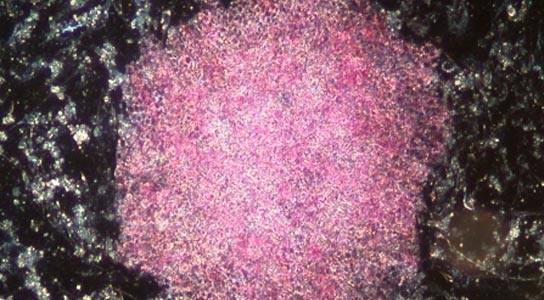
    iPS cells stained for alkaline phosphatase. Credit: University at Buffalo

    Urine could be used as a powerful source of brain cells to study some diseases, and could even be used one day in therapies to study neurodegenerative diseases. Scientists have found a way to persuade the cells discarded in urine to turn into useful neurons.

    The scientists published their findings in the journal Nature Methods. The technique doesn’t involve embryonic stem cells, which come with drawbacks when transplanted, such as the risk of developing tumors. This new method uses ordinary cells present in urine and transforms them into neural progenitor cells, which are the precursors of brain cells. These cells could help produce tailored cells for individuals more quickly than other current methods.

    Scientists often reprogram cultured skin and blood cells into induced pluripotent stem cells (iPS), which can form any cell in the body. However, urine is a much more accessible source.

    Previously, retroviruses were used to insert pluripotency genes into cells. This alters the genetic makeup of cells and can make them less predictable. Instead, in this study, the genes were introduced using vectors that didn’t integrate them into the cellular genome.

    This produced reprogrammed cells resembling iPS cells after only 12 days, half the time needed to produce iPS cells with current techniques. When cultured further, the colonies took the rosette shape common to neural stem cells. The reprogrammed cells were able to work as functional neurons in the lab. The cells were transplanted into newborn rat brains, and didn’t form any tumors. Four weeks after implantation, the cells had taken on the shape and molecular markers of neurons.

    Reference: “Generation of integration-free neural progenitor cells from cells in human urine” by Lihui Wang, Linli Wang, Wenhao Huang, Huanxing Su, Yanting Xue, Zhenghui Su, Baojian Liao, Haitao Wang, Xichen Bao, Dajiang Qin, Jufang He, Wutian Wu, Kwok Fai So, Guangjin Pan and Duanqing Pei, 1 January 2013, Nature Methods.
    DOI: 10.1038/nmeth.2283

    Never miss a breakthrough: Join the SciTechDaily newsletter.
    Follow us on Google and Google News.

    Cells Neurology Neuroscience Popular Stem Cells
    Share. Facebook Twitter Pinterest LinkedIn Email Reddit

    Related Articles

    Scientists Use Modified Version Rabies to Trace Neural Pathways in the Brain

    PAPupuncture Offers Long-Lasting Pain Relief

    Reactivation of the Hippocampus Causes Memory Recall

    DRD2 May Protect Brain Regions from Alcohol-Induced Brain Damage

    Researchers Develop Gene Therapy, Promotes Remyelination in a Mouse Model of MS

    Researchers Use FDDNP–PET Scanning to Predict Cognitive Decline

    Scientists Create Brain Cells from Skin Cells

    Neuroscientists Decode Correlation Between Sound and Brain Activity

    Scientists Create Stem-Cell-Derived Neurons from Alzheimer’s Disease

    Leave A Reply Cancel Reply

    • Facebook
    • Twitter
    • Pinterest
    • YouTube

    Don't Miss a Discovery

    Subscribe for the Latest in Science & Tech!

    Trending News

    The Strange “Spacetime Crystal” That Can Suddenly Turn Into a Black Hole

    The Surprising Way Asteroids May Have Helped Life Begin on Earth

    Vast Hidden Structure Discovered Under Miles of Ice in East Antarctica

    A Surprising Discovery Suggests Autism Is Not One Condition

    New Alzheimer’s Discovery Could Change How Scientists Fight the Disease

    Yale Discovery Overturns Long-Held “Evolutionary Dead End” Theory

    UCLA Scientists Uncover a “Hidden Weakness” in Some of the World’s Deadliest Cancers

    Humpback Whale Stuns Scientists With 15,000 Kilometer Journey Across Oceans

    Follow SciTechDaily
    • Facebook
    • Twitter
    • YouTube
    • Pinterest
    • Newsletter
    • RSS
    SciTech News
    • Biology News
    • Chemistry News
    • Earth News
    • Health News
    • Physics News
    • Science News
    • Space News
    • Technology News
    Recent Posts
    • Scientists Discover a Biological Clock Unlike Anything Seen Before
    • This “Zombie” Sea Creature Keeps Growing After Being Cut Apart
    • The Brain May Not Need Full Sleep To Recover, New Research Finds
    • Scientists Reveal the Hidden Way Caffeine Sabotages Sleep
    • Your Gut Microbes May Decide How Many Calories You Really Absorb
    Copyright © 1998 - 2026 SciTechDaily. All Rights Reserved.
    • Science News
    • About
    • Contact
    • Editorial Board
    • Privacy Policy
    • Terms of Use

    Type above and press Enter to search. Press Esc to cancel.