
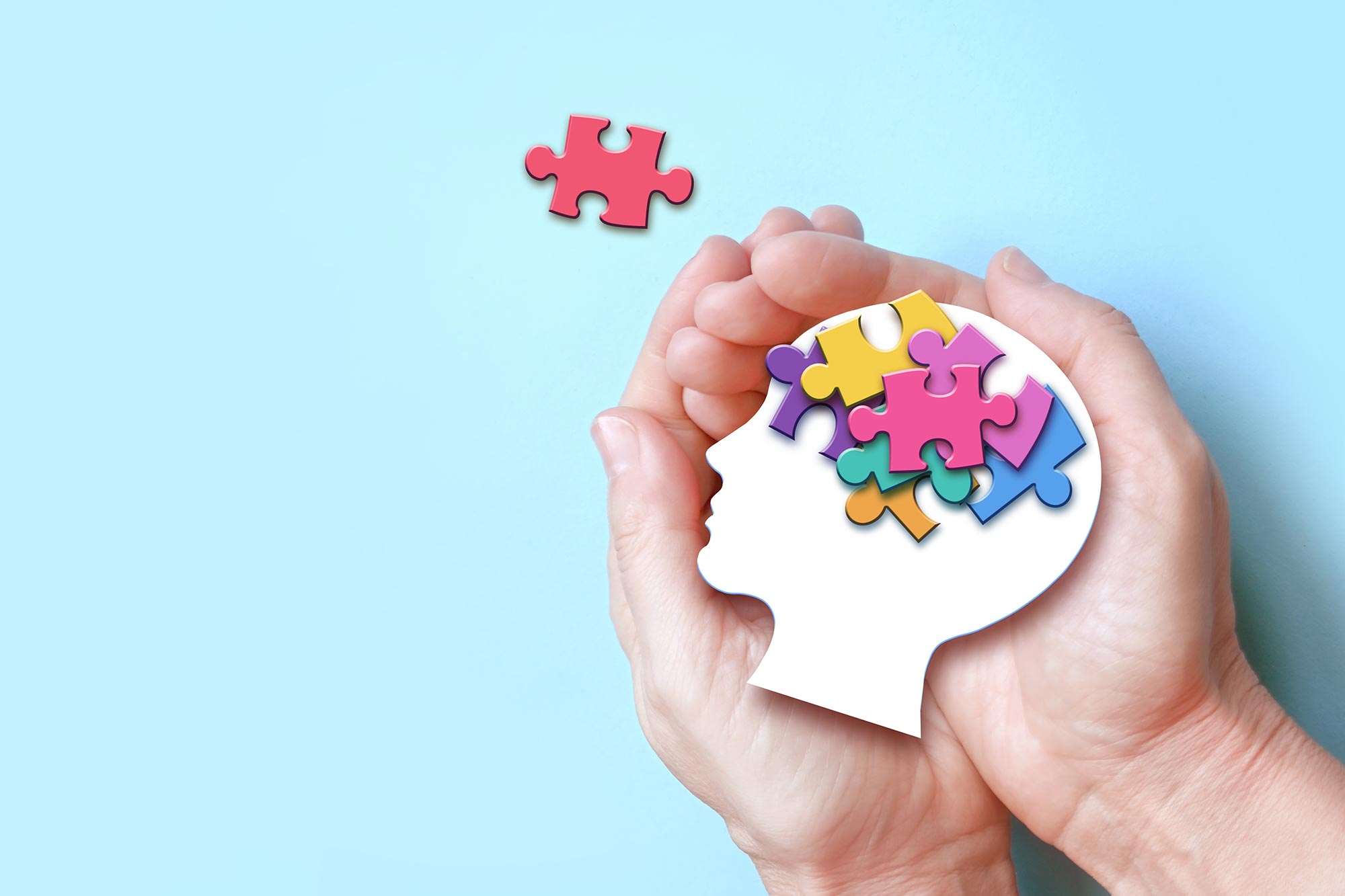
By analyzing three different types of brain scans, researchers uncovered new clues about the biological processes linked to autism. The results point to the dopamine system as a potentially important part of autism biology.
Autism is associated with differences across several systems in the brain, but understanding how those differences connect has been difficult. Researchers from the University of Southern Denmark and Odense University Hospital investigated that question in 60 adults using three forms of brain imaging.
For the first time, the researchers combined three advanced brain scanning techniques to examine the dopamine system, energy use, and communication among brain regions within the same study.
The results provide a more detailed view of biological mechanisms associated with autism. Autistic participants had more dopamine D2 receptors than neurotypical participants, suggesting that the dopamine system may be an important part of autism biology.
Three scans reveal a dopamine difference
Earlier autism research has largely examined communication among different parts of the brain, while fewer studies have focused on neurotransmitters or the way the brain uses energy.
Neurotransmitters are chemical messengers that help regulate communication throughout the brain. Examining whether these signals differ is therefore important for understanding why communication between certain brain regions may vary between autistic and neurotypical people.
By studying these processes together, the researchers could identify relationships that had not previously been described.
“Our study is the first to investigate the neurotransmitter dopamine, the brain’s energy use (glucose metabolism) and communication between brain regions in the same study. This gives us a more nuanced understanding of the neurobiological mechanisms associated with autism,” says Laust Vind Knudsen, postdoc at the Research Unit for Psychiatry, Odense University Hospital and the University of Southern Denmark.
Knudsen is the study’s first author. The researchers found, among other results, that certain deep brain regions in autistic participants showed both greater energy use and more dopamine receptors than those same regions in neurotypical participants.
The research was conducted as part of Knudsen’s PhD project at the University of Southern Denmark and Odense University Hospital. Professor Tanja Maria Sheldrick Michel served as research leader and principal supervisor, while Professor Manouchehr Seyedi Vafaee was co-supervisor.
Dopamine differences tracked brain energy use
Dopamine is a neurotransmitter that some nerve cells use to communicate with one another. It contributes to functions including motivation, learning, and movement.
Among the autistic participants, a greater number of dopamine receptors was associated with higher energy use in the same areas of the brain.
The researchers also found that the relationship between the dopamine system and communication among brain regions differed between autistic and neurotypical participants.
“Our findings suggest that the dopamine system not only differs between autistic and neurotypical people. They also indicate that the dopamine system affects communication between brain regions differently in the two groups. This suggests that the dopamine system may play a more fundamental role in autism than previously thought,” says Laust Vind Knudsen.
The results raise autism ADHD questions
The researchers emphasize that the findings do not explain why autism develops and cannot be used to diagnose it. Instead, the study provides new information about biological variation and mechanisms associated with autism, including how neurotransmitters, energy use, and communication among brain regions may interact.
The findings are also relevant to questions about ADHD because many autistic people are also diagnosed with ADHD, and dopamine plays an important role in that condition.
This raises the possibility that some dopamine-related biological mechanisms could be shared between autism and ADHD, potentially helping researchers investigate why ADHD occurs so frequently among autistic people.
“Brain research can help us understand autism better, not in order to change autistic people, but to create greater understanding of neurodiversity and better conditions in society. Our findings also raise new questions about why autism and ADHD so often occur together, which we would like to investigate further,” says Laust Vind Knudsen.
Larger studies still need confirmation
The study involved 60 adults and is the first positron emission tomography (PET) study specifically designed to also investigate possible differences between autistic men and women.
The researchers caution that larger studies are still needed to determine whether the results can be confirmed and reproduced in other groups of autistic people.
Reference: “Subcortical dopamine D2 receptor availability and glucose metabolism in autism: a dual-tracer PET/MR study” by Laust Vind Knudsen, Manouchehr Seyedi Vafaee, Ziba Ahangarani Farahani, Abigail Jane Sheldrick-Michel and Tanja Maria Michel, 6 July 2026, European Journal of Nuclear Medicine and Molecular Imaging.
DOI: 10.1007/s00259-026-08053-4
Funding: The Psychiatry Research Fund, Region of Southern Denmark.
Never miss a breakthrough: Join the SciTechDaily newsletter.
Follow us on Google and Google News.
4 Comments
Wonder how many of these conditions and genetic abnormalities are from the thousands of poisons in our air water and food.
This is where research should be immediately and regulations against these products like they do in Europe so we’re not Lab rats.
Air water food…and supplements & medications, furniture, clothing, hygiene products, cleaning products, lawn & garden products, carpets and rugs, any new product that off-gasses, anything with a perfume or fragrance, printed paper products, cookware & bakeware & dishware & storage containers, etc. etc. etc. The modern world is insane. And that’s not even getting into all the forms of radiation around us that are inescapable like all the EMFs in and around our homes and workplaces, all the radio frequencies constantly bombarding us from cell phones and satellites and cell towers, the wi fi signals and the blue tooth, etc. etc. We’re all guinea pigs for those, as well.
Are these SciTechDaily writers paid by the word? These articles are extremely repetitive. They say the same thing over and over just phrased differently each time. This entire article could have been condensed down to two or three paragraphs and it would not have lost any details or information. It would save the readers a lot of time, though.
my theories regarding autism adhd add , etc is all to do with the poisons in this world starting from, the industrial revolution. the first case of autism was 1911, the industrial revolution happened before. so my theory is all the toxic waste from factories was dumped, buried etc, and even more damning is all the waste we buried in landfills, cars thrown down ravines, and set alight, body shops spraying cars. and military technologies like the f117 nighthawk,the stealth coating that was made and tested was burned at area 51 and furthermore a security guard developed a terminal lung disease from the particles from what they were burning.