
Scientists from Harvard University and the Max-Planck Institute unravel a neural circuit that could play an important role in autism.
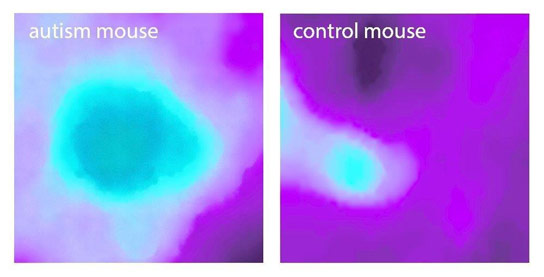
The insular cortex is an integral “hub”, combining sensory, emotional, and cognitive content. Not surprisingly, alterations in insular structure and function have been reported in many psychiatric disorders, such as anxiety disorders, depression, addiction, and autism spectrum disorders (ASD). Scientists from Harvard University and the Max-Planck Institute of Neurobiology in Martinsried now describe consistent alterations in integrative processing of the insular cortex across autism mouse models of diverse etiologies. In particular, the delicate balance between excitation and inhibition in the autistic brains was disturbed, but could be pharmacologically re-adjusted. The results could help the development of novel diagnostic and therapeutic strategies.
Autism is a neurodevelopmental disorder characterized by impaired social interaction, verbal and non-verbal communication, and by restricted and repetitive behaviors. Diagnosis is solely based on behavioral analysis as biological markers and neurological underpinnings remain unknown. This makes the development of novel therapeutic strategies extremely difficult.
As the cellular basis of autism spectrum disorders cannot be addressed in human patients, scientists have developed a number of mouse models for the disease. Similar to humans, mice are social animals and communicate through species-specific vocalizations. The mouse models harbor all diagnostic hallmark criteria of autism, such as repetitive, stereotypic behaviors and deficits in social interactions and communication.
Nadine Gogolla and her colleagues in the laboratory of Takao Hensch at Harvard University have now searched for common neural circuit alterations in mouse models of autism. They concentrated on the insular cortex, a brain structure that contributes to social, emotional, and cognitive functions. ‘We wanted to know whether we can detect differences in the way the insular cortex processes information in healthy or autism-like mice’, says Nadine Gogolla, who was recently appointed Leader of a Research Group at the Max Planck Institute of Neurobiology.
As the researchers now report, the insular cortex of healthy mice integrates stimuli from different sensory modalities and reacts more strongly when two different stimuli are presented concomitantly (e.g. a sound and a touch). ‘We recognize a rose more easily when we smell and see it rather than when we just see or smell it’ says Nadine Gogolla. This capacity of combining sensory stimuli was consistently affected in all autism models the researchers looked at. Interestingly, often one sense alone elicited such a strong response that adding a second modality did not add further information. This is very reminiscent of the sensory hyper-responsiveness experienced by many autistic patients. The scientist further discovered that the insular cortex of adult autism-model mice resembled the activation patterns observed in very young control mice. ‘It seemed as if the insular cortex of the autism-models did not mature properly after birth’, says Gogolla.
For proper brain function, excitation and inhibition have to be in equilibrium. In the now identified part of the insular cortex, the scientists found that this equilibrium was disturbed. In one of the mouse models, inhibitory contacts between nerve cells were strongly reduced.
To test the influence of this reduction on sensory processing, the researchers gave mice the drug Diazepam, which is also known under the trade name Valium, to boost inhibitory transmission in the brain. Indeed, this treatment transiently rescued the capacity of the insular cortex to combine stimuli of different sensory modalities. The balance between excitation and inhibition in the brain is established after birth. The scientists thus treated young animals over several days with Diazepam. This treatment was efficient in reestablishing the insular cortex capacity for sensory integration permanently, even in adult mice that did not receive any further treatment. Interestingly, also the stereotypic grooming of the animals was significantly reduced.
All autism models investigated showed alterations in inhibitory molecules. However, the alterations were very diverse. While in some models certain molecules were reduced, the opposite was true in another model. These results suggest that the disequilibrium between excitation and inhibition may be an important factor in the neuropathology of autism. However, future therapies will need to be carefully tailored to each particular subgroup of autism. For instance, an artificial boost of inhibition through a drug like Diazepam in healthy mice can throw the delicate equilibrium off and create changes in the insular cortex similar to those seen in the autism models. Whether a therapeutic strategy aimed on keeping the brain’s equilibrium between excitation and inhibition could be useful and if so, how to test the individuals’ status of the excitation/inhibition balance and how to implement individually tailored treatments, would need to be established through further studies and pre-clinical tests.
Reference: “Sensory Integration in Mouse Insular Cortex Reflects GABA Circuit Maturation” by Nadine Gogolla, Anne E. Takesian, Guoping Feng, Michela Fagiolini and Takao K. Hensch, 31 July 2014, Neuron.
DOI: 10.1016/j.neuron.2014.06.033
Never miss a breakthrough: Join the SciTechDaily newsletter.
Follow us on Google and Google News.