
Close Menu
    Facebook X (Twitter) Instagram
    SciTechDaily
    • Biology
    • Chemistry
    • Earth
    • Health
    • Physics
    • Science
    • Space
    • Technology
    Facebook X (Twitter) Pinterest YouTube RSS
    SciTechDaily
    Home»Technology»Correlator Supercomputer Designed to Run ALMA Radio Telescope Array
    Technology

    Correlator Supercomputer Designed to Run ALMA Radio Telescope Array

    By SciTechDailyJanuary 5, 20131 Comment2 Mins Read
    Facebook Twitter Pinterest Telegram LinkedIn WhatsApp Email Reddit
    Share
    Facebook Twitter LinkedIn Pinterest Telegram Email Reddit
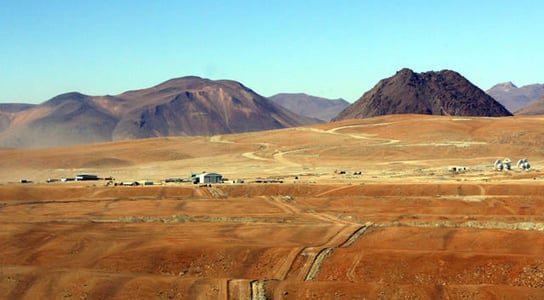
    Chile's Chajnantor plateau, some 5 kilometers above sea level, is the home of a new supercomputer specially designed to run the ALMA radio telescope array (dishes at lower right). Credit: ALMA (ESO/NAOJ/NRAO), Carlos Padilla
    Chile’s Chajnantor plateau, some 5 kilometers above sea level, is the home of a new supercomputer specially designed to run the ALMA radio telescope array (dishes at lower right). Credit: ALMA (ESO/NAOJ/NRAO), Carlos Padilla

    The Atacama Large Millimeter/Submillimeter Array (ALMA) Correlator, a large supercomputer that was built in Chile to help radio astronomers, will be able to perform 17 quadrillion operations per second. It took 48 months to install it, 5,000 meters (16,500 feet) above sea level.

    The Correlator supercomputer was designed to run one of the world’s most complex ground telescopes. The supercomputer will combine space signals from deep space captured by the radio telescope’s dozens of antennas. ALMA is expected to be completed in March 2013, and is already operating on a limited basis. It will use an array composed of 66 antennas to gather electromagnetic signals from deep space. In order to produce useful images and information, astronomers needed a supercomputer to process the signals and make the array function as a single telescope. This supercomputer was built to handle signals from 2016 possible antenna pair combinations, and creating it was no easy task. The thin atmosphere makes it harder to cool components, and data storage drives don’t work reliably.

    Correlator engineers optimized the design and placement of the resistors, capacitors, and other components to reduce energy use and ease cooling. Data from the Correlator is transmitted down to an ALMA support facility located at 2,900 meters (9,500 feet), where it is stored on special disks.

    The Correlator was assembled in four stages, starting in 2008. The machine is too specific for ALMA’s needs to become a model for supercomputing, but some of the designs of the computer’s components could be of interest to engineers designing new general-purpose supercomputers.

    Never miss a breakthrough: Join the SciTechDaily newsletter.
    Follow us on Google and Google News.

    ALMA Chile Radio Astronomy Supercomputer Supercomputing
    Share. Facebook Twitter Pinterest LinkedIn Email Reddit

    Related Articles

    Frontier Supercomputer Surges to 1.35 Exaflops, To Tackle the “Biggest Science Problems on the Planet”

    Inside NASA’s High-Tech World: How Supercomputing Is Unlocking the Universe

    Science Simplified: What Is Supercomputing?

    Behind the Scenes at NASA: Supercomputers Empower NASA Mission Success

    Quantum Internet Breakthrough – Bell State Analyzer Presents Giant Leap Toward Fully Quantum Internet

    MIT Develops New Programming Language for High-Performance Computers

    Science Made Simple: What Is Exascale Computing?

    Innovative Chip Resolves Quantum Headache – Paves Road to Supercomputer of the Future

    Titan, Possibly the World’s Most Powerful Supercomputer

    1 Comment

    1. Richard E. Burnette on January 5, 2013 9:23 am

      Great, thanks!!!

      Reply
    Leave A Reply Cancel Reply

    • Facebook
    • Twitter
    • Pinterest
    • YouTube

    Don't Miss a Discovery

    Subscribe for the Latest in Science & Tech!

    Trending News

    Breakthrough Bowel Cancer Trial Leaves Patients Cancer-Free for Nearly 3 Years

    Natural Compound Shows Powerful Potential Against Rheumatoid Arthritis

    100,000-Year-Old Neanderthal Fossils in Poland Reveal Unexpected Genetic Connections

    Simple “Gut Reset” May Prevent Weight Gain After Ozempic or Wegovy

    2.8 Days to Disaster: Scientists Warn Low Earth Orbit Could Suddenly Collapse

    Common Food Compound Shows Surprising Power Against Superbugs

    5 Simple Ways To Remember More and Forget Less

    The Atomic Gap That Could Cost the Semiconductor Industry Billions

    Follow SciTechDaily
    • Facebook
    • Twitter
    • YouTube
    • Pinterest
    • Newsletter
    • RSS
    SciTech News
    • Biology News
    • Chemistry News
    • Earth News
    • Health News
    • Physics News
    • Science News
    • Space News
    • Technology News
    Recent Posts
    • Powerful Antioxidant Found To Play a Key Role in Proper Protein Folding
    • MIT Laser Breakthrough Lets Scientists Watch Drugs Enter the Brain in Real Time
    • Study Reveals Malaria’s Hidden Role in Human Evolution
    • Scientists Print Artificial Neurons That Can Talk to the Brain
    • Bowel and Ovarian Cancers Are Dramatically Rising in Young Adults and Scientists Aren’t Sure Why
    Copyright © 1998 - 2026 SciTechDaily. All Rights Reserved.
    • Science News
    • About
    • Contact
    • Editorial Board
    • Privacy Policy
    • Terms of Use

    Type above and press Enter to search. Press Esc to cancel.