
Close Menu
    Facebook X (Twitter) Instagram
    SciTechDaily
    • Biology
    • Chemistry
    • Earth
    • Health
    • Physics
    • Science
    • Space
    • Technology
    Facebook X (Twitter) Pinterest YouTube RSS
    SciTechDaily
    Home»Biology»Discovering Inflammation’s Achilles Heel: The Breakthrough That Could Change Medicine
    Biology

    Discovering Inflammation’s Achilles Heel: The Breakthrough That Could Change Medicine

    By Kyoto UniversityApril 5, 2023No Comments3 Mins Read
    Facebook Twitter Pinterest Telegram LinkedIn WhatsApp Email Reddit
    Share
    Facebook Twitter LinkedIn Pinterest Telegram Email Reddit
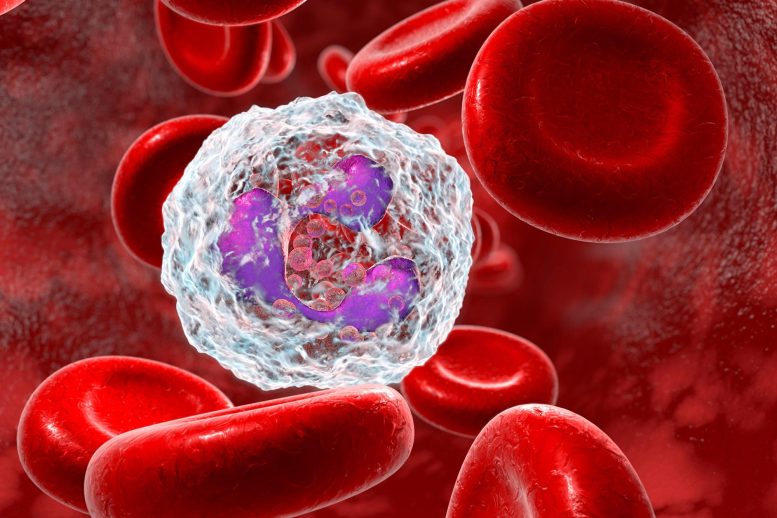
    Neutrophil White Blood Cell Illustration
    Kyoto University researchers discovered that neutrophils can induce anti-inflammatory macrophages within granulomas, offering potential insights into chronic inflammation and tumor development. This finding could contribute to more effective cancer drug development.

    Researchers at Kyoto University have found that neutrophils, a type of white blood cell, can induce anti-inflammatory macrophages (M2) within granulomas, which are dense globular structures that form during chronic inflammation. This M2 macrophage polarization can help regulate inflammation and tissue health. The team believes that their findings, derived from studying tuberculosis, could also be applied to tumor development. By understanding how a bacteria-permissive microenvironment is formed, the researchers hope to contribute to more effective cancer drug development.

    When our bodies become infected, various immune responses are triggered, starting with a release of granulocytes, white blood cells containing special enzymes that makeup about half or more of all human white blood cells.

    Neutrophils are also granulocytes that fight off invasive bacteria and fungi, often with zero tolerance for such invaders. Sometimes, however, a balanced and less aggressive approach goes even further in providing a cure.

    Now, a team of researchers at Kyoto University has determined that neutrophils induce anti-inflammatory — or M2 — macrophages deep in the core of the granulomas.

    In previous studies, chronic inflammatory macrophages were found to have the potential to polarize or differentiate into two opposite versions: pro-inflammatory, or M1, and anti-inflammatory, or M2 types. These constitute an M1-M2 equilibrium that regulates the severity of inflammation and tissue health — or homeostasis.

    Granulomas and Microenvironment Manipulation

    This dual nature or polarization describes how M2 can revert to M1 or even M0 — the non-inflammatory or steady state — in the deep granuloma zone where a bacteria-permissive microenvironment is formed. The team has examined the dense globular structures of granulomas in animals, particularly in the lungs.

    “Microbes and cancer cells may manipulate this permissive microenvironment to favor their survival,” says Tatsuaki Mizutani.
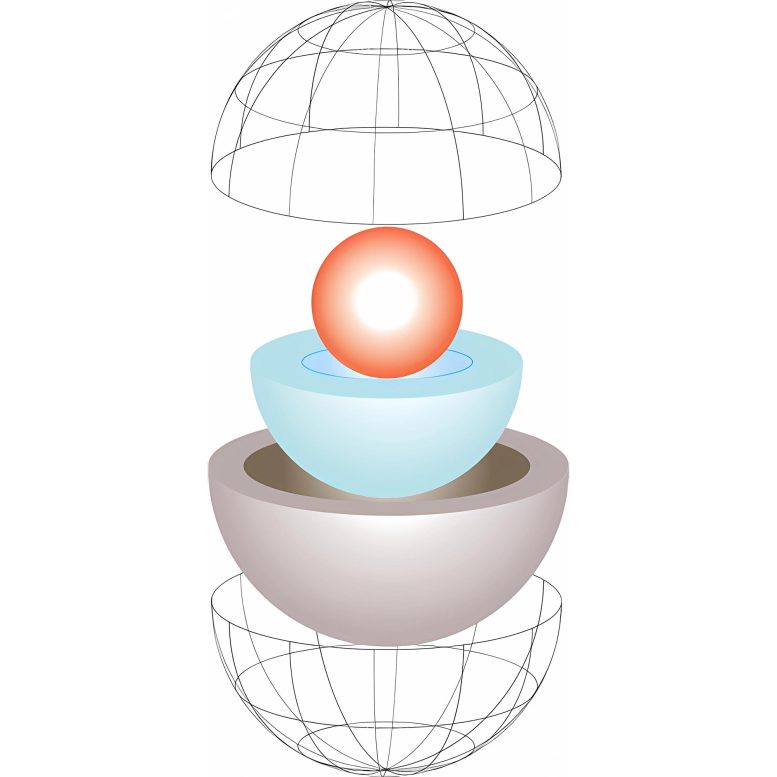
    Cold Inner Core Hot Outer Core
    Visual analogy of a cold inner core (anti-inflammatory M2 region) residing in the hot outer core of the earth (neutrophils core). Credit: KyotoU/Tatsuaki Mizutani

    Human granuloma-related disorders including tuberculosis are a hallmark of chronic inflammatory diseases. Mizutani posits that the results his team obtained from tuberculosis may also be applied to tumors.

    Previous studies have revealed that intercellular interactions within granulomas drive effective inflammatory responses against pathogens or contaminants, but chronic inflammation — as in tuberculosis and tumors — persists over prolonged periods of time.

    To test how to predict tumor development, Mizutani’s team previously established a lung granuloma model in guinea pigs, which demonstrated the specific accumulation of Neutrophil S100A9 — or A9 — deep in the cores of granulomas. A9 is expressed in monocytes and macrophages at low levels but at high levels within neutrophils.

    Applications to Cancer Therapy Development

    “What is interesting is that both the inflammatory and anti-inflammatory effects of A9 have been reported in A9-deficient mice,” notes Mizutani, whose team is now considering whether to make A9’s multifunctional nature anti-tumorigenic in the tumor microenvironment.

    “Our understanding of how a permissive microenvironment in tumors is formed may be applied to effective cancer drug development,” reflects Mizutani.

    Reference: “Neutrophil S100A9 supports M2 macrophage niche formation in granulomas” by Tatsuaki Mizutani, Toshiaki Ano, Yuya Yoshioka, Satoshi Mizuta, Keiko Takemoto, Yuki Ouchi, Daisuke Morita, Satsuki Kitano, Hitoshi Miyachi, Tatsuaki Tsuruyama, Nagatoshi Fujiwara and Masahiko Sugita, 29 January 2023, iScience.
    DOI: 10.1016/j.isci.2023.106081

    Funding: KAKENHI, Ohyama Health Foundation, Fujiwara Memorial Foundation, INFRONT Office of Directors’ Research Grants Program

    Never miss a breakthrough: Join the SciTechDaily newsletter.
    Follow us on Google and Google News.

    Immunology Inflammation Kyoto University Popular
    Share. Facebook Twitter Pinterest LinkedIn Email Reddit

    Related Articles

    Your Blood May Carry a 700-Million-Year-Old Secret

    Scientists Discover New Way To Eliminate “Zombie Cells” Driving Aging

    “Unheard of in Structural Biology” – New Research Unveils Enzymatic Keys to Immune System Regulation

    Genetic Predisposition to Severe COVID-19 Discovered by Russian Researchers

    Daily Rhythms May Impact Our Ability to Fight Disease – Immune System Killer Cells Controlled by Circadian Rhythms

    New COVID-19 Research Provides Deep Insights Into Transmission and Mutation Properties of SARS-CoV-2

    Immune System’s Response to COVID-19 Was Just Revealed by Scientists Who Discovered SARS

    Modified RNA Extends Telomeres in Human Cells, Turns Back Aging Clock

    Researchers Convert Human Stem Cells to Functional Lung Cells

    Leave A Reply Cancel Reply

    • Facebook
    • Twitter
    • Pinterest
    • YouTube

    Don't Miss a Discovery

    Subscribe for the Latest in Science & Tech!

    Trending News

    Scientists May Have Discovered How To Heal Damaged Kidneys

    Interstellar Visitor 3I/ATLAS Is Bursting With an Unexpected Chemical

    Scientists Just Found All 5 Genetic “Letters” of DNA and RNA on an Asteroid

    The 4,000-Year-Old City That Defied History’s Rules on Wealth and Power

    The World’s Biggest Population Fear Has Flipped – and It Could Change Everything

    This “Fake” Pill Improved Memory and Physical Performance in Just 3 Weeks

    Scientists Say Frequent Ejaculation May Improve Sperm Quality and Fertility

    Scientists Have Found “The Heaven Sword” After Years of Looking

    Follow SciTechDaily
    • Facebook
    • Twitter
    • YouTube
    • Pinterest
    • Newsletter
    • RSS
    SciTech News
    • Biology News
    • Chemistry News
    • Earth News
    • Health News
    • Physics News
    • Science News
    • Space News
    • Technology News
    Recent Posts
    • Scientists Uncover a Previously Unknown Lineage of Ancient Marsupials
    • Critically Endangered Monkey Defies the Odds With New Baby After Surgery
    • 17-Million-Year-Old Ape Fossil in Egypt Could Change What We Know About Human Origins
    • NASA’s Orbiting Quantum Lab Pushes Deeper Into the Unknown
    • NASA’s James Webb Discovers Bizarre Salt Clouds on the Pink Planet
    Copyright © 1998 - 2026 SciTechDaily. All Rights Reserved.
    • Science News
    • About
    • Contact
    • Editorial Board
    • Privacy Policy
    • Terms of Use

    Type above and press Enter to search. Press Esc to cancel.