
Close Menu
    Facebook X (Twitter) Instagram
    SciTechDaily
    • Biology
    • Chemistry
    • Earth
    • Health
    • Physics
    • Science
    • Space
    • Technology
    Facebook X (Twitter) Pinterest YouTube RSS
    SciTechDaily
    Home»Space»Curiosity 2.0: NASA’s Mars Rover Software Upgrade Revs Up Performance
    Space

    Curiosity 2.0: NASA’s Mars Rover Software Upgrade Revs Up Performance

    By Jet Propulsion LaboratoryApril 21, 2023No Comments5 Mins Read
    Facebook Twitter Pinterest Telegram LinkedIn WhatsApp Email Reddit
    Share
    Facebook Twitter LinkedIn Pinterest Telegram Email Reddit
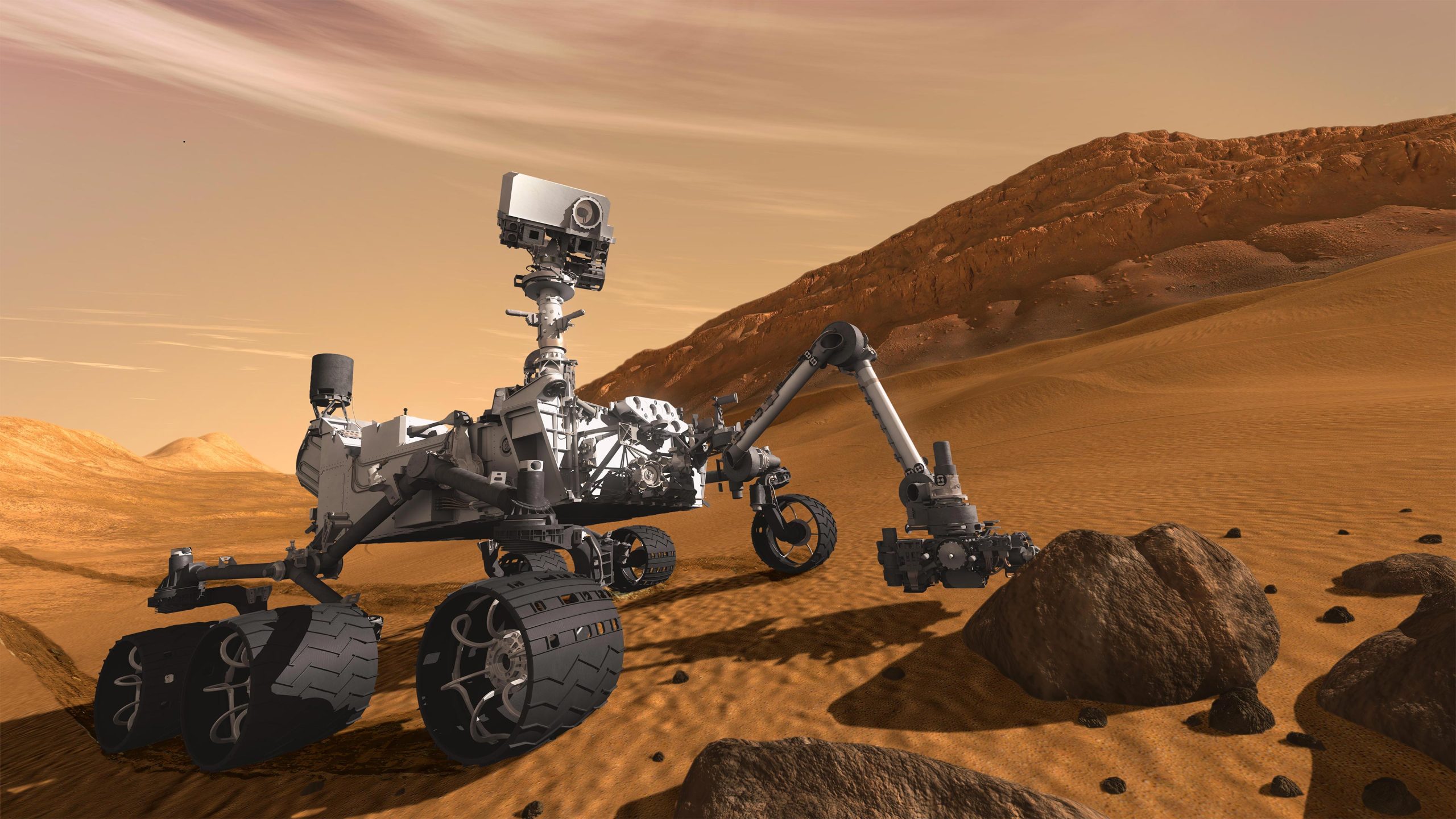
    NASA's Mars Science Laboratory Curiosity Rover Artist Concept
    This artist concept features NASA’s Mars Science Laboratory Curiosity rover, a mobile robot for investigating Mars’ past or present ability to sustain microbial life. In this picture, the rover examines a rock on Mars with a set of tools at the end of the rover’s arm, which extends about 2 meters (7 feet). Two instruments on the arm can study rocks up close. Also, a drill can collect sample material from inside of rocks and a scoop can pick up samples of soil. The arm can sieve the samples and deliver fine powder to instruments inside the rover for thorough analysis. Credit: NASA/JPL-Caltech

    The update brings loads of improvements, the most significant being new driving capabilities.

    Years in the making, a major software update that has been installed on NASA’s Curiosity rover will enable the Mars robot to drive faster and reduce wear and tear on its wheels. Those are just two of about 180 changes implemented during the update, which required the team to put Curiosity’s science and imaging operations on hold between April 3 and April 7.

    “The flight software is essential to our mission, so this is a big deal for our team,” said Curiosity Project Manager Kathya Zamora-Garcia of NASA’s Jet Propulsion Laboratory in Southern California. “This is a major software update, and we had to make sure we did it right.”

    Planning for this update goes back to 2016, when Curiosity last received a software overhaul. Some changes this time around are as small as making corrections to the messages the rover sends back to mission controllers on Earth. Others simplify computer code that has been altered by multiple patches since Curiosity touched down in 2012. The biggest changes will help keep Curiosity rolling more efficiently for years to come.

    Curiosity View of Paraitepuy Pass Crop
    NASA’s Curiosity Mars rover will drive faster and reduce wear on its wheels thanks to two of the new capabilities included with a major software update that was completed on April 7. Seen here is the rover’s view of a hill nicknamed “Bolívar,” with Gale Crater’s vast floor in the upper right. Credit: NASA/JPL-Caltech/MSSS

    The rover can now do more of what the team calls “thinking while driving” – something NASA’s newest Mars rover, Perseverance, can perform in a more advanced way to navigate around rocks and sand traps. When Perseverance drives, it constantly snaps pictures of the terrain ahead, processing them with a dedicated computer so it can autonomously navigate during one continuous drive.

    Curiosity doesn’t have a dedicated computer for this purpose. Instead, it drives in segments, halting to process imagery of the terrain after each segment. That means it needs to start and stop repeatedly over the course of a long drive. The new software will help the venerable rover process images faster, allowing it to spend more time on the move.

    “This won’t let Curiosity drive as quickly as Perseverance, but instead of stopping for a full minute after a drive segment, we’re stopping for just a moment or two,” said Jonathan Denison of JPL, Curiosity’s engineering operations team chief. “Spending less time idling between drive segments also means we use less energy each day. And even though we’re almost 11 years old, we’re still implementing new ideas to use more of our available energy for science activities.”

    Wheel Wear

    The team also wants to maintain the health of Curiosity’s aluminum wheels, which began showing signs of broken treads in 2013. When engineers realized that sharp rocks were chipping away at the treads, they came up with an algorithm to improve traction and reduce wheel wear by adjusting the rover’s speed depending on the rocks it’s rolling over.

    The new software goes further by introducing two new mobility commands that reduce the amount of steering Curiosity needs to do while driving in an arc toward a specific waypoint. With less steering required, the team can reach the drive target quicker and decrease the wear that inherently comes with steering.

    “That ability was actually dreamed up during the Spirit and Opportunity days,” Denison said. “It was a ‘nice to have’ they decided not to implement.”

    Overall, the new software will streamline the task of Curiosity’s human drivers, who have to write complex plans containing hundreds of commands. The software update will also enable them to upload software patches more easily than in past. And it will help engineers plan the motions of Curiosity’s robotic arm more efficiently and point its “head” atop the mast more accurately.

    As with any major software update, there’s a sense of relief to see it working as designed, Denison said.

    “The idea of hitting the install button was a little scary,” he added. “Despite all our testing, we never know exactly what will happen until the software is up there.”

    More About the Mission

    Curiosity was built by NASA’s Jet Propulsion Laboratory (JPL), which is managed by the California Institute of Technology (Caltech) in Pasadena, California. JPL leads the mission on behalf of NASA’s Science Mission Directorate in Washington.

    Never miss a breakthrough: Join the SciTechDaily newsletter.
    Follow us on Google and Google News.

    Curiosity Rover JPL Mars NASA Popular
    Share. Facebook Twitter Pinterest LinkedIn Email Reddit

    Related Articles

    A “Novel” Discovery: NASA’s Curiosity Rover Finds a Book-Like Rock on Mars

    NASA’s Curiosity Rover Views First Dazzling “Sun Rays” on Mars

    NASA’s Curiosity Rover Discovers Surprise Clues to Ancient Water on Mars

    Tantalizing Science and Dangerous Hazards: NASA’s Curiosity Mars Rover Reaches Long-Awaited Salty Region

    NASA’s Curiosity Mars Rover Still Going 10 Years After Landing – What It’s Learned

    NASA’s Curiosity Rover Measures Key Life Ingredient on Mars for First Time

    NASA’s Curiosity Rover Captures Stunning Mars Views – Unlocking Mysteries of Ancient Past

    NASA’s Curiosity Rover Spots a “Doorway” on Mars

    NASA’s Curiosity Mars Rover Reroutes Away From Knife-Edged “Gator-Back” Rocks

    Leave A Reply Cancel Reply

    • Facebook
    • Twitter
    • Pinterest
    • YouTube

    Don't Miss a Discovery

    Subscribe for the Latest in Science & Tech!

    Trending News

    Millions of People Have Osteopenia Without Realizing It – Here’s What You Need To Know

    Researchers Discover Boosting a Single Protein Helps the Brain Fight Alzheimer’s

    World-First Study Reveals Human Hearts Can Regenerate After a Heart Attack

    Why Your Dreams Feel So Real Sometimes and So Strange Other Times

    This Simple Home Device May Boost Brain Power in Adults Over 40

    Enormous Prehistoric Insects Puzzle Scientists

    Scientists Develop Bioengineered Chewing Gum That Could Help Fight Oral Cancer

    After 37 Years, the World’s Longest-Running Soil Warming Experiment Uncovers a Startling Climate Secret

    Follow SciTechDaily
    • Facebook
    • Twitter
    • YouTube
    • Pinterest
    • Newsletter
    • RSS
    SciTech News
    • Biology News
    • Chemistry News
    • Earth News
    • Health News
    • Physics News
    • Science News
    • Space News
    • Technology News
    Recent Posts
    • Mezcal “Worm” in a Bottle Mystery: DNA Testing Reveals a Surprise
    • Scientists Turn Red Lettuce Green, Unlocking Hidden Nutrients
    • Researchers Discover Natural Compound That Disarms Deadly Superbug
    • New Research Reveals That Your Morning Coffee Activates an Ancient Longevity Switch
    • Researchers Identify the Most Common Recessive Neurodevelopmental Disorder Ever Discovered
    Copyright © 1998 - 2026 SciTechDaily. All Rights Reserved.
    • Science News
    • About
    • Contact
    • Editorial Board
    • Privacy Policy
    • Terms of Use

    Type above and press Enter to search. Press Esc to cancel.