
Close Menu
    Facebook X (Twitter) Instagram
    SciTechDaily
    • Biology
    • Chemistry
    • Earth
    • Health
    • Physics
    • Science
    • Space
    • Technology
    Facebook X (Twitter) Pinterest YouTube RSS
    SciTechDaily
    Home»Space»Hubble Space Telescope Spots a Ghostly Galactic Jellyfish
    Space

    Hubble Space Telescope Spots a Ghostly Galactic Jellyfish

    By ESA/HubbleApril 30, 2023No Comments2 Mins Read
    Facebook Twitter Pinterest Telegram LinkedIn WhatsApp Email Reddit
    Share
    Facebook Twitter LinkedIn Pinterest Telegram Email Reddit
    Jellyfish Galaxy JO175
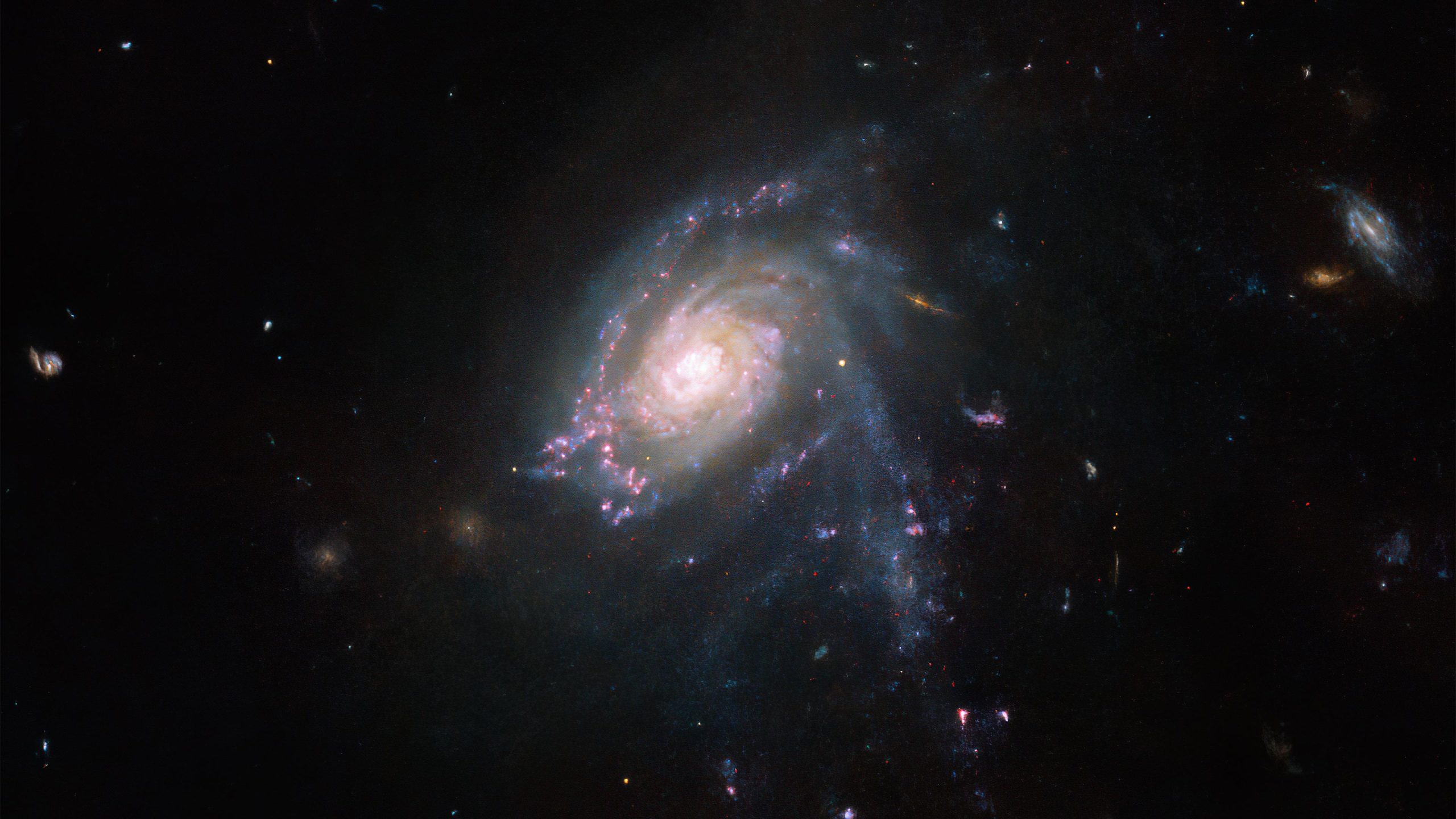
    Hubble Space Telescope image of the jellyfish galaxy JO175, located over 650 million light-years away in the constellation Telescopium. Credit: ESA/Hubble & NASA, M. Gullieuszik and the GASP team

    The Hubble Space Telescope has captured detailed images of the jellyfish galaxy JO175, over 650 million light-years away. Named for their star-forming tendrils, recent research suggests that star formation in these galaxies is similar to the process in standard galactic discs.

    The jellyfish galaxy JO175 appears to hang suspended in this image from the NASA/ESA Hubble Space Telescope. This galaxy lies over 650 million light-years from Earth in the appropriately-named constellation Telescopium, and was captured in crystal-clear detail by Hubble’s Wide Field Camera 3. A handful of more distant galaxies are lurking throughout the scene, and a bright four-pointed star lies to the lower right side.
    Jellyfish Galaxy JO175 Enhanced
    Enhanced zoomed-in view of the Hubble Space Telescope image of the jellyfish galaxy JO175. Credit: ESA/Hubble & NASA, M. Gullieuszik and the GASP team

    Jellyfish galaxies get their unusual name from the tendrils of star-forming gas and dust that trail behind them, just like the tentacles of a jellyfish. These bright tendrils contain clumps of star formation and give jellyfish galaxies a particularly striking appearance. Unlike their ocean-dwelling namesakes, jellyfish galaxies make their homes in galaxy clusters, and the pressure of the tenuous superheated plasma that permeates these galaxy clusters is what draws out the jellyfish galaxies’ distinctive tendrils.

    Hubble recently completed a deep dive into jellyfish clusters, specifically the star-forming clumps of gas and dust that stud their tendrils. By studying the origins and fate of the stars in these clumps, astronomers hoped to better understand the processes underpinning star formation elsewhere in the Universe. Interestingly, their research suggests that star formation in the discs of galaxies is similar to star formation in the extreme conditions found in the tendrils of jellyfish galaxies.

    Never miss a breakthrough: Join the SciTechDaily newsletter.
    Follow us on Google and Google News.

    Astronomy European Space Agency Hubble Space Telescope
    Share. Facebook Twitter Pinterest LinkedIn Email Reddit

    Related Articles

    A Diamond Necklace of Cosmic Proportions

    Hubble Snaps a Stunning Close-Up of a Magnificent Spiral Galaxy

    Extraordinary Hubble Image: Light Bends From the Beyond

    Hubble Space Telescope Sees Volcanic Activity Reforming the Atmosphere on a Rocky Exoplanet

    Hubble Spies a Luminous Heart With Dark Tendrils

    Spectacular Return to the Veil Nebula

    Hubble Spots a Peculiar Sight: Unusual Spiral Galaxy With a Heavy Arm

    A Flash of Life: Hubble Spies an Unusual Planetary Nebula

    Through the Cosmic Clouds: Hubble Spots a Beautiful Stellar Nursery

    Leave A Reply Cancel Reply

    • Facebook
    • Twitter
    • Pinterest
    • YouTube

    Don't Miss a Discovery

    Subscribe for the Latest in Science & Tech!

    Trending News

    Common Laxative May Help Reverse Depression-Related Brain Fog

    Younger Generations Are Aging Faster – and It May Be Fueling a Surge in Cancer

    New Discovery Could Unlock Quantum Computers the Size of a Coin

    Shingles Vaccine Linked to 24% Lower Dementia Risk in Older Adults

    Scientists Found a Wordle Trick That Solves 99% of Puzzles

    A Hidden Galaxy Called Shadow Blaster May Explain One of Astronomy’s Biggest Mysteries

    These 3 Common Sleep Habits May Be Aging Your Brain Faster

    Rare Goblin Shark Spotted Alive in Its Natural Habitat for the First Time

    Follow SciTechDaily
    • Facebook
    • Twitter
    • YouTube
    • Pinterest
    • Newsletter
    • RSS
    SciTech News
    • Biology News
    • Chemistry News
    • Earth News
    • Health News
    • Physics News
    • Science News
    • Space News
    • Technology News
    Recent Posts
    • This Extraordinary Desert Mouse Defies Aging – and It Could Change Human Longevity
    • A Simple Blood Test Can Reveal the True Age of Your Brain, Heart, and Other Organs
    • This Popular Workout Supplement May Give Cancer Immunotherapy a Big Boost
    • Scientists Built a Mars Rover That “Swims” Through Sand
    • This Strange New Magnet Could Transform Future Electronics
    Copyright © 1998 - 2026 SciTechDaily. All Rights Reserved.
    • Science News
    • About
    • Contact
    • Editorial Board
    • Privacy Policy
    • Terms of Use

    Type above and press Enter to search. Press Esc to cancel.