
Close Menu
    Facebook X (Twitter) Instagram
    SciTechDaily
    • Biology
    • Chemistry
    • Earth
    • Health
    • Physics
    • Science
    • Space
    • Technology
    Facebook X (Twitter) Pinterest YouTube RSS
    SciTechDaily
    Home»Space»A Diamond Necklace of Cosmic Proportions
    Space

    A Diamond Necklace of Cosmic Proportions

    By ESA/HubbleApril 25, 20211 Comment2 Mins Read
    Facebook Twitter Pinterest Telegram LinkedIn WhatsApp Email Reddit
    Share
    Facebook Twitter LinkedIn Pinterest Telegram Email Reddit
    Necklace Nebula
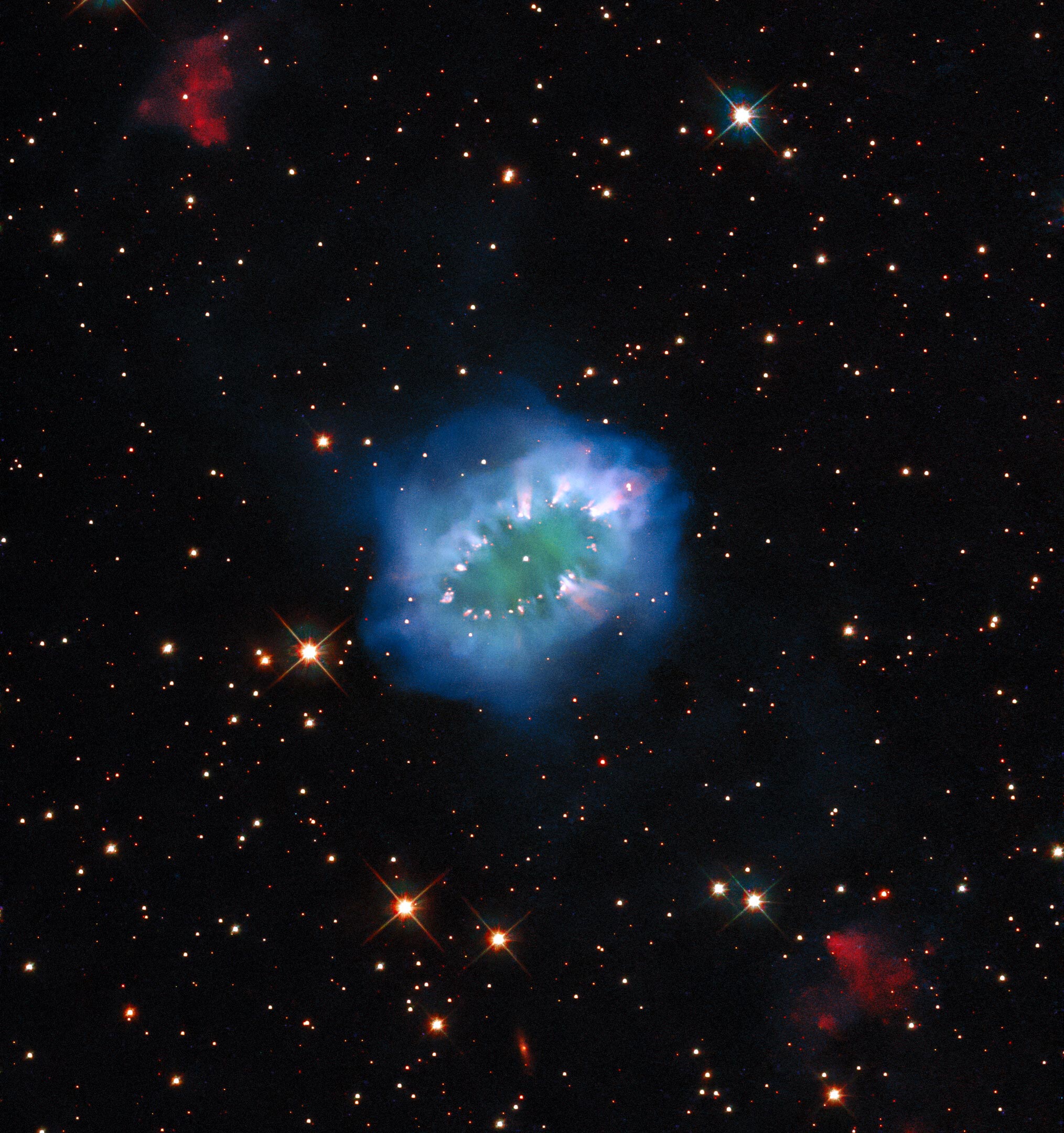
    Hubble Space Telescope image of PN G054.2-03.4, also known as the Necklace Nebula. Credit: ESA/Hubble & NASA, K. Noll

    The interaction of two doomed stars has created this spectacular ring adorned with bright clumps of gas — a diamond necklace of cosmic proportions. Fittingly known as the Necklace Nebula, this planetary nebula is located 15,000 light-years away from Earth in the small, dim constellation of Sagitta (The Arrow).

    The Necklace Nebula — which also goes by the less glamorous name of PN G054.2-03.4 — was produced by a pair of tightly orbiting Sun-like stars. Roughly 10,000 years ago, one of the aging stars expanded and engulfed its smaller companion, creating something astronomers call a “common envelope.” The smaller star continued to orbit inside its larger companion, increasing the bloated giant’s rotation rate until large parts of it spun outwards into space. This escaping ring of debris formed the Necklace Nebula, with particularly dense clumps of gas forming the bright “diamonds” around the ring.

    The pair of stars which created the Necklace Nebula remain so close together — separated by only a few million kilometers — that they appear as a single bright dot in the center of this image. Despite their close encounter the stars are still furiously whirling around each other, completing an orbit in just over a day. 
    Hubble Necklace Nebula
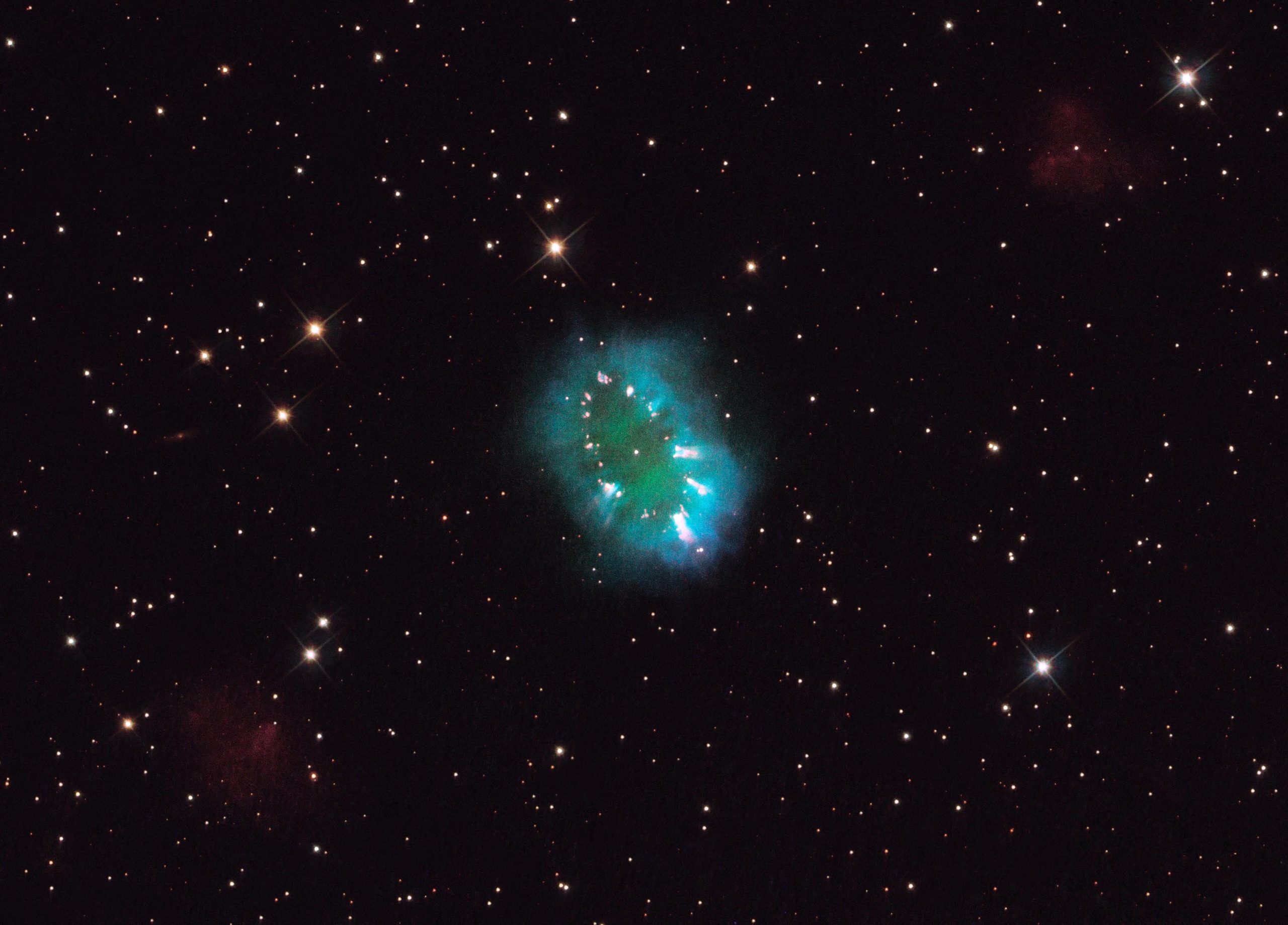
    Credit: NASA, ESA and the Hubble Heritage Team (STScI/AURA)

    The Necklace Nebula was featured in a previously released Hubble image (above), but now this new image (top) has been created by applying advanced processing techniques, making for a new and improved view of this intriguing object. The composite image includes several exposures from Hubble’s Wide Field Camera 3.

    Never miss a breakthrough: Join the SciTechDaily newsletter.
    Follow us on Google and Google News.

    Astronomy European Space Agency Hubble Space Telescope NASA Popular
    Share. Facebook Twitter Pinterest LinkedIn Email Reddit

    Related Articles

    Hubble’s Newest Discovery Isn’t a Star, It’s a Window Into the Dark Universe

    Hubble Celebrates 34th Anniversary With a Spectacular View of the Little Dumbbell Nebula

    Hubble Views Spiral Galaxy NGC 5793

    Hubble Captures Face-On Image of Messier 61

    Hubble Views an Ongoing Cosmic Collision

    Hubble Views Newborn Stars in Galaxy IC 5052

    New XDF Image, The Deepest-Ever View of the Universe

    Hubble Zooms in on the Center of M4

    Hubble Image of Peculiar Galaxy Pair Arp 116

    1 Comment

    1. harrioust on May 15, 2021 11:29 am

      A variety of gemological services that are reliable, efficient, and convenient are offered by the GSI gem lab. They provides gemstone identification and grading services, is engaged in gemological research, and also offers various educational programs that can help prepare the new generation of graders. Ensuring the delivery of the highest quality products and services is its priority. You can visit https://gemscience.net/services-and-reports/grading-reports/ for numbers to contact them and get more detailed information.

      Reply
    Leave A Reply Cancel Reply

    • Facebook
    • Twitter
    • Pinterest
    • YouTube

    Don't Miss a Discovery

    Subscribe for the Latest in Science & Tech!

    Trending News

    Popular Vitamin B3 Supplements May Help Cancer Cells Survive, Scientists Warn

    Scientists Discover Strange Property of Rice and Turn It Into a Smart Material

    NASA Artemis II Skips Burn As Astronaut Captures Stunning View of Earth

    NASA’s Artemis II: Humans Just Left Earth Orbit for the First Time Since 1972

    What Causes Chronic Pain? Scientists Identify Key Culprit in the Brain

    Semaglutide Shows Surprising Mental Health Benefits in Massive 100,000-Person Study

    This Liquid Snapped Instead of Flowing and Scientists Were Shocked

    Breakthrough Alzheimer’s Drug Rewires the Brain Instead of Just Clearing Plaques

    Follow SciTechDaily
    • Facebook
    • Twitter
    • YouTube
    • Pinterest
    • Newsletter
    • RSS
    SciTech News
    • Biology News
    • Chemistry News
    • Earth News
    • Health News
    • Physics News
    • Science News
    • Space News
    • Technology News
    Recent Posts
    • Scientists Uncover the Secret “Glue” That Helps Soil Hold Water
    • Climate Change Is Altering a Key Greenhouse Gas in a Way Scientists Didn’t Expect
    • Why Antarctic Sea Ice Suddenly Collapsed After Decades of Growth
    • Astronomers Discover the Most Pristine Star Ever Found
    • New Study Suggests Gravitational Waves May Have Created Dark Matter
    Copyright © 1998 - 2026 SciTechDaily. All Rights Reserved.
    • Science News
    • About
    • Contact
    • Editorial Board
    • Privacy Policy
    • Terms of Use

    Type above and press Enter to search. Press Esc to cancel.