
Close Menu
    Facebook X (Twitter) Instagram
    SciTechDaily
    • Biology
    • Chemistry
    • Earth
    • Health
    • Physics
    • Science
    • Space
    • Technology
    Facebook X (Twitter) Pinterest YouTube RSS
    SciTechDaily
    Home»Space»Lonely Clouds and Dark Tendrils: Hubble Observes Strange Galactic Neighbor
    Space

    Lonely Clouds and Dark Tendrils: Hubble Observes Strange Galactic Neighbor

    By European Space Agency (ESA)July 2, 2023No Comments2 Mins Read
    Facebook Twitter Pinterest Telegram LinkedIn WhatsApp Email Reddit
    Share
    Facebook Twitter LinkedIn Pinterest Telegram Email Reddit
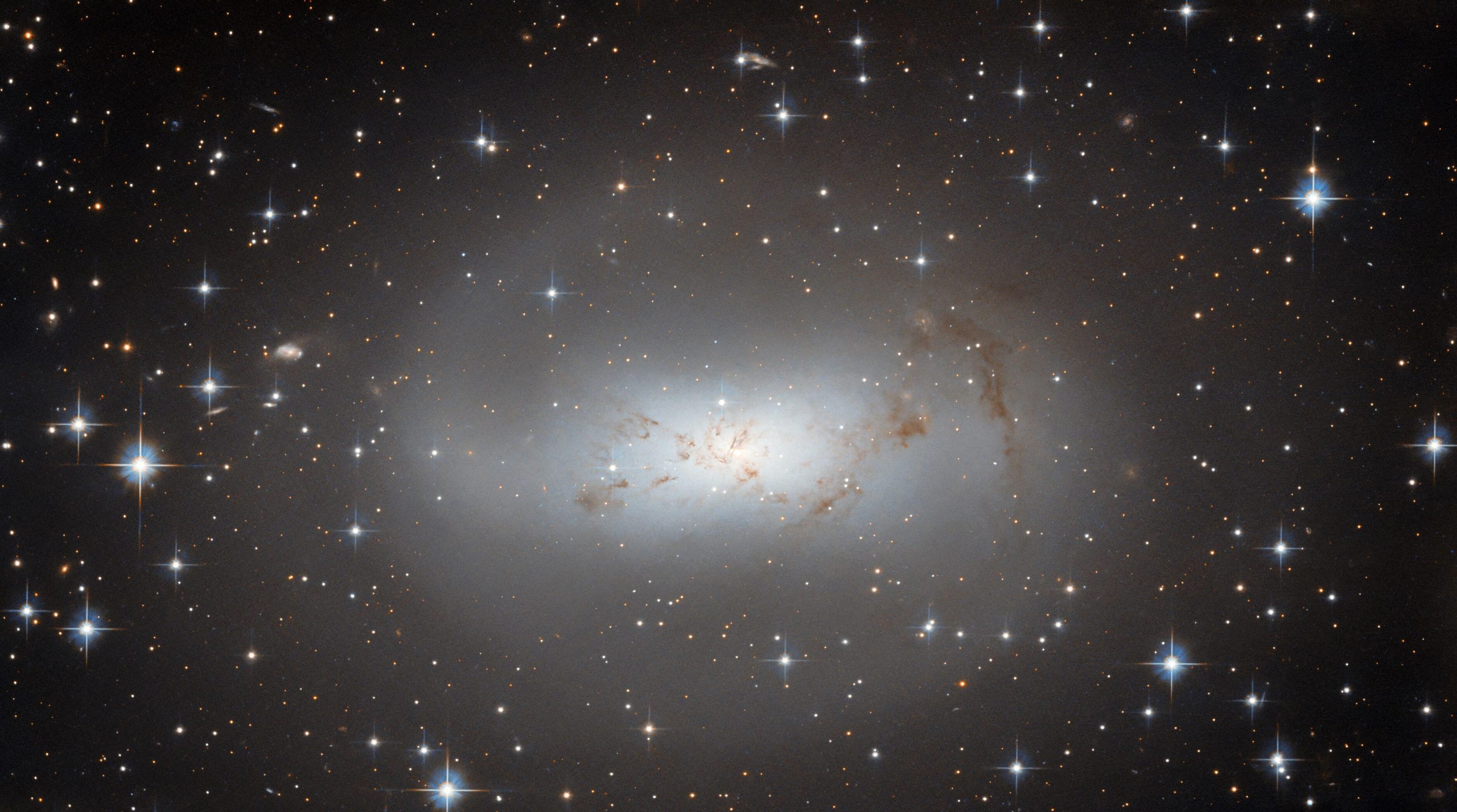
    Galaxy ESO 174-1
    Hubble Space Telescope image of the highly irregular galaxy ESO 174-1, located approximately 11 million light-years away from Earth. The image shows a bright cloud of stars alongside a faint, dark trail of gas and dust. Credit: ESA/Hubble & NASA, R. Tully

    The Hubble Space Telescope has taken a detailed image of the irregular galaxy ESO 174-1, 11 million light-years away. The image is part of a program to study all known galaxies within 32 million light-years, strategically using the telescope’s downtime for observing hard-to-schedule celestial bodies.

    The highly irregular galaxy ESO 174-1, which resembles a lonely, hazy cloud against a backdrop of bright stars, dominates this image from the NASA/ESA Hubble Space Telescope. ESO 174-1 lies around 11 million light-years from Earth and consists of a bright cloud of stars and a faint, meandering tendril of dark gas and dust.

    This image is part of a collection of Hubble observations that aims to get to know our nearby galactic neighbors. To be more precise, the observations aim to resolve the brightest stars and basic properties of every known galaxy within 10 megaparsecs. A parsec is a unit used by astronomers to measure the vast distances to other galaxies — 10 megaparsecs translates to 32 million light-years — and makes astronomical distances easier to handle. For example, the nearest star to the Sun, Proxima Centauri, is about 1.3 parsecs away. In everyday units this is a staggering 40 million million kilometers (25 trillion miles)! 

    The program to capture all of our neighboring galaxies was designed to use the 2-3% of Hubble time that absolutely no other observing program can use. Many of the myriad objects that Hubble observes can only be seen at certain times of year, which makes filling out the observatory’s schedule a daunting logistical challenge. Observing programs such as the one which captured ESO 174-1 help Hubble’s operators get the most out of every last minute of observing time.

    Never miss a breakthrough: Join the SciTechDaily newsletter.
    Follow us on Google and Google News.

    Astronomy European Space Agency Hubble Space Telescope
    Share. Facebook Twitter Pinterest LinkedIn Email Reddit

    Related Articles

    A Diamond Necklace of Cosmic Proportions

    Hubble Snaps a Stunning Close-Up of a Magnificent Spiral Galaxy

    Extraordinary Hubble Image: Light Bends From the Beyond

    Hubble Space Telescope Sees Volcanic Activity Reforming the Atmosphere on a Rocky Exoplanet

    Hubble Spies a Luminous Heart With Dark Tendrils

    Spectacular Return to the Veil Nebula

    Hubble Spots a Peculiar Sight: Unusual Spiral Galaxy With a Heavy Arm

    A Flash of Life: Hubble Spies an Unusual Planetary Nebula

    Through the Cosmic Clouds: Hubble Spots a Beautiful Stellar Nursery

    Leave A Reply Cancel Reply

    • Facebook
    • Twitter
    • Pinterest
    • YouTube

    Don't Miss a Discovery

    Subscribe for the Latest in Science & Tech!

    Trending News

    “I Couldn’t Do It Anymore” – Antarctic Guides Quit Their Dream Jobs After Witnessing Tourism’s Damage

    Scientists Say Eating Less Protein May Help You Live Longer

    Scientists Solve a Long-Standing Mystery About Bird and Dinosaur Eggs

    Belly Fat and Low Vitamin D May More Than Double the Risk of Early Death

    Lost in Space: Rare Cosmic Flare Exposes a Wandering Black Hole Far From Its Galaxy’s Center

    Dark Matter May Be Leaving a Signal in Earth’s Atmosphere

    Scientists Discover a 300-Million-Year-Old Geological Time Capsule Inside Fossilized Wood

    Oral Weight Loss Pill Helps Patients Lose up to 12% of Body Weight

    Follow SciTechDaily
    • Facebook
    • Twitter
    • YouTube
    • Pinterest
    • Newsletter
    • RSS
    SciTech News
    • Biology News
    • Chemistry News
    • Earth News
    • Health News
    • Physics News
    • Science News
    • Space News
    • Technology News
    Recent Posts
    • Don’t Miss: Europe Is About To Go Dark in a Spectacular Total Solar Eclipse
    • Industrial Chicken Farming Is Supercharging the Spread of a Dangerous Foodborne Bacterium
    • Honeybee Queens May Pass Toxic Chemicals to the Next Generation
    • This Common Amino Acid May Help the Body Fight Cancer and Viruses
    • Schizophrenia’s Brain Damage May Start in One Key Region
    Copyright © 1998 - 2026 SciTechDaily. All Rights Reserved.
    • Science News
    • About
    • Contact
    • Editorial Board
    • Privacy Policy
    • Terms of Use

    Type above and press Enter to search. Press Esc to cancel.