
Close Menu
    Facebook X (Twitter) Instagram
    SciTechDaily
    • Biology
    • Chemistry
    • Earth
    • Health
    • Physics
    • Science
    • Space
    • Technology
    Facebook X (Twitter) Pinterest YouTube RSS
    SciTechDaily
    Home»Space»CfA Astronomers Explore the Economic Realities of Mining an Asteroid
    Space

    CfA Astronomers Explore the Economic Realities of Mining an Asteroid

    By Harvard-Smithsonian Center for AstrophysicsMay 6, 2014No Comments3 Mins Read
    Facebook Twitter Pinterest Telegram LinkedIn WhatsApp Email Reddit
    Share
    Facebook Twitter LinkedIn Pinterest Telegram Email Reddit
    CfA Astronomers Explore the Economic Realities of Mining an Asteroid
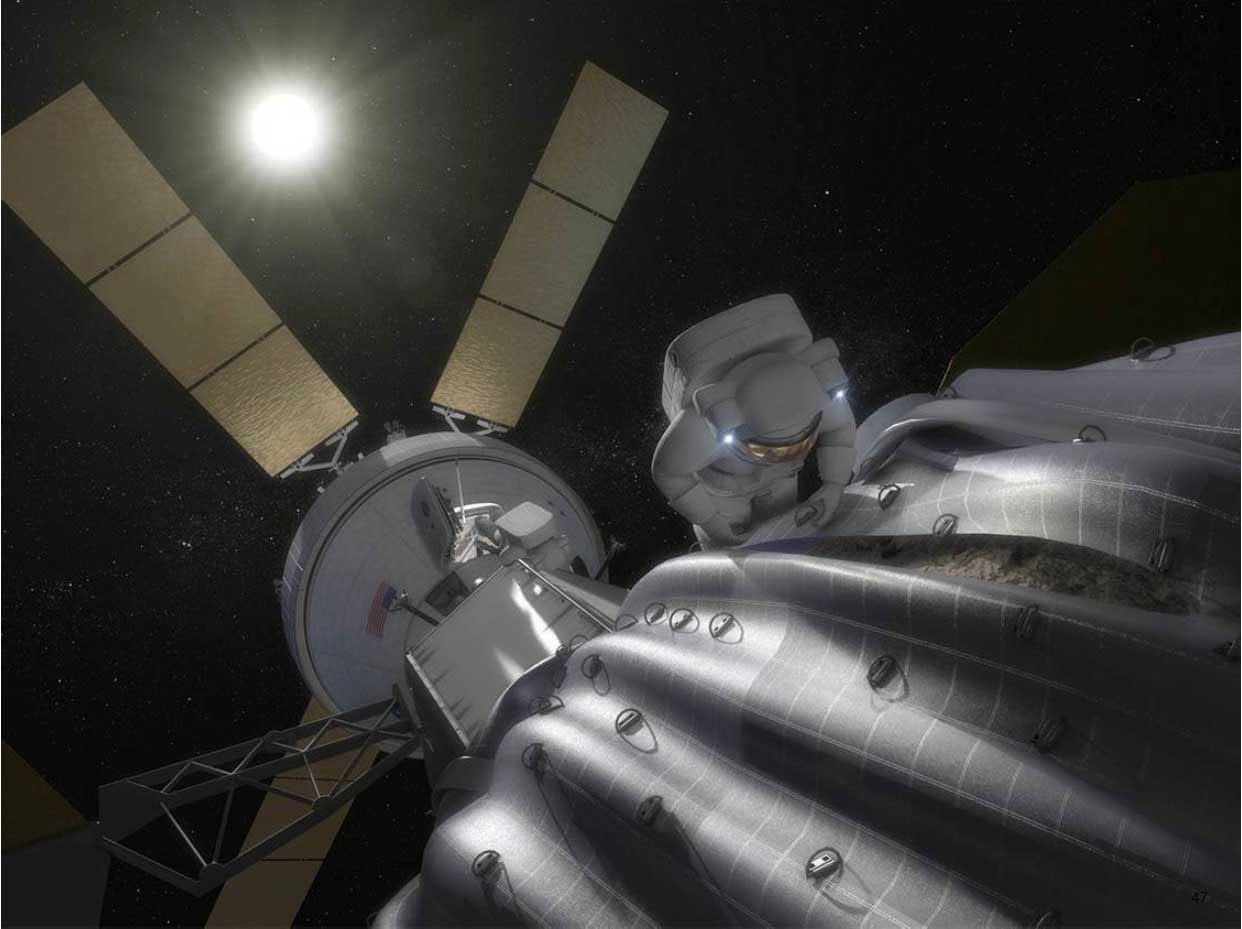
    An artist’s conception of an astronaut preparing an asteroid for retrieval to Earth. Astronomers estimate that selecting one with potentially valuable minerals or water will take perhaps a dozen preliminary probes, depending on how many pre-launch characterization observations can be done. Credit: NASA

    A new study from researchers at the Harvard-Smithsonian Center for Astrophysics explores the economic realities of mining an asteroid.

    Last month NASA held a forum to explore the possibility of a human mission to an asteroid, motivated in part by its longer-term goal: the human exploration of Mars. An asteroid mission, besides providing new science on the origins of the asteroids and the solar system, would also result in more practical results, from advanced rocket propulsion systems to enhanced detection techniques, and including the potential mining of precious metals. The first step in such a mission is likely to be the robotic recovery of a nearby asteroid, a near-Earth object (NEO). The current Asteroid Recovery Mission concept proposes to capture robotically a smallish NEO (between five and ten meters in diameter) and tow it into an orbit around the Earth where a crew of astronauts would rendezvous with it and retrieve samples.

    CfA astronomers Martin Elvis and Thomas Esty explore the economic realities of mining an asteroid in their new paper in Acta Astronautica, “How Many Assay Probes to Find One Ore­bearing Asteroid?” There are estimated from statistical analyses to be about ten million NEOs larger than about twenty meters to choose from. The selection problem is driven mainly by a lack of information about the location, size, and composition of each one. The astronomers therefore use a probabilistic approach in their analysis. (Other CfA astronomers have meanwhile been actively characterizing NEO sizes and properties using infrared measurements from the Spitzer Space Telescope.) In Elvis’ earlier work, he concluded that about one in a thousand accessible asteroids has a concentration of water high enough for practical recovery, and about one in two thousand has a high enough concentration of platinum group metals. If NASA were to send out probes to complete in situ measurements of candidate asteroids prior to a recovery, the team concludes that for a 90% chance of success in finding a mineable asteroid, between ten to twenty probes would be needed.

    If additional remote observations could be performed first, to further characterize the population, and if these observations used sensitive space-based telescopes with current capabilities, the scientists calculate that the search could be narrowed and the probe fleet reduced to fewer than a half-dozen missions, at considerable cost savings. The paper concludes that the recovery of economically worthwhile ore-bearing asteroids is indeed possible, but that improved prior characterization would greatly enhance the effectiveness of the program.

    Reference: “How Many Assay Probes of Find One Ore-Bearing Asteroid?” by Martin Elvisa and Thomas Esty, 28 November 2013, Acta Astronautica
    DOI: 10.1016/j.actaastro.2013.11.027
    arXiv: 1312.4452

    Never miss a breakthrough: Join the SciTechDaily newsletter.
    Follow us on Google and Google News.

    Asteroid Astronomy Harvard-Smithsonian Center for Astrophysics Mining
    Share. Facebook Twitter Pinterest LinkedIn Email Reddit

    Related Articles

    Ancient Space Rocks May Hold the Blueprint for Asteroid Mining

    A Small Object (A/2017 U1) from Deep Space Enters Our Solar System

    A New Set of Calculations for Catastrophic Disruptions of Main Belt Asteroids

    Asteroid Belt More Diverse than Previously Realized

    Spitzer Measures the Physical Properties of NEO 2009BD

    Comet-Like Activity Discovered in Near-Earth Object Don Quixote

    Near Miss Asteroid – An Opportunity To Test a Rapid Response Program

    Curious Findings from Early Stages of Planet Formation

    Origins of Type Ia Supernovae

    Leave A Reply Cancel Reply

    • Facebook
    • Twitter
    • Pinterest
    • YouTube

    Don't Miss a Discovery

    Subscribe for the Latest in Science & Tech!

    Trending News

    Scientists May Have Discovered How To Heal Damaged Kidneys

    Interstellar Visitor 3I/ATLAS Is Bursting With an Unexpected Chemical

    Scientists Just Found All 5 Genetic “Letters” of DNA and RNA on an Asteroid

    The 4,000-Year-Old City That Defied History’s Rules on Wealth and Power

    The World’s Biggest Population Fear Has Flipped – and It Could Change Everything

    This “Fake” Pill Improved Memory and Physical Performance in Just 3 Weeks

    Scientists Say Frequent Ejaculation May Improve Sperm Quality and Fertility

    Scientists Have Found “The Heaven Sword” After Years of Looking

    Follow SciTechDaily
    • Facebook
    • Twitter
    • YouTube
    • Pinterest
    • Newsletter
    • RSS
    SciTech News
    • Biology News
    • Chemistry News
    • Earth News
    • Health News
    • Physics News
    • Science News
    • Space News
    • Technology News
    Recent Posts
    • NASA’s Lucy Uncovers Ancient Water Clues on a Weirdly Wobbling Asteroid
    • Could This Visitor From Another Star System Be Alien Technology? SETI Investigates
    • NASA Moon Base Could Become Earth’s First Defense Against Alien Microbes
    • Europe’s First TES Spectrometer Makes Previously Impossible X-Ray Experiments Possible
    • This Sodium Battery From China Matched Tesla in a Surprising Head-to-Head Test
    Copyright © 1998 - 2026 SciTechDaily. All Rights Reserved.
    • Science News
    • About
    • Contact
    • Editorial Board
    • Privacy Policy
    • Terms of Use

    Type above and press Enter to search. Press Esc to cancel.