

A team led by ICE-CSIC examined meteorites from documented historical falls as well as samples from NASA’s Antarctic meteorite collection.
Much about the makeup of small asteroids is still uncertain, yet these objects are drawing growing attention for what they may contain. Scientists believe they could host useful metals, preserve materials left over from the early solar system, and offer chemical clues about the larger bodies from which they formed. To explore this potential, a research team led by the Institute of Space Sciences (ICE-CSIC) examined samples linked to C-type asteroids, carbon-rich objects in the Solar System that are thought to be the source of carbonaceous chondrites.
The results, reported in the Monthly Notices of the Royal Astronomical Society, strengthen the case that these asteroids could play an important role in future resource use. The study also shows how their composition can help scientists trace their origins while supporting the design of upcoming missions and the development of technologies aimed at using space-based materials.
Carbonaceous chondrites reach Earth naturally, but they account for only about 5% of all meteorite falls. Many are extremely fragile and tend to break apart during their descent, which means they are often lost before they can be collected. As a result, recovered specimens are uncommon and are most frequently found in dry, stable environments such as the Sahara Desert or Antarctica.
“The scientific interest in each of these meteorites is that they sample small, undifferentiated asteroids, and provide valuable information on the chemical composition and evolutionary history of the bodies from which they originate,” says Josep M. Trigo-Rodríguez, first author of the study and astrophysicist at ICE-CSIC, affiliated to the Institute of Space Studies of Catalonia (IEEC).
The physical and chemical composition of asteroids
Researchers at ICE-CSIC were responsible for selecting and characterizing the meteorite samples used in the study. These materials were then examined through mass spectrometry at the University of Castilla-La Mancha by Professor Jacinto Alonso-Azcárate. This approach enabled the team to measure the chemical makeup of the six most common types of carbonaceous chondrites in detail, helping scientists better assess whether extracting resources from such asteroids could be practical in the future.
The Asteroids, Comets, and Meteorites research group at ICE-CSIC investigates the physicochemical properties of the materials that make up the surfaces of asteroids and comets and has made numerous contributions in this field over the last decade. “At ICE-CSIC and IEEC, we specialize in developing experiments to better understand the properties of these asteroids and how the physical processes that occur in space affect their nature and mineralogy,” says Trigo-Rodríguez, who leads this group.
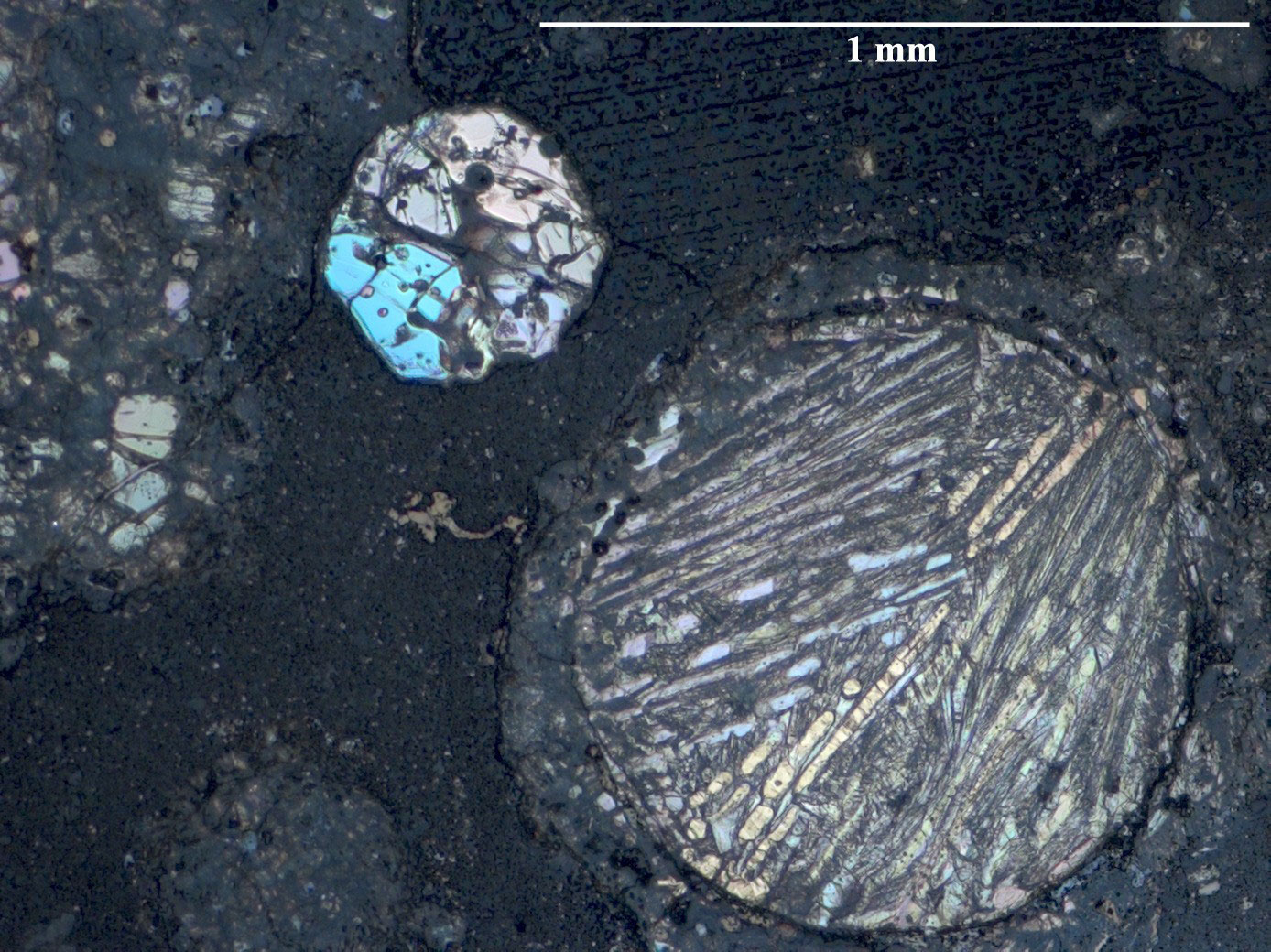
Furthermore, for over a decade, he has been involved in selecting and requesting from NASA several carbonaceous chondrites analyzed in this study, as well as devising several experiments with them, since the ICE-CSIC is the international repository for NASA’s Antarctic meteorite collection. “The work now being published is the culmination of that team effort,” he adds.
“Studying and selecting these types of meteorites in our clean room using other analytical techniques is fascinating, particularly because of the diversity of minerals and chemical elements they contain. However, most asteroids have relatively small abundances of precious elements, and therefore the objective of our study has been to understand to what extent their extraction would be viable,” says Pau Grèbol Tomás, ICE-CSIC predoctoral researcher.
“Although most small asteroids have surfaces covered in fragmented material called regolith -and it would facilitate the return of small amounts of samples-, developing large-scale collection systems to achieve clear benefits is a very different matter. In any case, it deserves to be explored because the search for resources in space could be susceptible to minimizing the impact of mining activities on terrestrial ecosystems,” points out Jordi Ibáñez-Insa, Geosciences Barcelona (GEO3BCN-CSIC) researcher and co-author of the study.
The future of exploration and resource extraction on small asteroids
Given the diversity present in the main asteroid belt, it is crucial to define what types of resources could be found there. According to Trigo-Rodríguez: “They are small and quite heterogeneous objects, heavily influenced by their evolutionary history, particularly collisions and close approaches to the Sun. If we are looking for water, there are certain asteroids from which hydrated carbonaceous chondrites originate, which, conversely, will have fewer metals in their native state. Let’s not forget that, after 4.56 billion years since their formation, each asteroid has a different composition, as revealed by the study of chondritic meteorites.”
One of the study’s conclusions is that mining undifferentiated asteroids—the primordial remnants of the solar system’s formation considered the progenitor bodies of chondritic meteorites—is still far from viable. On the other hand, the study points to a type of pristine asteroid with olivine and spinel bands as a potential target for mining. A comprehensive chemical analysis of carbonaceous chondrites is essential to identify promising targets for space mining. However, the team states that this effort must be accompanied by new sample-return missions to verify the identity of the progenitor bodies.
“Alongside the progress represented by sample return missions, companies capable of taking decisive steps in the technological development necessary to extract and collect these materials under low-gravity conditions are truly needed. The processing of these materials and the waste generated would also have a significant impact that should be quantified and properly mitigated,” adds Trigo-Rodríguez.
The team is confident of very short-term progress, given that the use of in-situ resources will be a key factor for future long-term missions to the Moon and Mars, reducing dependence on resupply from Earth. In this regard, the authors point out that if water extraction were the goal, water-altered asteroids with a high concentration of water-bearing minerals should be selected.
Exploiting these resources under low-gravity conditions requires the development of new extraction and processing techniques. “It sounds like science fiction, but it also seemed like science fiction when the first sample return missions were being planned thirty years ago,” says Pau Grèbol Tomàs.
In an international context, several proposals have been put forward, such as capturing small asteroids that pass close to Earth and placing them in a circumlunar orbit for exploitation. “For certain water-rich carbonaceous asteroids, extracting water for reuse seems more viable, either as fuel or as a primary resource for exploring other worlds. This could also provide science with greater knowledge about certain bodies that could one day threaten our very existence. In the long term, we could even mine and shrink potentially hazardous asteroids so that they cease to be dangerous,” Trigo-Rodríguez explains.
Reference: “Assessing the metal and rare earth element mining potential of undifferentiated asteroids through the study of carbonaceous chondrites” by J M Trigo-Rodríguez, P Grèbol-Tomàs, J Ibáñez-Insa, J Alonso-Azcárate and M Gritsevich, 8 November 2025, Monthly Notices of the Royal Astronomical Society.
DOI: 10.1093/mnras/staf1902
Never miss a breakthrough: Join the SciTechDaily newsletter.
Follow us on Google and Google News.
1 Comment
Wow! So we don’t care about the costs of mineral extraction? How did this happen? Makes me think I am watching “Don’t Look Up.”