
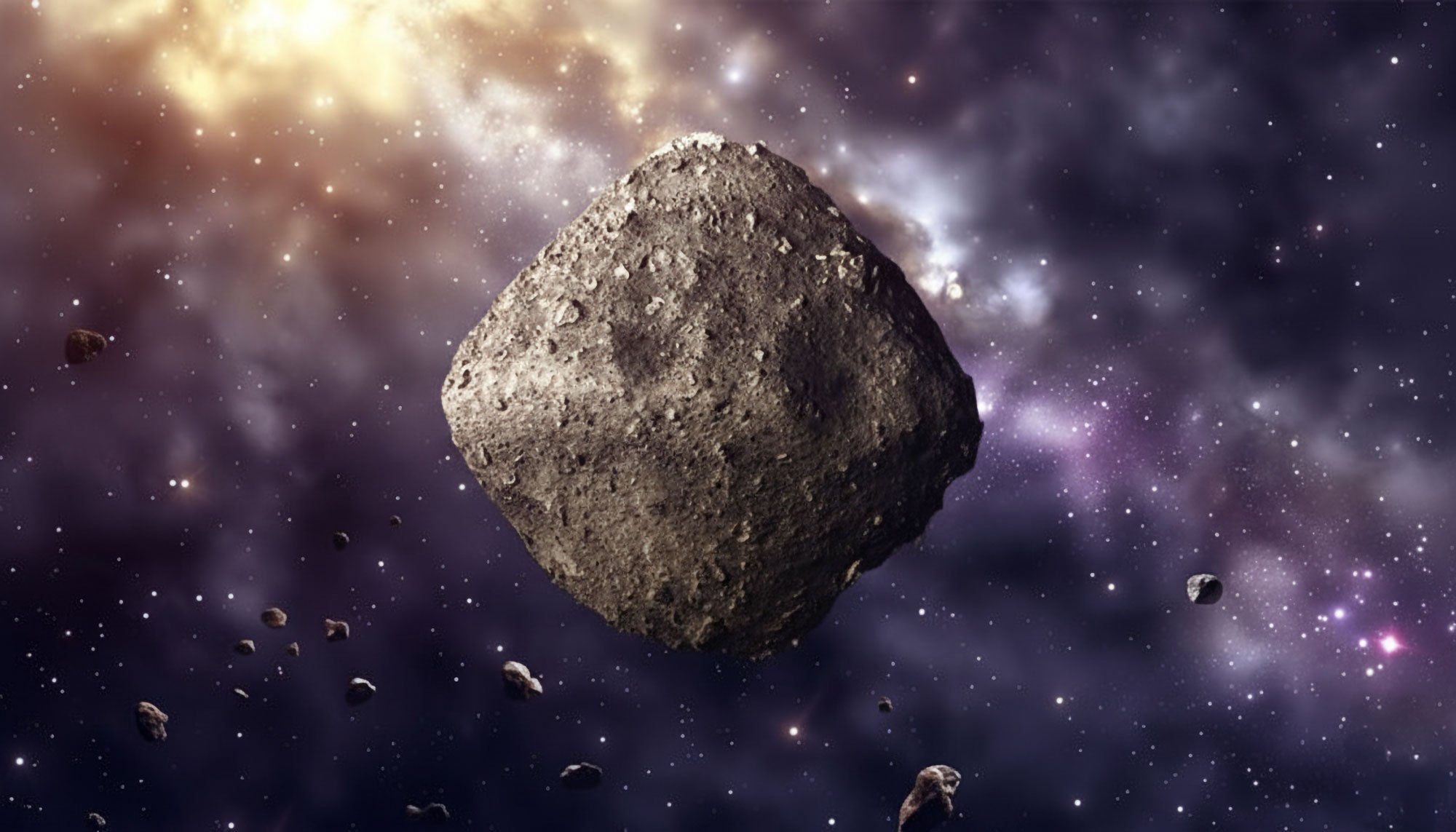
Liquid water on asteroids reshapes how we understand the early solar system.
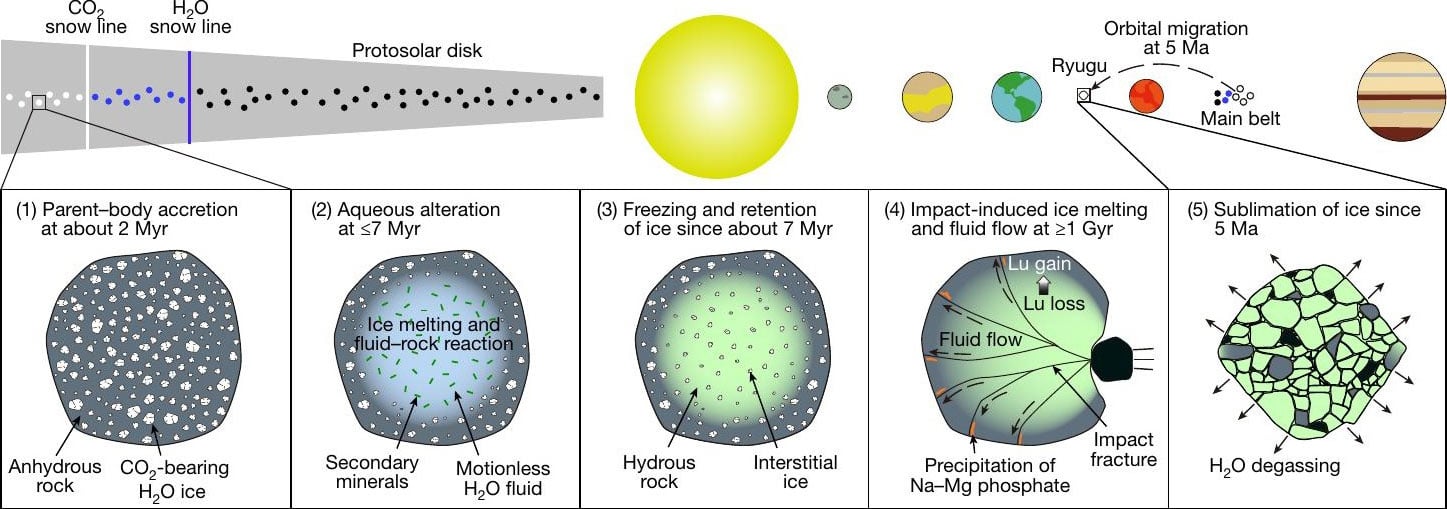
A group of scientists, including researchers from the University of Tokyo, has found evidence that liquid water once moved through the body of the asteroid that eventually gave rise to the near-Earth asteroid Ryugu. Remarkably, this activity occurred more than a billion years after the asteroid originally formed.
The discovery comes from the study of tiny rock fragments collected by the Hayabusa2 spacecraft of the Japan Aerospace Exploration Agency (JAXA). The results challenge the long-standing belief that water-related processes on asteroids happened only during the earliest stages of solar system history. This new understanding could influence models of how Earth itself was formed.
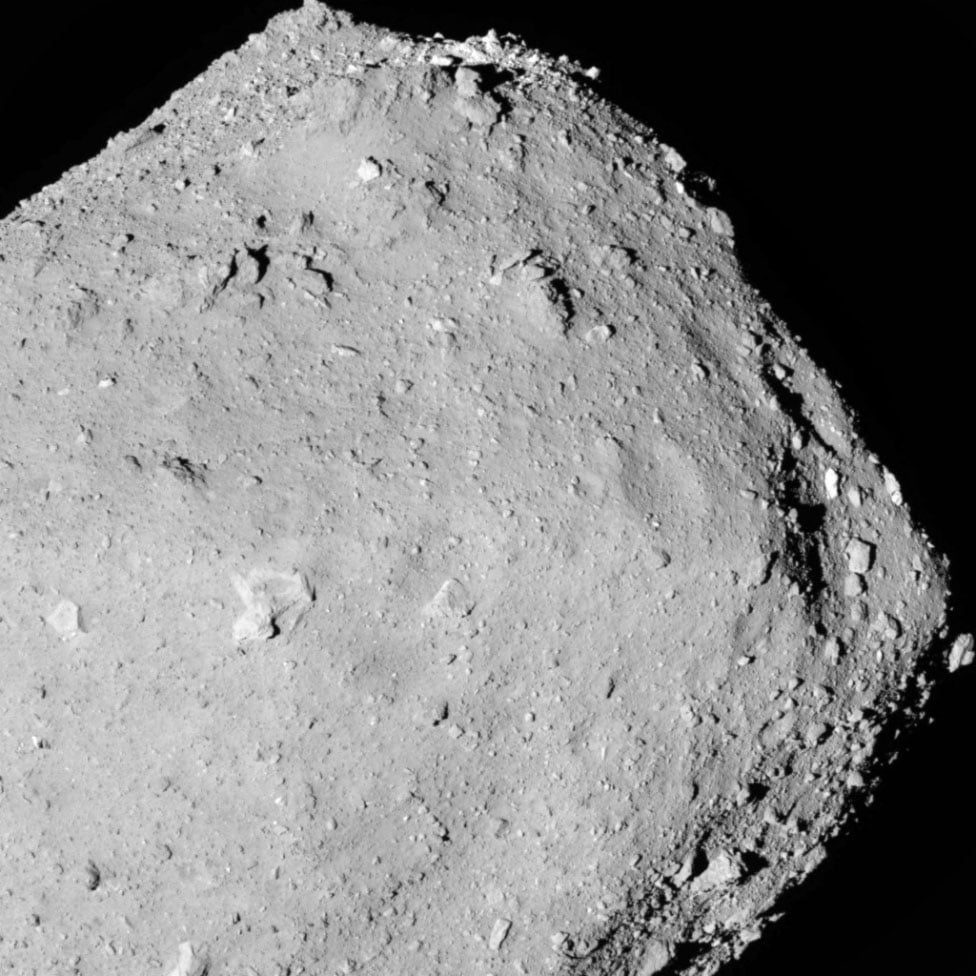
Although scientists have developed a fairly detailed picture of how the solar system came together, important questions remain. One of the biggest mysteries is how Earth acquired such an abundance of water. For decades, researchers have suspected that carbon-rich asteroids, such as Ryugu, which were created from ice and dust in the outer regions of the solar system, played a major role in supplying that water. Ryugu was visited by the Hayabusa2 mission in 2018, marking the first time a spacecraft both studied such an asteroid directly and returned samples to Earth. These precious materials are now helping researchers address some of the most fundamental questions about the origins of our planet.
Evidence of Long-Lived Water Activity
“We found that Ryugu preserved a pristine record of water activity, evidence that fluids moved through its rocks far later than we expected,” said Associate Professor Tsuyoshi Iizuka from the Department of Earth and Planetary Science at the University of Tokyo. “This changes how we think about the long-term fate of water in asteroids. The water hung around for a long time and was not exhausted so quickly as thought.”
The heart of the discovery comes from the analysis of isotopes of lutetium (Lu) and hafnium (Hf), whose radioactive decay from 176Lu to 176Hf can serve as a sort of clock for measuring geological processes. Their presence in certain quantities in the samples studied was expected to relate to the age of the asteroid in a fairly predictable way. But the ratio of 176Hf to 176Lu was far higher than anticipated. This strongly implied to the researchers that a fluid was essentially washing out the lutetium from the rocks containing it.
“We thought that Ryugu’s chemical record would resemble certain meteorites already studied on Earth,” said Iizuka. “But the results were completely different. This meant we had to carefully rule out other possible explanations and eventually concluded that the Lu-Hf system was disturbed by late fluid flow. The most likely trigger was an impact on a larger asteroid parent of Ryugu, which fractured the rock and melted buried ice, allowing liquid water to percolate through the body. It was a genuine surprise! This impact event may be also responsible for the disruption of the parent body to form Ryugu.”
Implications for Earth’s Water
One of the most important implications is that carbon-rich asteroids may have contained and delivered much more water to Earth than previously thought. It seems Ryugu’s parent body retained ice for over a billion years, meaning similar bodies striking a young Earth could have carried an estimated two to three times more water than standard models account for, significantly affecting our planet’s early oceans and atmosphere.
“The idea that Ryugu-like objects held on to ice for so long is remarkable,” said Iizuka. “It suggests that the building blocks of Earth were far wetter than we imagined. This forces us to rethink the starting conditions for our planet’s water system. Though it’s too early to say for sure, my team and others might build on this research to clarify things, including how and when our Earth became habitable.”
Hayabusa2 only brought back a few grams of material. With many researchers wanting to run tests on it, each experiment could only use a few tens of milligrams, fractions of a grain of rice. To maximize the information gained, the team developed sophisticated methods for separating elements and analyzing isotopes with extraordinary precision, realizing the full potential of current geochemical analytical techniques.
“Our small sample size was a huge challenge,” recalled Iizuka. “We had to design new chemistry methods that minimized elemental loss while still isolating multiple elements from the same fragment. Without this, we could never have detected such subtle signs of late fluid activity.”
The researchers also plan to study phosphate veins within Ryugu samples to pin down more precise ages of the late fluid flow. They will also compare their results with NASA’s samples collected from asteroid Bennu by the OSIRIS-REx spacecraft, to test whether similar water activity might have happened there too, or whether it was unique to Ryugu. Eventually, Iizuka and colleagues hope to trace how water was stored, mobilized, and finally delivered to Earth, a story that continues to shape our understanding of planetary habitability.
Reference: “Late fluid flow in a primitive asteroid revealed by Lu–Hf isotopes in Ryugu” by Tsuyoshi Iizuka, Takazo Shibuya, Takehito Hayakawa, Tetsuya Yokoyama, Ikshu Gautam, Makiko K. Haba, Kengo T. M. Ito, Yuki Hibiya, Akira Yamaguchi, Yoshinari Abe, Jérôme Aléon, Conel M. O’D. Alexander, Sachiko Amari, Yuri Amelin, Ken-ichi Bajo, Martin Bizzarro, Audrey Bouvier, Richard W. Carlson, Marc Chaussidon, Byeon-Gak Choi, Nicolas Dauphas, Andrew M. Davis, Tommaso Di Rocco, Wataru Fujiya, Ryota Fukai, Hiroshi Hidaka, Hisashi Homma, Gary R. Huss, Trevor R. Ireland, Akira Ishikawa, Shoichi Itoh, Noriyuki Kawasaki, Noriko T. Kita, Koki Kitajima, Thorsten Kleine, Shintaro Komatani, Alexander N. Krot, Ming-Chang Liu, Yuki Masuda, Kazuko Motomura, Frédéric Moynier, Kazuhide Nagashima, Izumi Nakai, Ann Nguyen, Larry Nittler, Andreas Pack, Changkun Park, Laurette Piani, Liping Qin, Sara Russell, Naoya Sakamoto, Maria Schönbächler, Lauren Tafla, Haolan Tang, Kentaro Terada, Yasuko Terada, Tomohiro Usui, Sohei Wada, Meenakshi Wadhwa, Richard J. Walker, Katsuyuki Yamashita, Qing-Zhu Yin, Shigekazu Yoneda, Hiroharu Yui, Ai-Cheng Zhang, Tomoki Nakamura, Hiroshi Naraoka, Takaaki Noguchi, Ryuji Okazaki, Kanako Sakamoto, Hikaru Yabuta, Masanao Abe, Akiko Miyazaki, Aiko Nakato, Masahiro Nishimura, Tatsuaki Okada, Toru Yada, Kasumi Yogata, Satoru Nakazawa, Takanao Saiki, Satoshi Tanaka, Fuyuto Terui, Yuichi Tsuda, Sei-ichiro Watanabe, Makoto Yoshikawa, Shogo Tachibana and Hisayoshi Yurimoto, 10 September 2025, Nature.
DOI: 10.1038/s41586-025-09483-0
This work was supported by Japan Society for the Promotion of Science KAKENHI grants (21KK0057, 22H00170).
Never miss a breakthrough: Join the SciTechDaily newsletter.
Follow us on Google and Google News.