
Close Menu
    Facebook X (Twitter) Instagram
    SciTechDaily
    • Biology
    • Chemistry
    • Earth
    • Health
    • Physics
    • Science
    • Space
    • Technology
    Facebook X (Twitter) Pinterest YouTube RSS
    SciTechDaily
    Home»Space»Astronomers Prepare for Asteroid 2002 AJ129 Flyby of Earth
    Space

    Astronomers Prepare for Asteroid 2002 AJ129 Flyby of Earth

    By DC Agle, Jet Propulsion LaboratoryJanuary 19, 2018No Comments2 Mins Read
    Facebook Twitter Pinterest Telegram LinkedIn WhatsApp Email Reddit
    Share
    Facebook Twitter LinkedIn Pinterest Telegram Email Reddit
    Astronomers Prepare for Asteroid Flyby on February 4
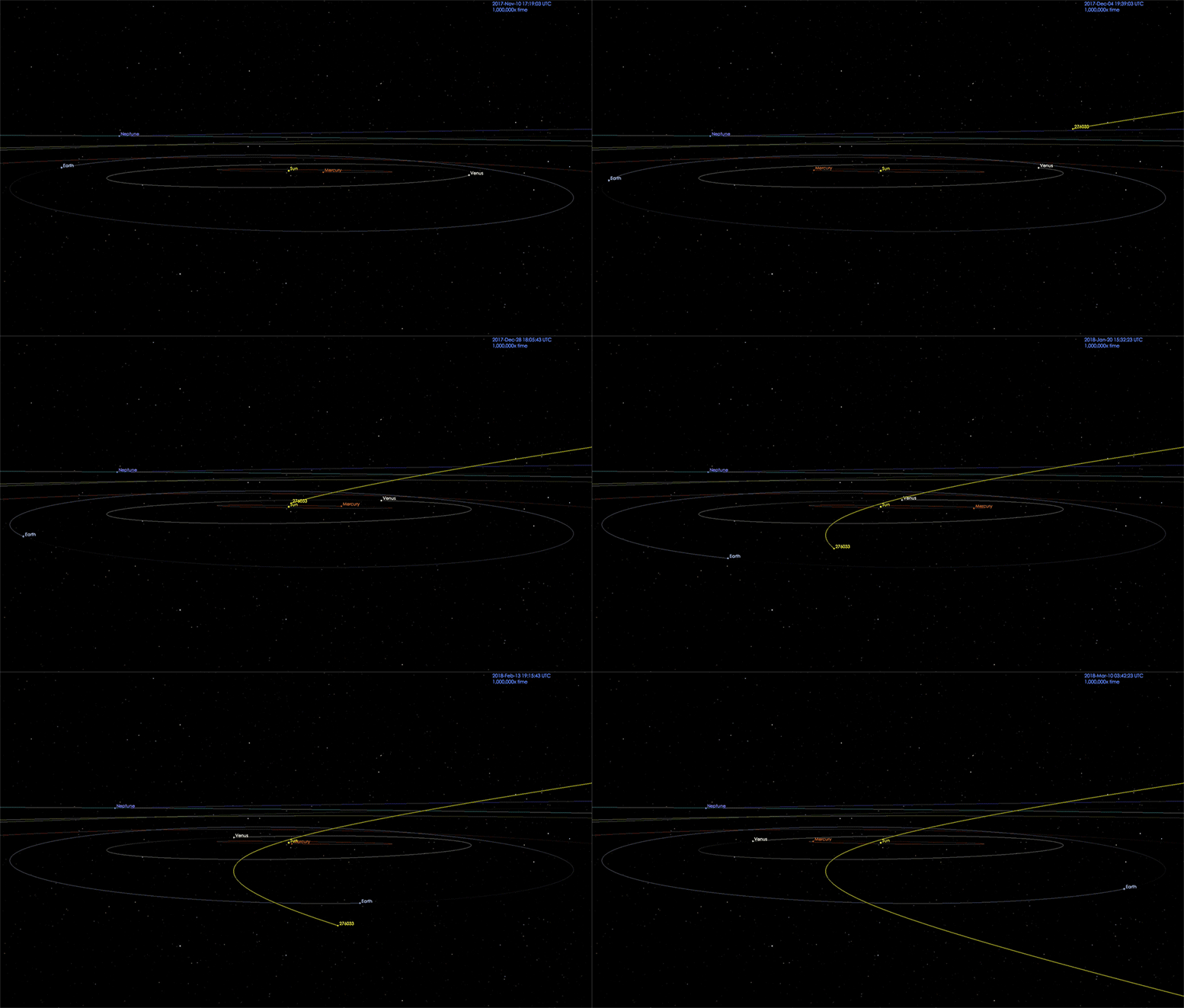
    Asteroid 2002 AJ129 will make its closest approach to Earth on February 4, 2018, at 1:30 p.m. PST (4:30 p.m. EST). At the time of closest approach, the asteroid will be no closer than 10 times the distance between Earth and the moon. Credit: NASA/JPL-Caltech

    Asteroid 2002 AJ129 will make a close approach to Earth on February 4, 2018 at 1:30 p.m. PST (4:30 p.m. EST / 21:30 UTC). At the time of closest approach, the asteroid will be no closer than 10 times the distance between Earth and the Moon (about 2.6 million miles, or 4.2 million kilometers).

    2002 AJ129 is an intermediate-sized near-Earth asteroid, somewhere between 0.3 miles (0.5 kilometers) and 0.75 miles (1.2 kilometers) across. It was discovered on Jan. 15, 2002, by the former NASA-sponsored Near Earth Asteroid Tracking project at the Maui Space Surveillance Site on Haleakala, Hawaii. The asteroid’s velocity at the time of closest approach, 76,000 mph (34 kilometers per second), is higher than the majority of near-Earth objects during an Earth flyby. The high flyby velocity is a result of the asteroid’s orbit, which approaches very close to the Sun — 11 million miles (18 million kilometers). Although asteroid 2002 AJ129 is categorized as a Potentially Hazardous Asteroid (PHA), it does not pose an actual threat of colliding with our planet for the foreseeable future.

    “We have been tracking this asteroid for over 14 years and know its orbit very accurately,” said Paul Chodas, manager of NASA’s Center for Near-Earth Object Studies at the Jet Propulsion Laboratory, Pasadena, California.  “Our calculations indicate that asteroid 2002 AJ129 has no chance — zero — of colliding with Earth on February 4 or any time over the next 100 years.”

    JPL hosts the Center for Near-Earth Object Studies for NASA’s Near-Earth Object Observations Program, an element of the Planetary Defense Coordination Office within the agency’s Science Mission Directorate.

    More information about asteroids and near-Earth objects can be found at:

    https://cneos.jpl.nasa.gov

    https://www.jpl.nasa.gov/asteroidwatch

    For more information about NASA’s Planetary Defense Coordination Office, visit: https://www.nasa.gov/planetarydefense

    Never miss a breakthrough: Join the SciTechDaily newsletter.
    Follow us on Google and Google News.

    Asteroid Astronomy NEO Planetary Science Popular
    Share. Facebook Twitter Pinterest LinkedIn Email Reddit

    Related Articles

    The Moon Was Hit Again: NASA Scientists Discover a Newly Formed Crater

    An Asteroid’s Billion-Year-Old Secret Is a “Genuine Surprise” to Scientists

    For the First Time: Water Molecules Have Been Discovered on an Asteroid’s Surface

    Remnants of an Ancient Asteroid Shake Up a Once Accepted Timeline for Cataclysmic Events in the Early Solar System

    Unusual Pair of Asteroids Reveal Evidence for Early Planetary Shake-Up

    Arecibo Radar Views Near-Earth Asteroid 3200 Phaethon

    New Physical Model Explains the Origin of Water in Our Solar System

    Large Near-Earth Asteroid Florence to Pass Earth on September 1

    “Skull Shaped” Asteroid 2015 TB145 Will Flyby Earth This Halloween

    Leave A Reply Cancel Reply

    • Facebook
    • Twitter
    • Pinterest
    • YouTube

    Don't Miss a Discovery

    Subscribe for the Latest in Science & Tech!

    Trending News

    Millions Take These IBS Drugs, But a New Study Finds Serious Risks

    Scientists Unlock Hidden Secrets of 2,300-Year-Old Mummies Using Cutting-Edge CT Scanner

    Bread Might Be Making You Gain Weight Even Without Eating More Calories

    Scientists Discover Massive Magma Reservoir Beneath Tuscany

    Europe’s Most Active Volcano Just Got Stranger – Here’s Why Scientists Are Rethinking It

    Alzheimer’s Symptoms May Start Outside the Brain, Study Finds

    Millions Take This Popular Supplement – Scientists Discover a Concerning Link to Heart Failure

    The Universe Is Expanding Too Fast and Scientists Can’t Explain Why

    Follow SciTechDaily
    • Facebook
    • Twitter
    • YouTube
    • Pinterest
    • Newsletter
    • RSS
    SciTech News
    • Biology News
    • Chemistry News
    • Earth News
    • Health News
    • Physics News
    • Science News
    • Space News
    • Technology News
    Recent Posts
    • Scientists Say a Hidden Structure May Exist Inside Earth’s Core
    • Doctors Surprised by the Power of a Simple Drug Against Colon Cancer
    • Why Popular Diabetes Drugs Like Ozempic Don’t Work for Everyone: The “Genetic Glitch”
    • Scientists Create Improved Insulin Cells That Reverse Diabetes in Mice
    • Scientists Stunned After Finding Plant Thought Extinct for 60 Years
    Copyright © 1998 - 2026 SciTechDaily. All Rights Reserved.
    • Science News
    • About
    • Contact
    • Editorial Board
    • Privacy Policy
    • Terms of Use

    Type above and press Enter to search. Press Esc to cancel.