
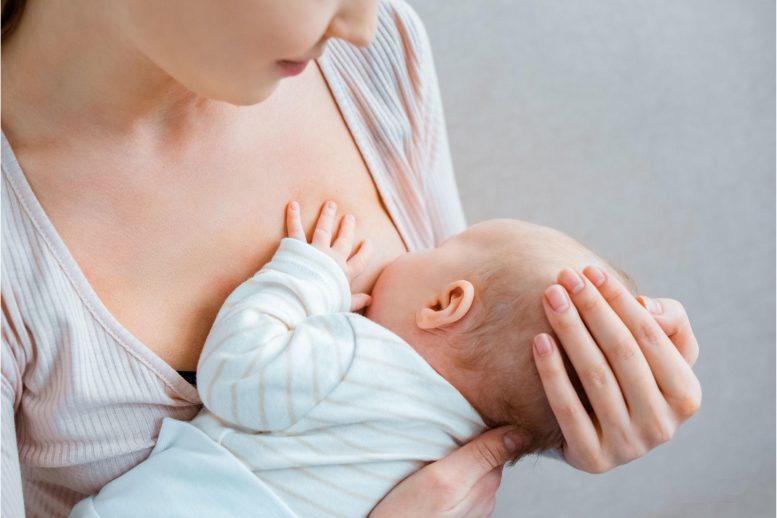
A new study indicates a potential link between extended breastfeeding periods and modest improvements in academic performance during adolescence.
A study published in the journal Archives of Disease in Childhood suggests that children breastfed for longer periods appear to slightly outperform non-breastfed children in their school GSCEs at age 16.
This trend towards improved academic achievement remains noticeable, even when controlling for variables such as socio-economic status and parental intelligence.
Previous studies have suggested that children who breastfed for longer have improved educational outcomes later in life. However these are relatively scarce, and most have not taken into account potential factors that could influence outcomes such as the fact that mothers from a higher socioeconomic status or with higher intelligence scores are more likely to breastfeed their children for longer and have children who get higher results in exams.
A team of researchers from the University of Oxford, therefore, set out to analyze data on a large group of British children who were included in the Millennium Cohort Study, which enrolled 18,818 children born in 2000-2002 living in the UK and who were followed up at ages 3, 5, 7, 11, 14, 17 and 22.
This data was linked to the National Pupil Dataset, which stores longitudinal academic data of students enrolled in English state schools.
For the new study, the researchers analyzed a nationally representative group of 4,940 participants from England up to age 16 and looked at the results of their secondary education standardized examinations (set by the English Department of Education), specifically their General Certificate of Secondary Education (GCSEs) in English and Mathematics. The Attainment 8 score, which is the sum of all the GCSEs taken by the children, was also analyzed.
Around a third (32.8%) of the participants were never breastfed, and the remainder were breastfed for different periods. Only 9.5% were breastfed for at least 12 months.
Longer Breastfeeding Associated with Higher GCSE Scores
Analysis of the results showed that longer breastfeeding was associated with better educational outcomes.
Only around a fifth (19.2%) of children who were breastfed for at least 12 months failed their English GCSE compared with 41.7% of those who were never breastfed, while 28.5% of those breastfed for at least 12 months achieved a high pass (A and A*) compared with 9.6% among non-breastfed children.
For the Mathematics GCSE, only 23.7% of children who were breastfed for at least 12 months failed their test compared with 41.9% of those who never breastfed, while 31.4% of those who breastfed for at least 12 months achieved a high pass (A and A*) compared with 11% among non-breastfed children.
After taking into account confounding factors, the overall association showed that compared with children who never breastfed, children who breastfed for at least 12 months were 39% more likely to have a high pass for both exams and were 25% less likely to fail the English exam.
Additionally, those who breastfed for longer had a better overall performance in their GCSEs (higher Attainment 8 score) than those who never breastfed.
The study had some limitations in that it was not possible to link the National Pupil Dataset for approximately 4,000 children because they were lost to follow-up or did not consent, while a further 1,292 children were not followed up to age 14 when maternal cognitive ability was measured.
Additionally, other factors that could potentially influence the association were not considered.
Nevertheless, the authors said their findings were nationally representative for children enrolled in state schools in England and the large sample size allowed them to detect outcome differences between several breastfeeding duration groups.
They had also taken into account the confounding effects of several markers of family-level and area-level socioeconomic status and maternal intelligence.
They concluded: “Breastfeeding duration was associated with improved educational outcomes at age 16 among children living in England, after controlling for important confounders. However, the effect sizes were modest and may be susceptible to residual confounding. Breastfeeding should continue to be encouraged, when possible, as potential improvements in academic achievement constitute only one of its potential benefits. Future studies should adjust for both socioeconomic circumstances (comprehensively) and maternal general intelligence.”
Reference: “Association between breastfeeding duration and educational achievement in England: results from the Millennium Cohort Study” by Reneé Pereyra-Elías, Claire Carson and Maria A Quigley, 5 June 2023, Archives of Disease in Childhood.
DOI: 10.1136/archdischild-2022-325148
The study was funded by the Nuffield Department of Population Health at University of Oxford.
Never miss a breakthrough: Join the SciTechDaily newsletter.
Follow us on Google and Google News.