

Close Menu
    Facebook X (Twitter) Instagram
    SciTechDaily
    • Biology
    • Chemistry
    • Earth
    • Health
    • Physics
    • Science
    • Space
    • Technology
    Facebook X (Twitter) Pinterest YouTube RSS
    SciTechDaily
    Home»Physics»Taming the Sun’s Inferno: Controlling Fusion Plasma Heat at 100 Million Degrees
    Physics

    Taming the Sun’s Inferno: Controlling Fusion Plasma Heat at 100 Million Degrees

    By Kyoto UniversityAugust 24, 20231 Comment3 Mins Read
    Facebook Twitter Pinterest Telegram LinkedIn WhatsApp Email Reddit
    Share
    Facebook Twitter LinkedIn Pinterest Telegram Email Reddit
    Advanced Fusion Reactor Concept Art
    Researchers at Kyoto University have developed a model to predict and control the rotational temperatures of hydrogen molecules in fusion reactors. This discovery aids in cooling plasma and optimizing the performance of fusion devices, offering insights for future advancements in fusion power generation.

    An international team of researchers has discovered a method to predict and control the rotational temperatures of hydrogen molecules in fusion reactors.

    Humans may never be able to tame the Sun, but hydrogen plasma — making up most of the Sun’s interior — can be confined in a magnetic field as part of fusion power generation: with a caveat.

    The Challenge of Containing Plasma

    The extremely high-temperature plasmas, typically as high as 100 million degrees Celsius, confined in the tokamaks — donut-shaped fusion reactors — cause damage to the containment walls of these mega devices. Researchers inject hydrogen and inert gases near the device wall to cool the plasma by radiation and recombination, which is the reverse of ionization. Heat load mitigation is critical to extending the lifetime of future fusion device.

    Enhancing Recombination Processes

    Understanding and predicting the process of the vibrational and rotational temperatures of hydrogen molecules near the walls could enhance the recombination, but effective strategies have remained elusive.
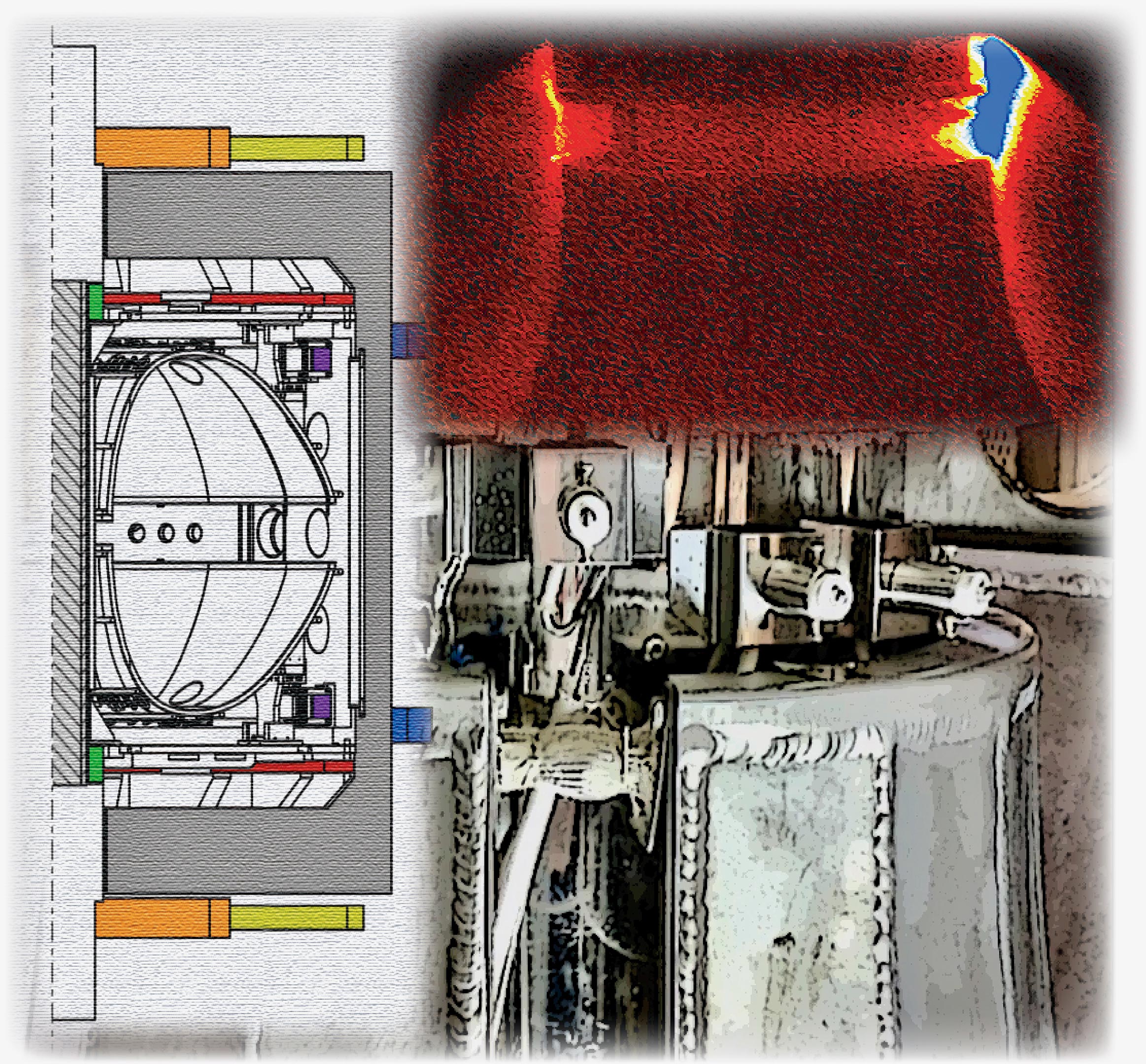
    Measuring Temperatures in Nuclear Fusion Devices
    Rotational temperatures of hydrogen molecules desorbed from plasma-facing surface was measured in three different tokamaks; the increases of the temperature due to collisional-radiative processes in the plasmas were also evaluated. Credit: KyotoU Global Comms/Taiichi Shikama

    An international team of researchers led by Kyoto University has recently found a way to explain the rotational temperatures measured in three different experimental fusion devices in Japan and the United States. Their model evaluates the surface interactions and electron-proton collisions of hydrogen molecules.

    “In our model, we targeted the evaluation on the rotational temperatures in the low energy levels, enabling us to explain the measurements from several experimental devices,” adds corresponding author Nao Yoneda of KyotoU’s Graduate School of Engineering.

    Optimizing Fusion Device Performance

    By enabling the prediction and control of the rotational temperature near the wall surface, the team was able to dissipate plasma heat flux and optimize the devices’ operative conditions.

    “We still need to understand the mechanisms of rotational-vibrational hydrogen excitations,” Yoneda reflects, “but we were pleased that the versatility of our model also allowed us to reproduce the measured rotational temperatures reported in literature.”

    Reference: “Spectroscopic measurement of increases in hydrogen molecular rotational temperature with plasma-facing surface temperature and due to collisional-radiative processes in tokamaks” by N. Yoneda, T. Shikama, F. Scotti, K. Hanada, H. Iguchi, H. Idei, T. Onchi, A. Ejiri, T. Ido, K. Kono, Y. Peng, Y. Osawa, G. Yatomi, A. Kidani, M. Kudo, R. Hiraka, K. Takeda, R.E. Bell, A. Maan, D.P. Boyle, R. Majeski, V.A. Soukhanovskii, M. Groth, A.G. McLean, R.S. Wilcox, C. Lasnier, K. Nakamura, Y. Nagashima, R. Ikezoe, M. Hasegawa, K. Kuroda, A. Higashijima, T. Nagata, S. Shimabukuro, I. Niiya, I. Sekiya and M. Hasuo, 27 July 2023, Nuclear Fusion.
    DOI: 10.1088/1741-4326/acd4d1

    Never miss a breakthrough: Join the SciTechDaily newsletter.
    Follow us on Google and Google News.

    Energy Fusion Energy Fusion Reactor Kyoto University Plasma Physics
    Share. Facebook Twitter Pinterest LinkedIn Email Reddit

    Related Articles

    FuZE3 Hits Gigapascal Plasma in Fusion Energy Milestone

    Inside the Tokamak: Scientists Crack the Code to Stable Fusion Energy

    Plasma’s Hidden Rhythms: The Ballet of Ions and Waves in Fusion Reactors

    The Future of Fusion: Unlocking Complex Physics With AI’s Precision

    Fusing Academia and Industry: The Key to Unlocking Fusion Energy’s Potential

    From Warzone to Fusion Power: Breakthrough in Cooking Up Plasmas With Microwaves

    A Fundamental New Law Unchains Fusion Energy

    Fusion Breakthrough Once Thought Impossible Brings Energy Device Closer to Realization

    JET Fusion Facility – At Temperatures 10x Higher Than the Center of the Sun – Sets a New World Energy Record

    1 Comment

    1. Bao-hua ZHANG on August 24, 2023 6:44 pm

      According to the topological vortex gravitational field theory, the rotational speed determines the temperature, and the number of rotational sites and direction of rotation determine the degree of chaos.

      Reply
    Leave A Reply Cancel Reply

    • Facebook
    • Twitter
    • Pinterest
    • YouTube

    Don't Miss a Discovery

    Subscribe for the Latest in Science & Tech!

    Trending News

    Nanoscale “Defects” Unlock a Major Heat Transfer Breakthrough

    Adults Taking More Vitamin D Scored 13% Higher on a Cognitive Test

    A 35,000-Year-Old Neanderthal Pelvis May Explain Why Men and Women Walk Differently

    Dual Stem Cell Treatment Restores Vision in First Human Trial

    Your Waist Size May Reveal More About Your Health Than You Think

    Scientists Turn Red Strawberries White With a Single Gene Edit

    A SpaceX Falcon 9 Rocket Hit the Moon and Blasted Open a 60-Foot Crater

    Study Reveals Your Organs May Be Aging at Very Different Speeds

    Follow SciTechDaily
    • Facebook
    • Twitter
    • YouTube
    • Pinterest
    • Newsletter
    • RSS
    SciTech News
    • Biology News
    • Chemistry News
    • Earth News
    • Health News
    • Physics News
    • Science News
    • Space News
    • Technology News
    Recent Posts
    • Quantum Simulators Put a 40-Year-Old Physics Theory to the Test
    • 125-Million-Year-Old Crocodile Fossil Reveals Astonishing New Secrets
    • Scientists Discover an “Impossible” Way Muscle Filaments Can Grow
    • Scientists Discover a Mysterious New Snake Species Hiding in New Guinea
    • Bats Have a Secret Immune System Scientists Have Never Seen in Any Other Mammal
    Copyright © 1998 - 2026 SciTechDaily. All Rights Reserved.
    • Science News
    • About
    • Contact
    • Editorial Board
    • Privacy Policy
    • Terms of Use

    Type above and press Enter to search. Press Esc to cancel.