
Close Menu
    Facebook X (Twitter) Instagram
    SciTechDaily
    • Biology
    • Chemistry
    • Earth
    • Health
    • Physics
    • Science
    • Space
    • Technology
    Facebook X (Twitter) Pinterest YouTube RSS
    SciTechDaily
    Home»Biology»Watch: How Hammerhead Sharks Get Their Hammer in Stunning Detail
    Biology

    Watch: How Hammerhead Sharks Get Their Hammer in Stunning Detail

    By University of FloridaNovember 27, 2023No Comments3 Mins Read
    Facebook Twitter Pinterest Telegram LinkedIn WhatsApp Email Reddit
    Share
    Facebook Twitter LinkedIn Pinterest Telegram Email Reddit
    Hammerhead Development
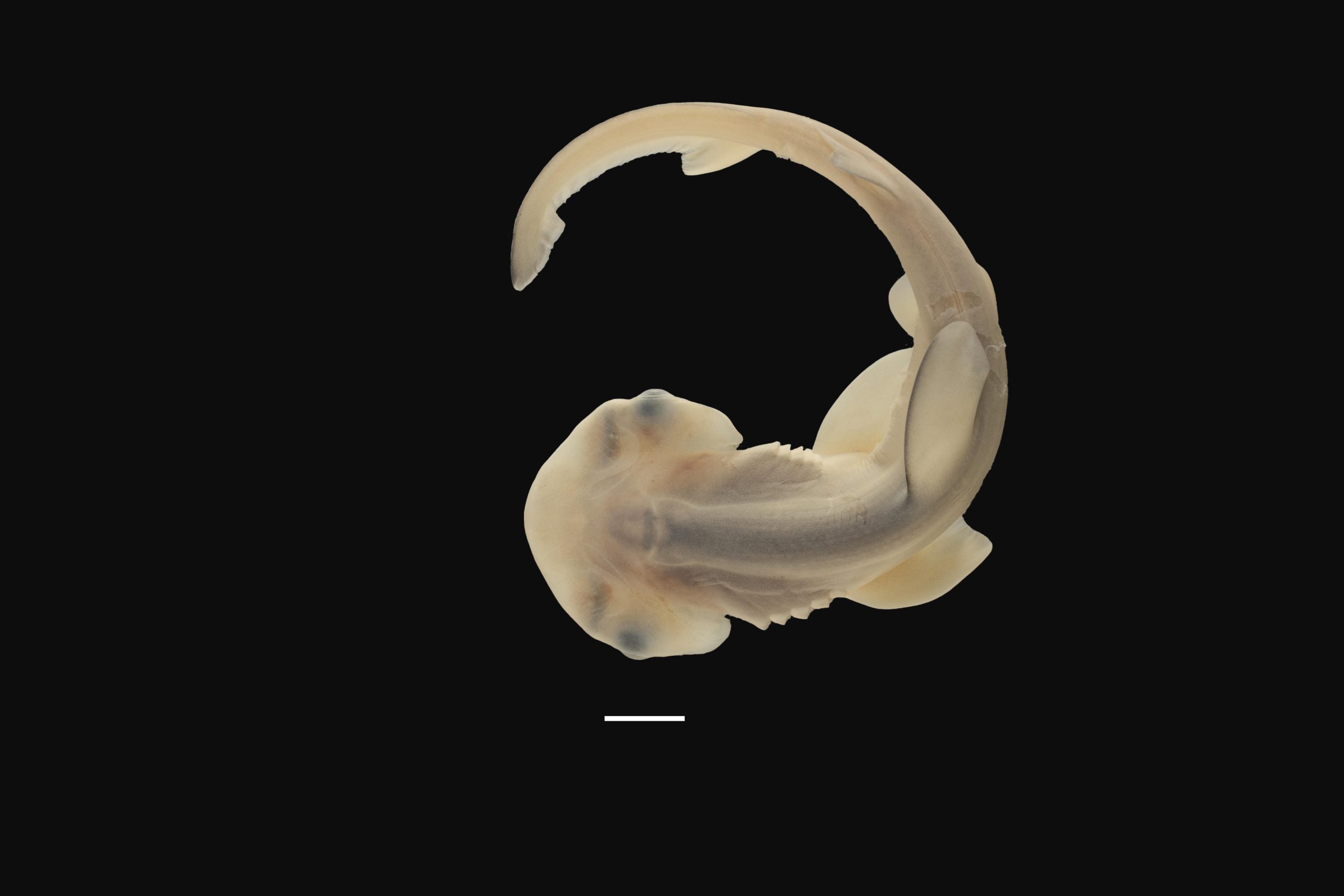
    University of Florida researchers have captured the unique development process of hammerhead sharks, showcasing the transformation of bonnethead embryos into their distinctive hammer-shaped heads. A baby hammerhead during development with a nascent hammerhead snout. Credit: Gareth Fraser

    For weeks, you’d be hard-pressed to tell if the rapidly growing animal was going to become a chicken, a fish, a frog, or even a human.

    Then out of nowhere: the hammer.

    In an unprecedented look at perhaps the strangest, most captivating animals in the ocean, University of Florida scientists have documented how hammerhead sharks stretch and distort their skulls into their namesake hammer-like shape.

    “This is a look at how monsters form,” said Gareth Fraser, a UF professor of biology who supervised the new study. “This is an insight into the development of a wonder of nature that we haven’t seen before and may not be able to see again.”

    The Transformation of Hammerhead Sharks

    In a series of striking pictures, the study reveals how, roughly halfway through gestation, two-inch-long bonnethead shark embryos suddenly widen their heads. The growing skull pushes out their still-growing eyes at unnatural-looking angles. In the following weeks, the front of the hammer rounds out as it pushes backward toward the gills, creating the final shovel-like shape.

    A couple months later, the fully-formed, foot-long shark is born.
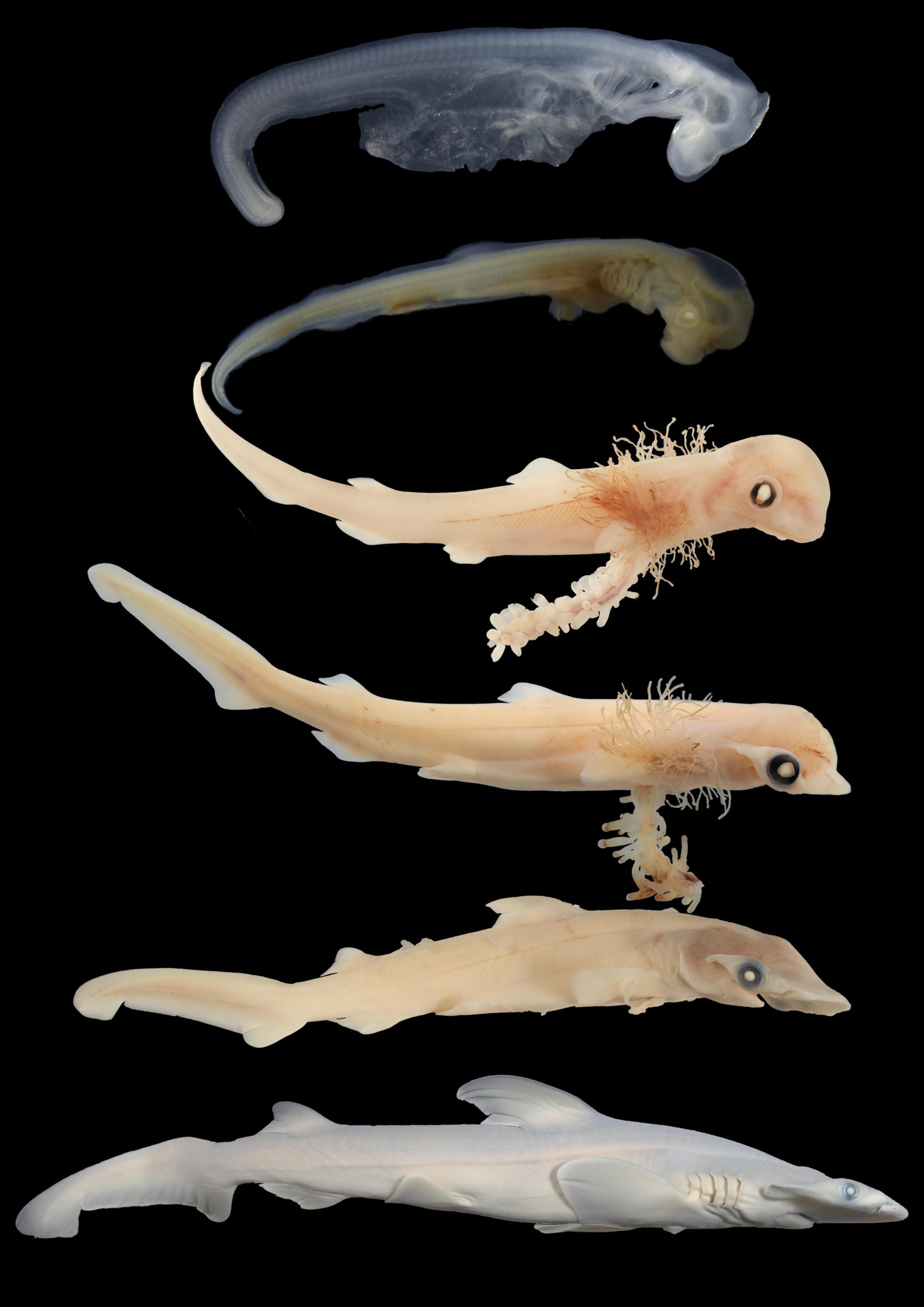
    Hammerhead Gestation
    Credit: Gareth Fraser

    Fraser and his graduate student Steven Byrum led the work to document in careful detail the development of bonnetheads, the smallest hammerhead shark species. Bonnetheads are abundant in the Gulf of Mexico and the Atlantic Ocean and spend time near shore, making them relatively easy to study.

    Challenges in Studying Hammerhead Sharks

    But this detailed look at hammerhead development had previously escaped scientists. Most fish, and many sharks, lay eggs that can be easily collected and examined back at the lab. Hammerheads give birth to live young, which makes it exceedingly difficult to watch embryos develop. Many species are endangered, prohibiting the harvesting of sharks to study their young.

    Fraser’s team made the most of the existing specimens. Through their collaborators, they gained access to embryos that were preserved from bonnetheads caught during other biological studies. No additional sharks were harmed to complete the study.


    During development, baby bonnetheads suddenly sprout their namesake hammerhead feature, which matures as they continue to grow. Credit: Gareth Fraser

    Because of the difficulty of studying hammerheads, the scientists say that such a close look at their development may never happen again.

    “It’s the perfect qualities of the bonnethead that allowed us to do it with this species,” said Byrum. “This was a unique opportunity we may not be able to get for very much longer with bonnetheads and may not be able to get in any other species of hammerhead.”

    Reference: “Embryonic development in the bonnethead (Sphyrna tiburo), a viviparous hammerhead shark” by Steven R. Byrum, Bryan S. Frazier, R. Dean Grubbs, Gavin J. P. Naylor and Gareth J. Fraser, 28 September 2023, Developmental Dynamics.
    DOI: 10.1002/dvdy.658

    Byrum and Fraser worked with Gavin Naylor, director of the Florida Program for Shark Research at the Florida Museum of Natural History, and scientists from the South Carolina Department of Natural Resources and Florida State University to publish their findings Sept. 28 in the journal Developmental Dynamics.

    The documentation sets up future experiments to determine how hammerheads control their head shape and why they evolved their unusual features, which are thought to amplify their field of vision and ability to detect the electrical movements of prey.

    Never miss a breakthrough: Join the SciTechDaily newsletter.
    Follow us on Google and Google News.

    Developmental Biology Marine Biology Sharks University of Florida
    Share. Facebook Twitter Pinterest LinkedIn Email Reddit

    Related Articles

    Reef Sharks in Decline – Already Functionally Extinct on Many of the World’s Reefs

    Life in the Shallows: A Trap for Baby Sharks

    Scientists Surprised When They Examine Stomach Contents of Great White Sharks and Find Out What They Really Eat

    Legacy of Cold War Nuclear Bomb Tests Solves Whale Shark Mystery

    Ocean Acidification From Climate Change Is Damaging Shark Scales

    Six-Year Whale Shark Study Offers New Behavior and Conservation Insights [Video]

    Tracking Basking Sharks Yields Fascinating Insights Into Their Behavior

    Great White Shark Have a More Varied Diet Than Previously Thought

    Relationships of Male Dolphins from Shark Bay Determined by Slow Swimming

    Leave A Reply Cancel Reply

    • Facebook
    • Twitter
    • Pinterest
    • YouTube

    Don't Miss a Discovery

    Subscribe for the Latest in Science & Tech!

    Trending News

    Scientists May Have Discovered How To Heal Damaged Kidneys

    Interstellar Visitor 3I/ATLAS Is Bursting With an Unexpected Chemical

    Scientists Just Found All 5 Genetic “Letters” of DNA and RNA on an Asteroid

    The 4,000-Year-Old City That Defied History’s Rules on Wealth and Power

    The World’s Biggest Population Fear Has Flipped – and It Could Change Everything

    This “Fake” Pill Improved Memory and Physical Performance in Just 3 Weeks

    Scientists Say Frequent Ejaculation May Improve Sperm Quality and Fertility

    Scientists Have Found “The Heaven Sword” After Years of Looking

    Follow SciTechDaily
    • Facebook
    • Twitter
    • YouTube
    • Pinterest
    • Newsletter
    • RSS
    SciTech News
    • Biology News
    • Chemistry News
    • Earth News
    • Health News
    • Physics News
    • Science News
    • Space News
    • Technology News
    Recent Posts
    • New Water-Harvesting Jacket Pulls up to 30 Ounces of Drinking Water From the Air Daily
    • Scientists Finally Uncover Why Gold Never Tarnishes
    • Scientists Uncover a Previously Unknown Lineage of Ancient Marsupials
    • Critically Endangered Monkey Defies the Odds With New Baby After Surgery
    • 17-Million-Year-Old Ape Fossil in Egypt Could Change What We Know About Human Origins
    Copyright © 1998 - 2026 SciTechDaily. All Rights Reserved.
    • Science News
    • About
    • Contact
    • Editorial Board
    • Privacy Policy
    • Terms of Use

    Type above and press Enter to search. Press Esc to cancel.