
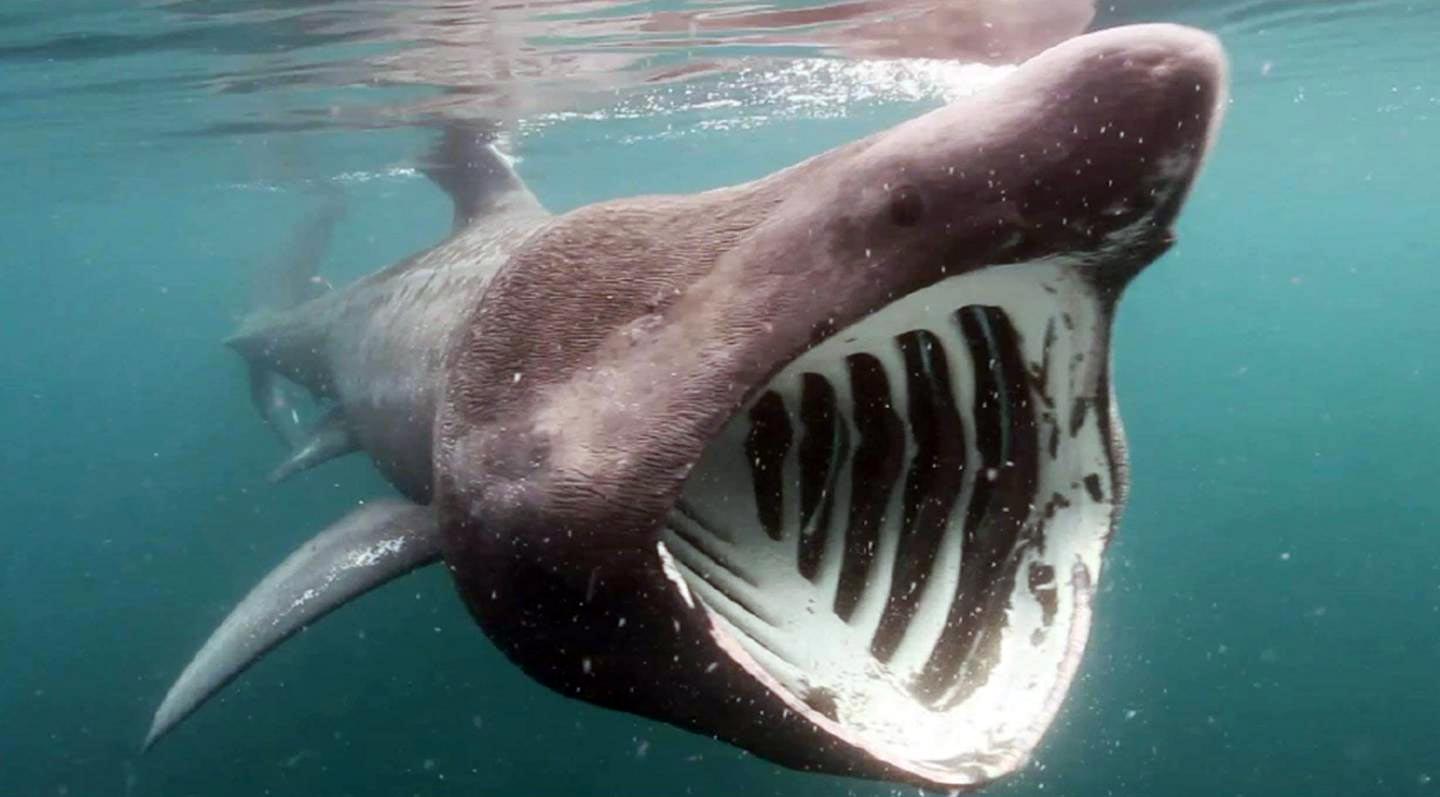
Tracking the world’s second-largest shark species has revealed that it moves to different depths depending on the time of year.
Basking sharks spend most of the summer months at the ocean’s surface, but dive to deeper depths in winter.
This seasonal variation in behavior is likely caused by environmental conditions: sharks could be exploring different areas of the ocean to deal with changes in food abundance.
Basking sharks also perform “yo-yo” dives towards late winter and early spring. “Yo-yo” dives are rapid and repeated movements between deep and surface waters.
Whilst performing these dives, several of the studied sharks reached depths of over 1,000 m (3,000 feet) , and two were tracked as far as 1,500 m (5,000 feet) below the surface.
Dr. Phil Doherty, a postdoctoral researcher at the University of Exeter’s Penryn Campus and lead author of the study, said: “We do not know exactly why the sharks are performing these dives. They may be sampling the water column in efforts to detect prey, or attempting to re-orientate themselves for navigation purposes.”
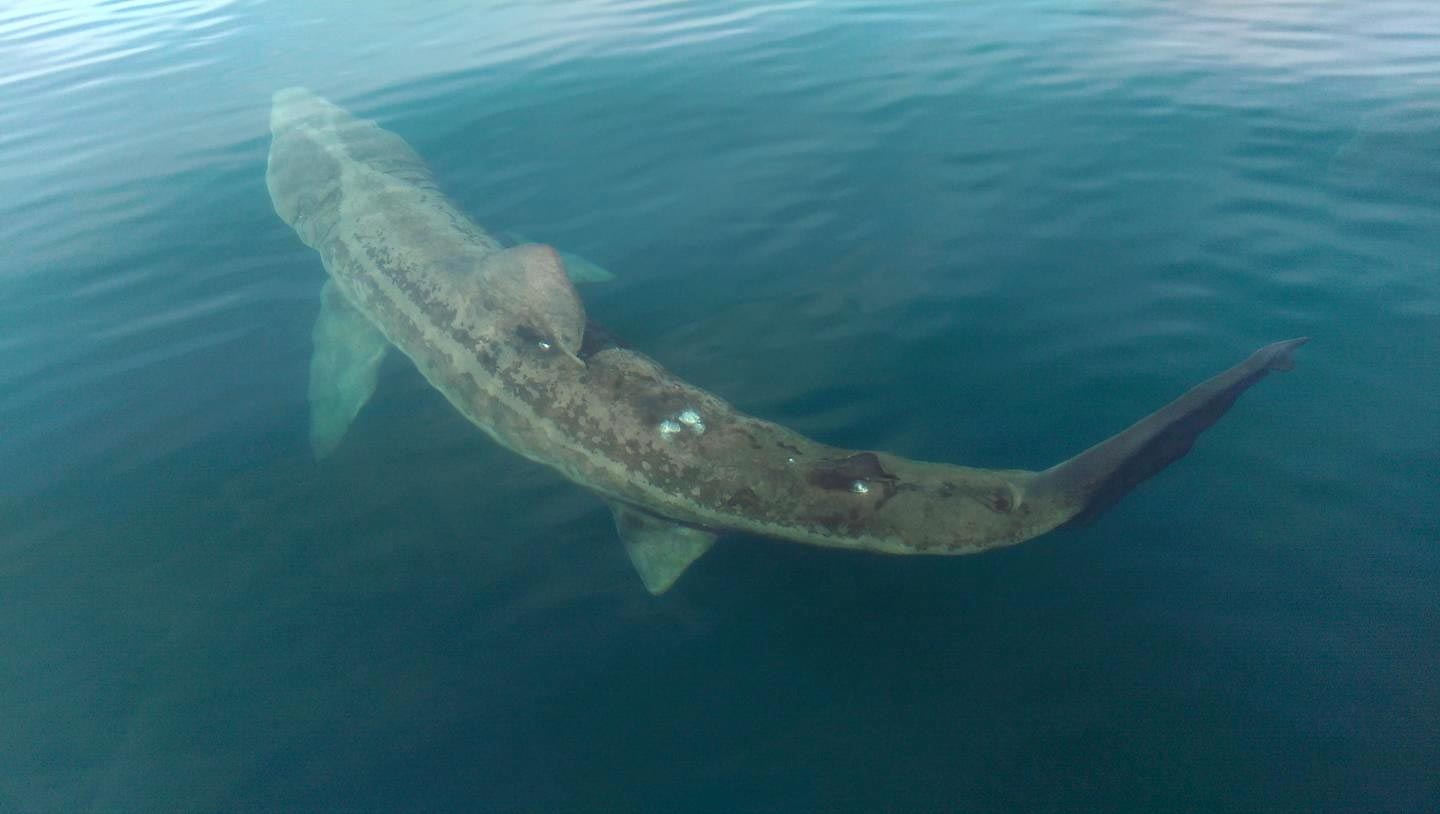
Dr. Doherty and his colleagues from the University of Exeter teamed up with Scottish Natural Heritage, MarAlliance, Manx Basking Shark Watch, and Wave Action to study how the movements and diving behavior of basking sharks change throughout the year.
The team attached satellite tags to 32 of these gentle giants off the coast of Scotland from a boat and monitored their movements. The tags collected data on depth and temperature, along with ambient light levels, which can be used to estimate the sharks’ location each day.
The collected data reveal a seasonal change in diving behavior, it also showed that basking sharks move to different depths depending on the time of day.
“We found that sharks spent most of the summer near the surface of the water, occupying the top few meters during the day, moving down to depths of 10-25 m (33-82 feet) at night. But in winter, they did the opposite, spending the majority of time between 50 and 250 m (164 and 820 feet), but more often shallower during the night,” said Dr. Doherty.
Moving to shallower depths during the day and diving down at night is referred to as “reverse diel vertical migration.” All three planktivorous sharks — basking sharks, whale sharks, and megamouth sharks — have been shown to display this behavior.
Scientists believe that it enables them to track their main food source, plankton. Like basking sharks, plankton can remain close to the ocean’s surface during the summer and move to deeper depths over winter.
Dr. Doherty and his team hope to use their study as a starting point for further investigations to identify “depth hotspots” of basking shark activity.
Dr. Suzanne Henderson, from Scottish Natural Heritage, said: “It’s great to see further analysis and publication of the data collected in 2012-2014. Behavior at depth is the most challenging to obtain and understand and this adds to that knowledge for basking sharks.”
Basking sharks are a protected species considered as “threatened” globally, with the north-east Atlantic population considered “endangered.” Understanding their diving behavior and preferred depths could help determine where shark presence overlaps with different types of fishing gear.
This information could be used to reduce the risk of incidental catch of these sharks by commercial fisheries, although we don’t know to what extent these sharks are at risk in Scottish waters. It could also help inform conservation measures to better protect sharks and their habitat.
###
Reference: “Seasonal changes in basking shark vertical space use in the north-east Atlantic” by P. D. Doherty, J. M. Baxter, B. J. Godley, R. T. Graham, G. Hall, J. Hall, L. A. Hawkes, S. M. Henderson, L. Johnson, C. Speedie and M. J. Witt, 18 September 2019, Marine Biology.
DOI: 10.1007/s00227-019-3565-6
Never miss a breakthrough: Join the SciTechDaily newsletter.
Follow us on Google and Google News.