

The radioactive legacy of the arms race reveals true age of the world’s largest fish.
Atomic bomb tests conducted during the Cold War have helped scientists for the first time correctly determine the age of whale sharks.
The discovery, published in the journal Frontiers in Marine Science, will help ensure the survival of the species — the largest fish in the world — which is classified as endangered.
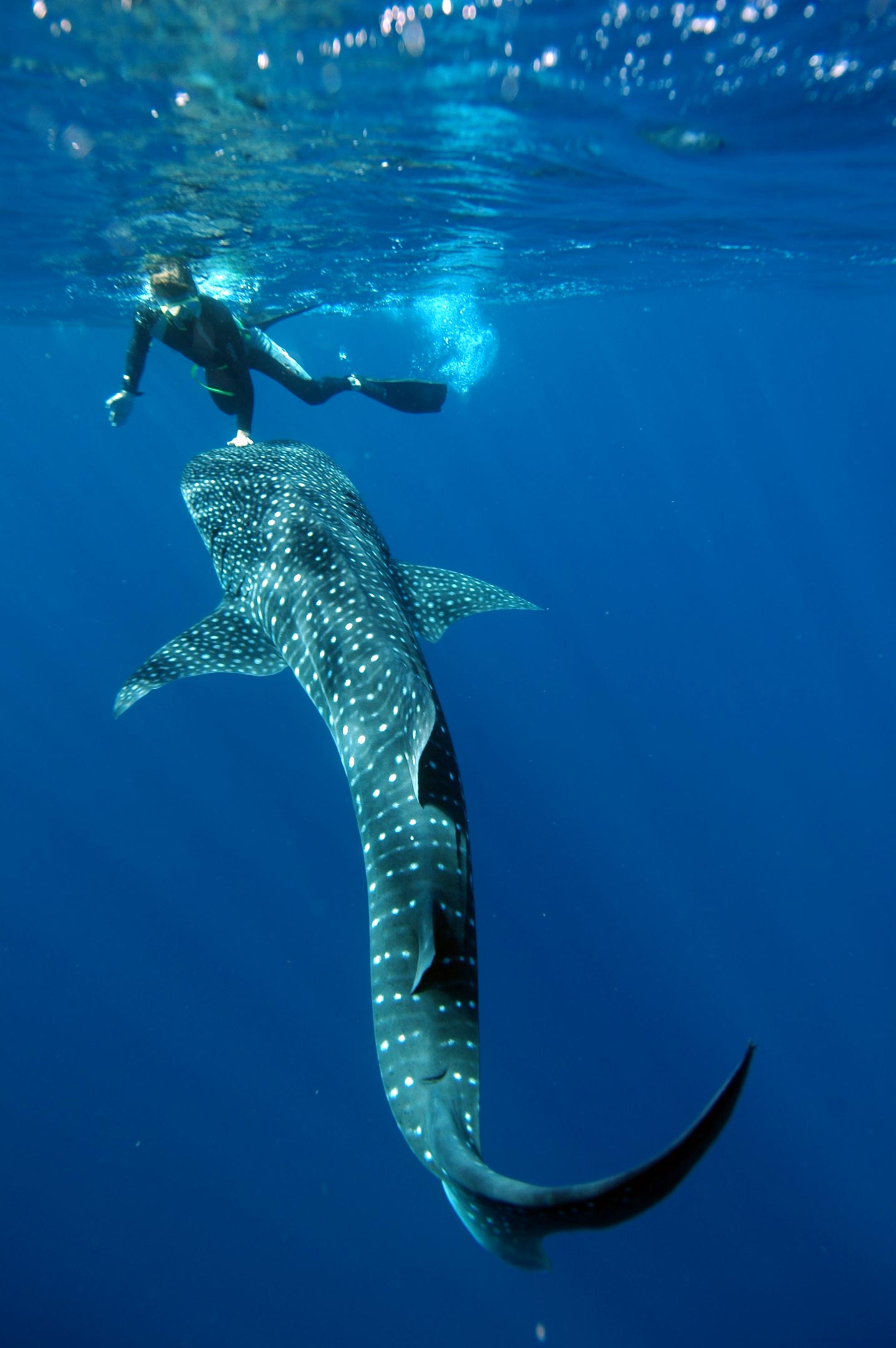
Measuring the age of whale sharks (Rhincodon typus) has been difficult because, like all sharks and rays, they lack bony structures called otoliths that are used to assess the age of other fish.
Whale shark vertebrae feature distinct bands — a little like the rings of a tree trunk — and it was known that these increased in number as the animal grew older. However, some studies suggested that a new ring was formed every year, while others concluded that it happened every six months.
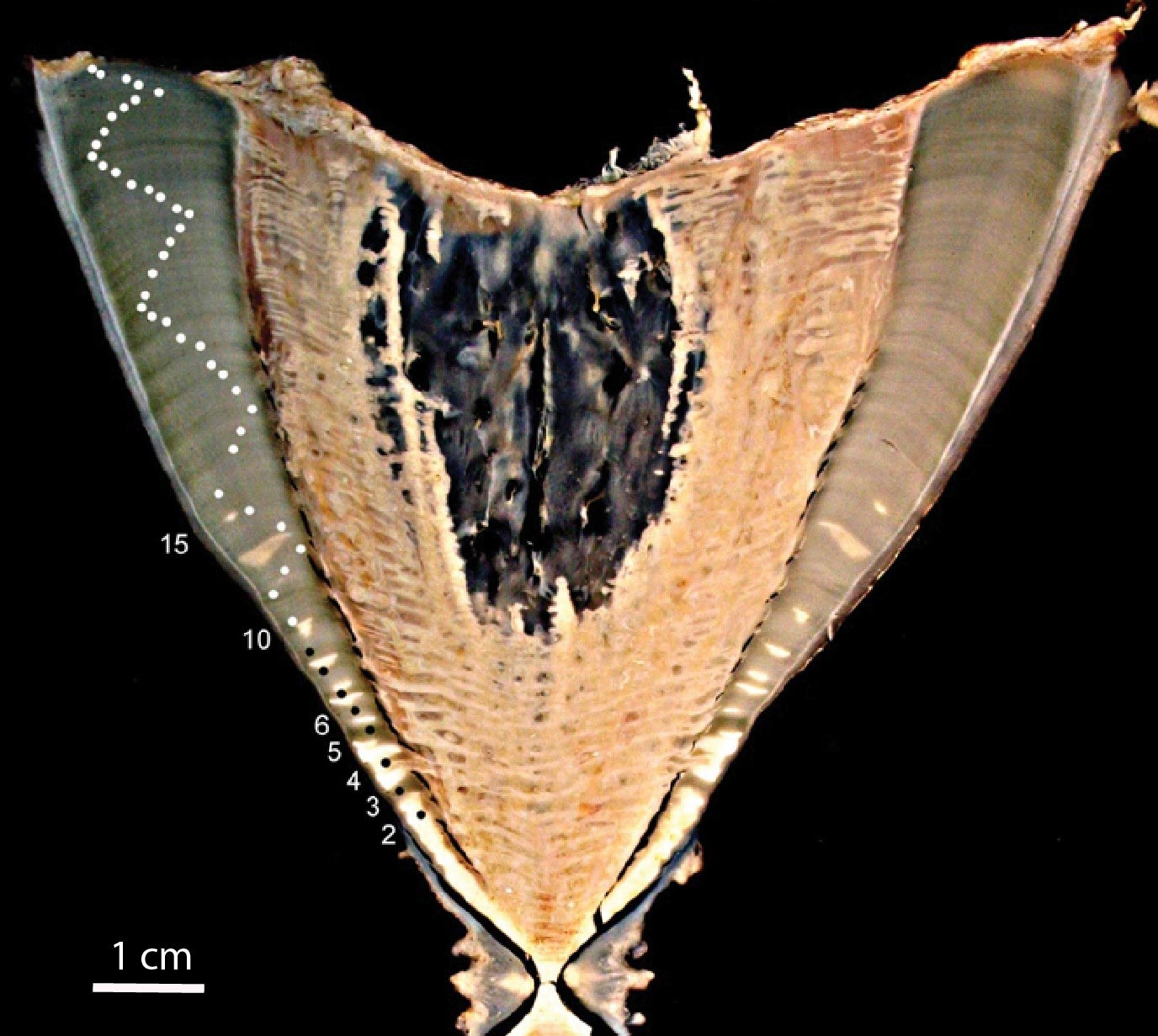
To resolve the question, researchers led by researchers led by Joyce Ong from Rutgers University in New Jersey, USA, Steven Campana from the University of Iceland, and Mark Meekan from the Australian Institute of Marine Science in Perth, Western Australia, turned to the radioactive legacy of the Cold War’s nuclear arms race.
During the 1950s and 1960s, the USA, Soviet Union, Great Britain, France, and China conducted tests of nuclear weapons. Many of these were explosions detonated several kilometers in the air.
One powerful result of the blasts was the temporary atmospheric doubling of an isotope called carbon-14.
Carbon-14 is a naturally occurring radioactive element that is often used by archaeologists and historians to date ancient bones and artifacts. Its rate of decay is constant and easily measured, making it ideal for providing age estimates for anything over 300 years old.
However, it is also a by-product of nuclear explosions. Fallout from the Cold War tests saturated first the air, and then the oceans. The isotope gradually moved through food webs into every living thing on the planet, producing an elevated carbon-14 label, or signature, which still persists.
This additional radioisotope also decays at a steady rate — meaning that the amount contained in bone formed at one point in time will be slightly greater than that contained in otherwise identical bone formed more recently.
Using bomb radiocarbon data prepared by Steven Campana, Ong, Meekan, and colleagues set about testing the carbon-14 levels in the growth rings of two long-dead whale sharks stored in Pakistan and Taiwan. Measuring the radioisotope levels in successive growth rings allowed a clear determination of how often they were created — and thus the age of the animal.
“We found that one growth ring was definitely deposited every year,” Dr Meekan said.
“This is very important, because if you over- or under-estimate growth rates you will inevitably end up with a management strategy that doesn’t work, and you’ll see the population crash.”
One of the specimens was conclusively established as 50 years old at death — the first time such an age has been unambiguously verified.
“Earlier modeling studies have suggested that the largest whale sharks may live as long as 100 years,” Dr. Meekan said.
“However, although our understanding of the movements, behavior, connectivity, and distribution of whale sharks have improved dramatically over the last 10 years, basic life history traits such as age, longevity, and mortality remain largely unknown.
“Our study shows that adult sharks can indeed attain great age and that long lifespans are probably a feature of the species. Now we have another piece of the jigsaw added.”
Reference: “Annual Bands in Vertebrae Validated by Bomb Radiocarbon Assays Provide Estimates of Age and Growth of Whale Sharks” by Joyce J. L. Ong, Mark G. Meekan, Hua Hsun Hsu, L. Paul Fanning and Steven E. Campana, 6 April 2020, Frontiers in Marine Science.
DOI: 10.3389/fmars.2020.00188
Whale sharks are today protected across their global range and are regarded as a high-value species for eco-tourism. AIMS is the world’s leading whale shark research body, and the animal is the marine emblem of Dr. Meekan’s home state, Western Australia.
Drs Ong, Meekan, and Campana were aided by Dr. Hua Hsun Hsu from the King Fahd University of Petroleum and Minerals in Saudi Arabia, and Dr. Paul Fanning from the Pakistan node of the UN Food and Agricultural Organisation.
Never miss a breakthrough: Join the SciTechDaily newsletter.
Follow us on Google and Google News.