
Close Menu
    Facebook X (Twitter) Instagram
    SciTechDaily
    • Biology
    • Chemistry
    • Earth
    • Health
    • Physics
    • Science
    • Space
    • Technology
    Facebook X (Twitter) Pinterest YouTube RSS
    SciTechDaily
    Home»Space»The Starling Squadron: NASA’s CubeSats Take Formation in Space
    Space

    The Starling Squadron: NASA’s CubeSats Take Formation in Space

    By NASADecember 12, 2023No Comments3 Mins Read
    Facebook Twitter Pinterest Telegram LinkedIn WhatsApp Email Reddit
    Share
    Facebook Twitter LinkedIn Pinterest Telegram Email Reddit
    NASA Starling Mission
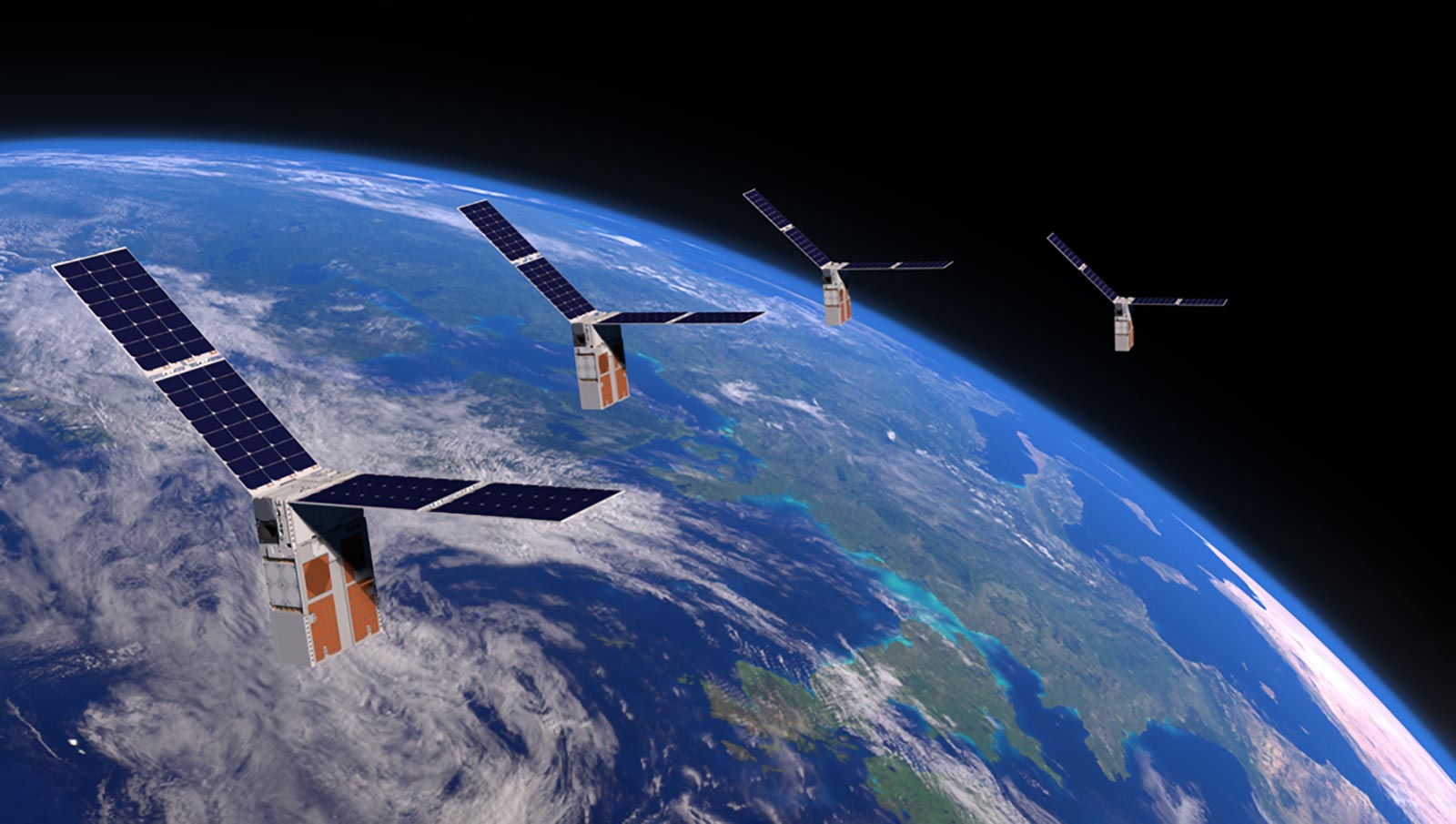
    NASA’s Starling mission will test new technologies for autonomous swarm navigation on four CubeSats in low-Earth orbit. Credit: Blue Canyon Technologies/NASA

    NASA’s Starling mission overcomes early challenges, with its spacecraft now in formation and gearing up for advanced swarm technology experiments.

    NASA’s Starling spacecraft are getting in formation: the mission team has spent the last two months troubleshooting issues and commissioning the four spacecraft, nicknamed Blinky, Pinky, Inky, and Clyde.

    Pinky, Inky, and Clyde have successfully completed their propulsion system commissioning and have executed maneuvers to get into their swarm operations configuration, maintaining a range between 50-200 km apart. The three have also successfully demonstrated two-way communications with their crosslink radios in this closer proximity.

    After launch, ground operators noticed a propulsion system leak on Blinky which caused the spacecraft to enter a slightly lower orbit. The issue was resolved, but it resulted in the spacecraft moving far in front of the others. To correct this, the other three spacecraft performed maneuvers to catch up to Blinky and the swarm is now reunited. The Starling team continues to test Blinky’s propulsion system while the spacecraft is in swarm position.

    Testing and commissioning the spacecraft is an important step in preparing for swarm experiment operations, as well as understanding what challenges future spacecraft swarms might experience. The next mission phase will be focused on development and testing of key swarm technologies.
    NASA Starling
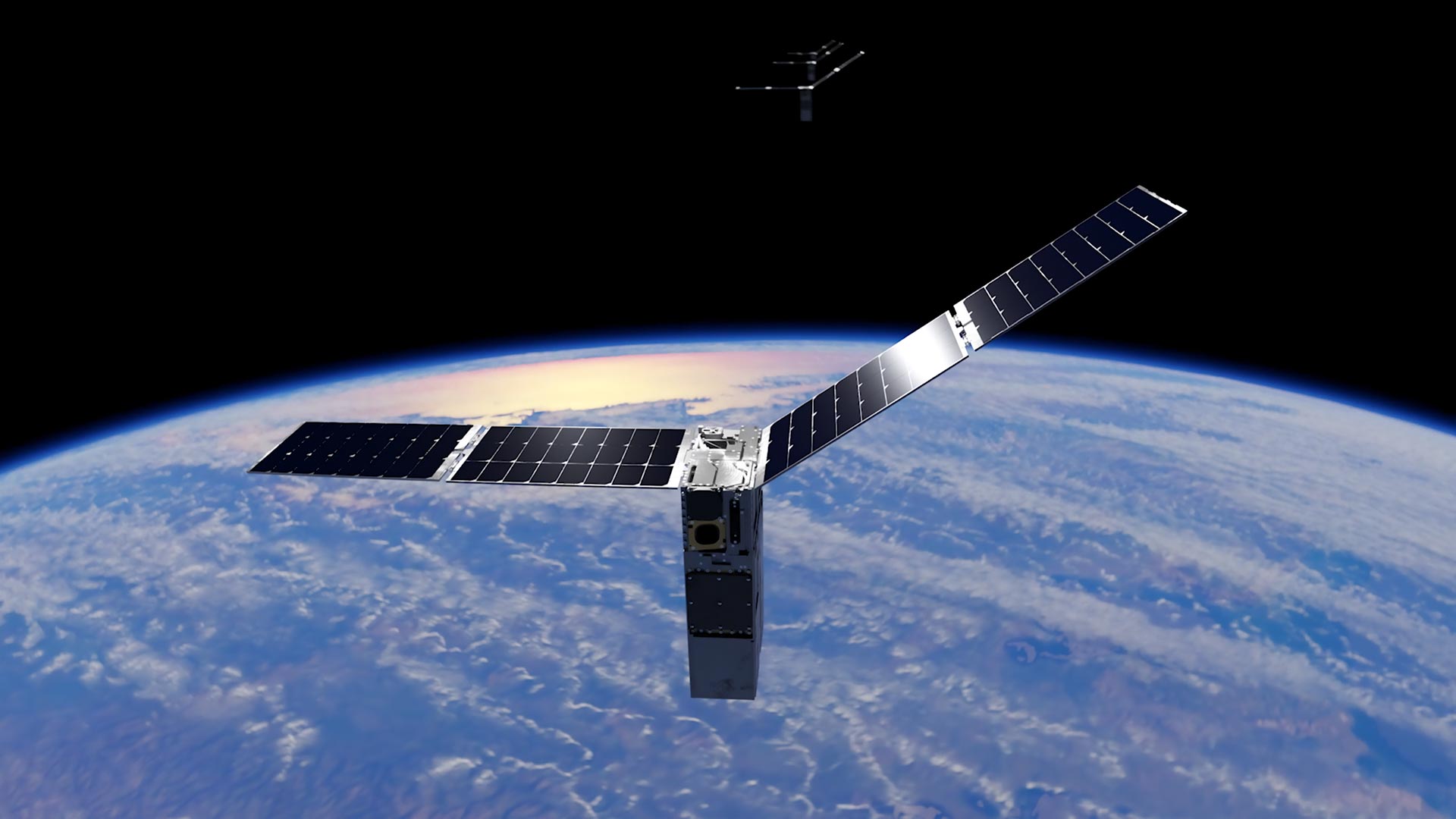
    NASA’s Starling mission will test new technologies for autonomous swarm navigation on four CubeSats in low-Earth orbit. Credit: NASA’s Ames Research Center

    NASA’s Starling Mission

    NASA’s Starling mission represents a significant leap in space exploration technology, specifically in the realm of CubeSats. The mission revolves around a group of small spacecraft, named Starling CubeSats, which includes four uniquely nicknamed units: Blinky, Pinky, Inky, and Clyde. These CubeSats are designed to operate in a swarm configuration, a pioneering approach in spacecraft formation flying.

    The primary goal of the Starling mission is to demonstrate and validate the technologies required for spacecraft to autonomously fly in formation. This involves intricate maneuvers to maintain a specific formation, in this case, keeping the spacecraft within 50-200 kilometers of each other. Such formations are vital for a range of future space exploration missions and experiments, including advanced Earth observation and deep space exploration.

    Starling is funded by NASA’s Small Spacecraft Technology program based at NASA’s Ames Research Center in California’s Silicon Valley and within the agency’s Space Technology Mission Directorate in Washington.

    Never miss a breakthrough: Join the SciTechDaily newsletter.
    Follow us on Google and Google News.

    NASA Starling
    Share. Facebook Twitter Pinterest LinkedIn Email Reddit

    Related Articles

    NASA Just Proved Satellites Can Navigate Without GPS

    NASA’s Starling Swarm Successfully Pioneers Autonomous Space Travel

    StarFOX Experiment: NASA’s Starling CubeSats Succeed in Autonomous Navigation Test

    Blinky, Pinky, Inky, and Clyde: NASA’s Starling CubeSats Take Flight in Swarm Experiment

    NASA’s Robotic Swarm Takes Flight: Communications Achieved for Four Starling CubeSats

    Hubble Reaches New Milestone: 10,000th Scientific Paper Published

    NASA Confiscates Stolen Rocket Engine

    The Mars Rover Curiosity Planetary Protection Snafu

    NASA Curiosity Heads to Mars

    Leave A Reply Cancel Reply

    • Facebook
    • Twitter
    • Pinterest
    • YouTube

    Don't Miss a Discovery

    Subscribe for the Latest in Science & Tech!

    Trending News

    Study Finds Exercise May Be a Surprisingly Powerful Treatment for Pain

    New Research Reveals Dinosaurs May Have Eaten Seaweed

    Don’t Miss: Saturn, Halley’s Comet Meteors and the Seven Sisters Light Up October

    Could Vitamin C Help Stop Leukemia Before It Starts?

    AI May Seem Human-Like, but That Doesn’t Mean People Think It’s Conscious

    Study Finds Natural Dairy Trans Fats Behave Very Differently From Industrial Fats

    Your Voice May Reveal How Fast Your Brain Is Aging

    These Fingernail-Sized Animals Are Moving Astonishing Amounts of California Beach Sand

    Follow SciTechDaily
    • Facebook
    • Twitter
    • YouTube
    • Pinterest
    • Newsletter
    • RSS
    SciTech News
    • Biology News
    • Chemistry News
    • Earth News
    • Health News
    • Physics News
    • Science News
    • Space News
    • Technology News
    Recent Posts
    • Scientists Reveal a Staggering $12 Trillion Potential Hidden in the World’s Oyster Reefs
    • A New Discovery Could Bring Scientists Closer to Healing Damaged Tendons
    • Humpback Whale Mother Stays Beside Her Dead Calf in Heartbreaking Encounter
    • This 160-Million-Year-Old “Squid” Fossil Is Unlike Anything Scientists Have Seen
    • A 178-Year-Old Space Weather Mystery Has Finally Been Solved
    Copyright © 1998 - 2026 SciTechDaily. All Rights Reserved.
    • Science News
    • About
    • Contact
    • Editorial Board
    • Privacy Policy
    • Terms of Use

    Type above and press Enter to search. Press Esc to cancel.