
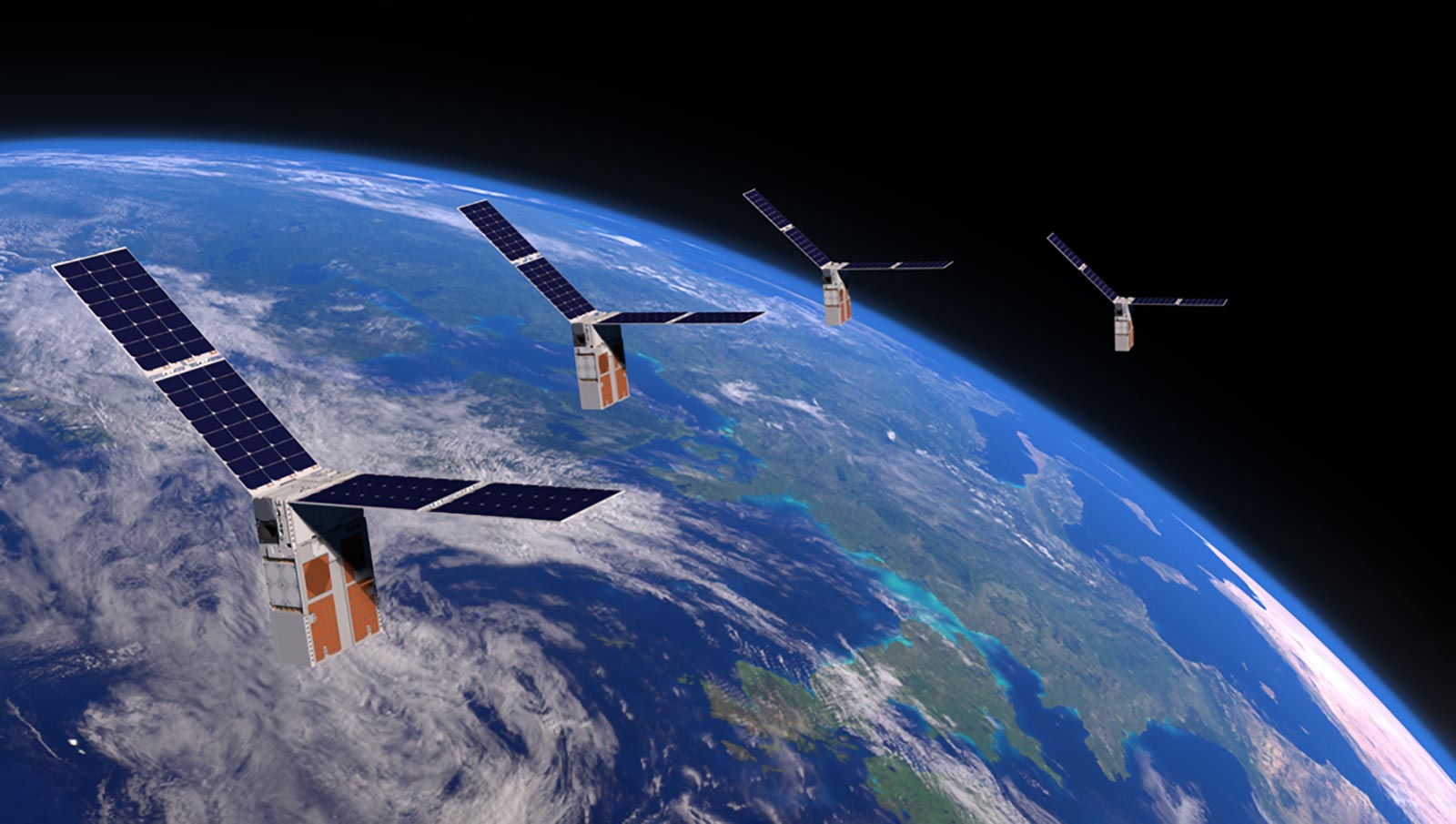
The Starling spacecraft swarm has completed its primary mission, showcasing breakthroughs in autonomous satellite operation and navigation, setting the stage for future collaborative space traffic management with SpaceX.
After ten months in orbit, the Starling spacecraft swarm successfully demonstrated its primary mission’s key objectives, representing significant achievements in the capability of swarm configurations.
Swarms of satellites may one day be used in deep space exploration. An autonomous network of spacecraft could self-navigate, manage scientific experiments, and execute maneuvers to respond to environmental changes without the burden of significant communications delays between the swarm and Earth.
“The success of Starling’s initial mission represents a landmark achievement in the development of autonomous networks of small spacecraft,” said Roger Hunter, program manager for NASA’s Small Spacecraft Technology program at NASA’s Ames Research Center in California’s Silicon Valley. “The team has been very successful in achieving our objectives and adapting in the face of challenges.”
Sharing the Work
The Distributed Spacecraft Autonomy (DSA) experiment, flown onboard Starling, demonstrated the spacecraft swarm’s ability to optimize data collection across the swarm. The CubeSats analyzed Earth’s ionosphere by identifying interesting phenomena and reaching a consensus between each satellite on an approach for analysis.
By sharing observational work across a swarm, each spacecraft can “share the load” and observe different data or work together to provide deeper analysis, reducing human workload, and keeping the spacecraft working without the need for new commands sent from the ground.
The experiment’s success means Starling is the first swarm to autonomously distribute information and operations data between spacecraft to generate plans to work more efficiently, and the first demonstration of a fully distributed onboard reasoning system capable of reacting quickly to changes in scientific observations.
Communicating Across the Swarm
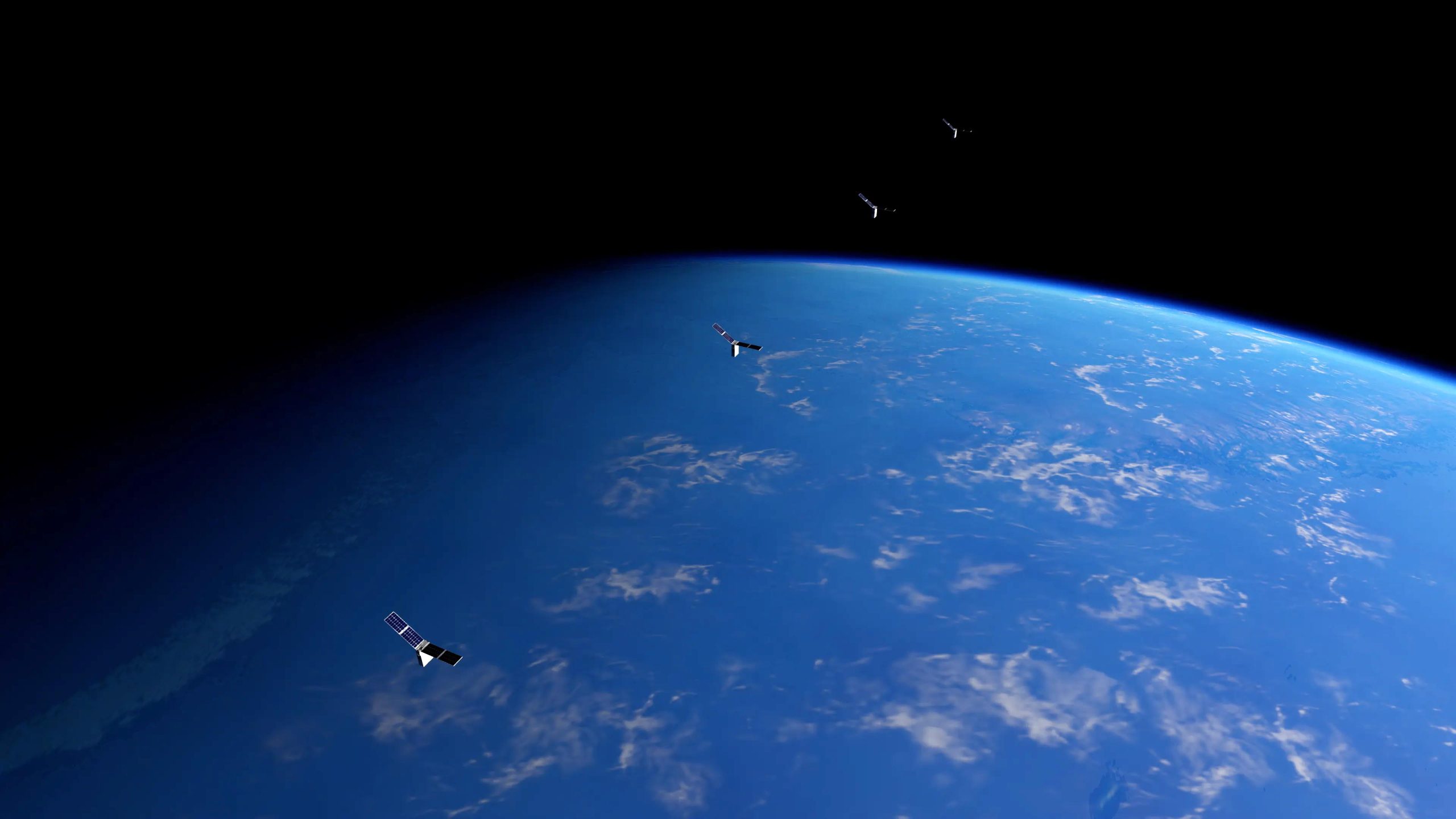
A swarm of spacecraft needs a network to communicate between each other. The Mobile Ad-hoc Network (MANET) experiment automatically established a network in space, allowing the swarm to relay commands and transfer data between one another and the ground, as well as share information about other experiments cooperatively.
The team successfully completed all the MANET experiment objectives, including demonstrating routing commands and data to one of the spacecraft having trouble with space to ground communications, a valuable benefit of a cooperative spacecraft swarm.
“The success of MANET demonstrates the robustness of a swarm,” said Howard Cannon, Starling project manager at NASA Ames. “For example, when the radio went down on one swarm spacecraft, we ‘side-loaded’ the spacecraft from another direction, sending commands, software updates, and other vital information to the spacecraft from another swarm member.”
Autonomous Swarm Navigation
Navigating and operating in relation to one another and the planet is an important part of forming a swarm of spacecraft. Starling Formation-Flying Optical Experiment, or StarFOX, uses star trackers to recognize a fellow swarm member, other satellite, or space debris from the background field of stars, then estimate each spacecraft’s position and velocity.
The experiment is the first-ever published demonstration of this type of swarm navigation, including the ability to track multiple members of a swarm simultaneously and the ability to share observations between the spacecraft, improving accuracy when determining each swarm member’s orbit.
Near the end of mission operations, the swarm was maneuvered into a passive safety ellipse, and in this formation, the StarFOX team was able to achieve a groundbreaking milestone, demonstrating the ability to autonomously estimate the swarm’s orbits using only inter-satellite measurements from the spacecraft star trackers.
Managing Swarm Maneuvers
The ability to plan and execute maneuvers with minimal human intervention is an important part of developing larger satellite swarms. Managing the trajectories and maneuvers of hundreds or thousands of spacecraft autonomously saves time and reduces complexity.
The Reconfiguration and Orbit Maintenance Experiments Onboard (ROMEO) system tests onboard maneuver planning and execution by estimating the spacecraft’s orbit and planning a maneuver to a new desired orbit.
The experiment team has successfully demonstrated the system’s ability to determine and plan a change in orbit and is working to refine the system to reduce propellant use and demonstrate executing the maneuvers. The team will continue to adapt and develop the system throughout Starling’s mission extension.
Swarming Together
Now that Starling’s primary mission objectives are complete, the team will embark on a mission extension known as Starling 1.5, testing space traffic coordination in partnership with SpaceX’s Starlink constellation, which also has autonomous maneuvering capabilities. The project will explore how constellations operated by different users can share information through a ground hub to avoid potential collisions.
“Starling’s partnership with SpaceX is the next step in operating large networks of spacecraft and understanding how two autonomously maneuvering systems can safely operate in proximity to each other. As the number of operational spacecraft increases each year, we must learn how to manage orbital traffic,” said Hunter.
NASA’s Small Spacecraft Technology program, based at Ames and within NASA’s Space Technology Mission Directorate (STMD), funds and manages the Starling mission. Blue Canyon Technologies designed and manufactured the spacecraft buses and is providing mission operations support. Rocket Lab USA, Inc. provided launch and integration services. Partners supporting Starling’s payload experiments have included Stanford University’s Space Rendezvous Lab in Stanford, California, York Space Systems (formerly Emergent Space Technologies) of Denver, Colorado, CesiumAstro of Austin, Texas, L3Harris Technologies, Inc., of Melbourne, Florida. Funding support for the DSA experiment was provided by NASA’s Game Changing Development program within STMD. Partners supporting Starling’s mission extension include SpaceX of Hawthorne, California, NASA’s Conjunction Assessment Risk Analysis (CARA) program, and the Department of Commerce. SpaceX manages the Starlink satellite constellation and the Collision Avoidance ground system.
Never miss a breakthrough: Join the SciTechDaily newsletter.
Follow us on Google and Google News.