
Close Menu
    Facebook X (Twitter) Instagram
    SciTechDaily
    • Biology
    • Chemistry
    • Earth
    • Health
    • Physics
    • Science
    • Space
    • Technology
    Facebook X (Twitter) Pinterest YouTube RSS
    SciTechDaily
    Home»Biology»Survivors of the Ice Age: How Did the Brown Bear Beat Extinction?
    Biology

    Survivors of the Ice Age: How Did the Brown Bear Beat Extinction?

    By University of Copenhagen - The Faculty of Health and Medical SciencesFebruary 18, 2024No Comments3 Mins Read
    Facebook Twitter Pinterest Telegram LinkedIn WhatsApp Email Reddit
    Share
    Facebook Twitter LinkedIn Pinterest Telegram Email Reddit
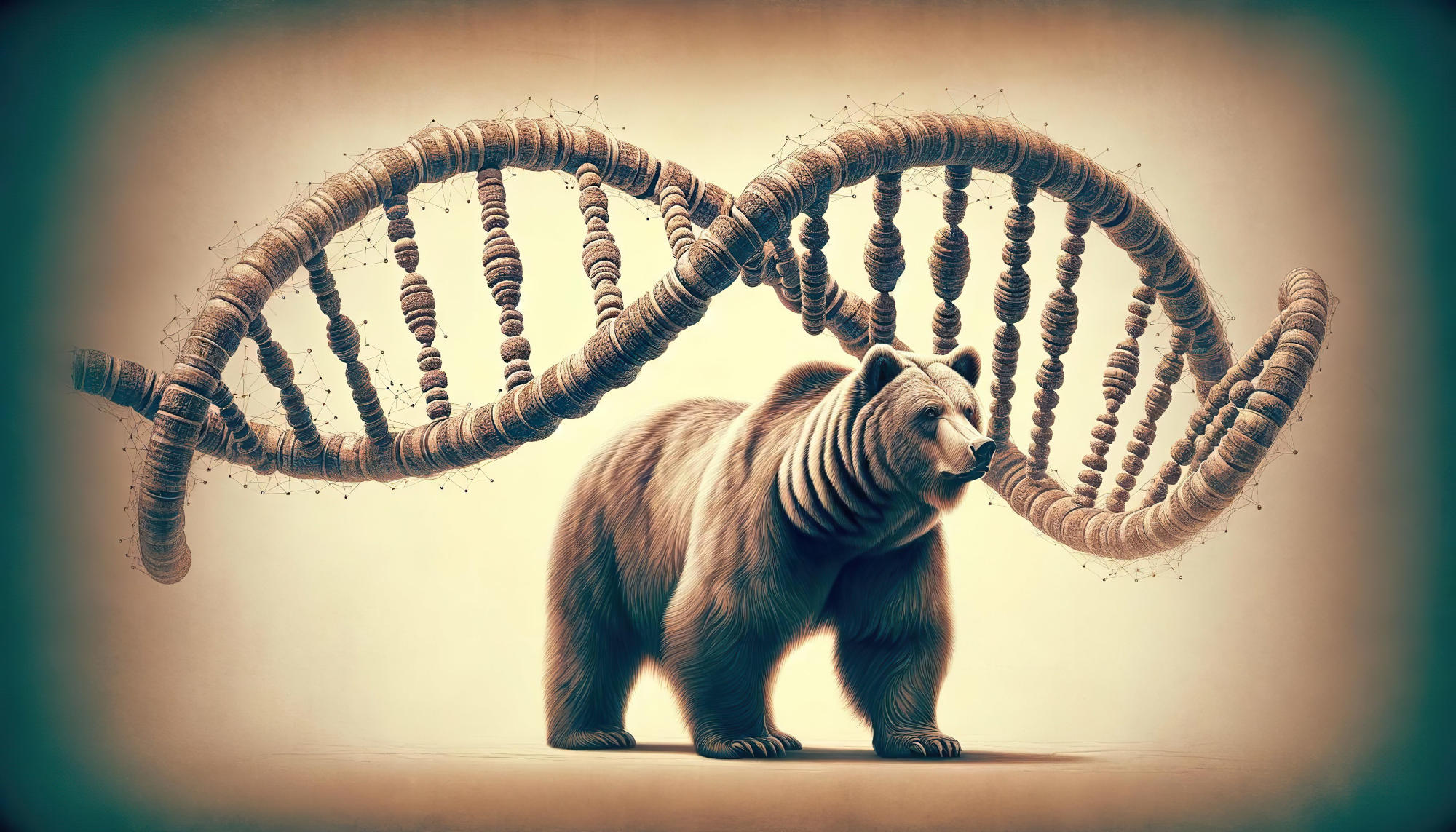
    Ancient Brown Bear DNA
    The study of ancient brown bear genomes reveals that their survival through the last Ice Age involved significant losses in range and genetic diversity, underscoring the importance of historical genetic studies in conservation efforts and future wildlife management. Credit: SciTechDaily.com

    The brown bear is one of the largest terrestrial carnivores alive today, with a broad distribution throughout the Northern Hemisphere. In contrast to numerous other large carnivores that faced extinction by the end of the last Ice Age (cave bear, sabretoothed cats, cave hyena), the brown bear is one of the lucky survivors that made it through to the present. The question has puzzled biologists for close to a century – how was this so?

    Brown bears are ecologically flexible and have a broad dietary range. While they are carnivores, their diets can also consist primarily of plant matter making them adaptable to environmental changes. However, brown bears also experienced extensive range reductions and regional extinctions during the last Ice Age. Brown bears used to occupy a much wider range including Ireland, Honshu, the largest island of Japan, and Quebec (Canada).

    Did the decline or disappearance of bear populations in certain areas happen because bears left those places for better ones that they still currently live, or did unique groups of bears with distinct genes inhabit those areas and go extinct, leading to a loss in the overall diversity of the species?

    Genetic Studies and Insights

    By studying the genomes of ancient brown bears dated to between 3,800 and 60,000 years old, including several individuals from outside their current range, researchers from the University of Copenhagen, Denmark, and the University of Yamanashi, Japan sought to address this question by investigating the evolutionary relationships between brown bears across space and time.

    Their study showed that brown bears did not simply move with the shifting environment, but populations went extinct. “Our analyses showed that ancient brown bears represent genetic diversity absent in today’s populations,” says Takahiro Segawa, lead author of the study. “While brown bears survived global extinction, they suffered considerable losses of their historical range and genetic diversity.” This new perspective highlights a crucial period in the brown bear’s history and that they also faced challenges during and after the last Ice Age.

    “As we continue to grapple with the challenges of coexistence between humans and wildlife, insights from the deep past are invaluable in shaping a sustainable future,” adds Michael Westbury, the senior author of the study. “Although studying recent specimens can provide some insights, by including samples from the past and from areas a species no longer exists, we can better quantify how patterns of current diversity arose, and inform predictions about how they may respond to future environmental change.”

    Reference: “The origins and diversification of Holarctic brown bear populations inferred from genomes of past and present populations” by Takahiro Segawa, Alba Rey-Iglesia, Eline D. Lorenzen and Michael V. Westbury, 24 January 2024, Proceedings of the Royal Society B.
    DOI: 10.1098/rspb.2023.2411

    Never miss a breakthrough: Join the SciTechDaily newsletter.
    Follow us on Google and Google News.

    Extinction Genetics Ice Age University of Copenhagen
    Share. Facebook Twitter Pinterest LinkedIn Email Reddit

    Related Articles

    Surprise! We’re More Like Primitive Fishes Than Once Believed

    New Genetics Research Reveals How Earth’s Oddest Mammal Got to Be So Bizarre

    Zoonomia Project: Largest Set of Mammalian Genomes Reveals Species at Risk of Extinction

    The Scimitar-Toothed Cat: DNA Reveals Insights About a Deadly Long-Distance Hunter

    Arks of Genetic Diversity in Terrestrial Mammals Uncovered by Scientists

    Study Resurrects Woolly Mammoth DNA to Explore the Cause of Their Extinction

    Scientists Extract Complete Human Genome From 5,700-Year-Old “Chewing Gum” – Here’s What They Found

    Hunting and Ivory Trade Likely Drove Icelandic Walrus to Extinction

    Monster From the Deep Hits the Surface: Giant Squid Throughout the World Are Genetically Similar

    Leave A Reply Cancel Reply

    • Facebook
    • Twitter
    • Pinterest
    • YouTube

    Don't Miss a Discovery

    Subscribe for the Latest in Science & Tech!

    Trending News

    JWST Finds a “Star” 100 Billion Times Brighter Than Any Star Should Be

    Scientists Find a Hidden Biological Link Across Different Forms of Autism

    Astronomers Discover a Ghostly River of Stars That Could Reveal Dark Matter

    Why Is Colorectal Cancer Rising in People Under 50? New Clues Point to the Environment

    Quantum Fluctuations Break a Crystal’s Symmetry Rules

    Why Does an Irregular Heartbeat Strike 40 Years Early in Some People?

    Scientists Reveal How ADHD Could Fuel Creative Thinking

    Scientists Find Just 3 Minutes of Sprinting Can Transform Blood Chemistry

    Follow SciTechDaily
    • Facebook
    • Twitter
    • YouTube
    • Pinterest
    • Newsletter
    • RSS
    SciTech News
    • Biology News
    • Chemistry News
    • Earth News
    • Health News
    • Physics News
    • Science News
    • Space News
    • Technology News
    Recent Posts
    • Giant Crocodylians Ruled South America’s Ancient Food Chain
    • 236-Million-Year-Old Fossil Reveals a Stunning Secret About the Origins of Mammal Birth
    • This Suitcase-Sized Spacecraft Could Detect a Signal From Before Stars Existed
    • Three Supermassive Black Holes Found in a Galaxy From the Dawn of the Universe
    • Breakthrough in a Bizarre Galaxy Could Help Unlock the Mystery of Dark Matter
    Copyright © 1998 - 2026 SciTechDaily. All Rights Reserved.
    • Science News
    • About
    • Contact
    • Editorial Board
    • Privacy Policy
    • Terms of Use

    Type above and press Enter to search. Press Esc to cancel.