
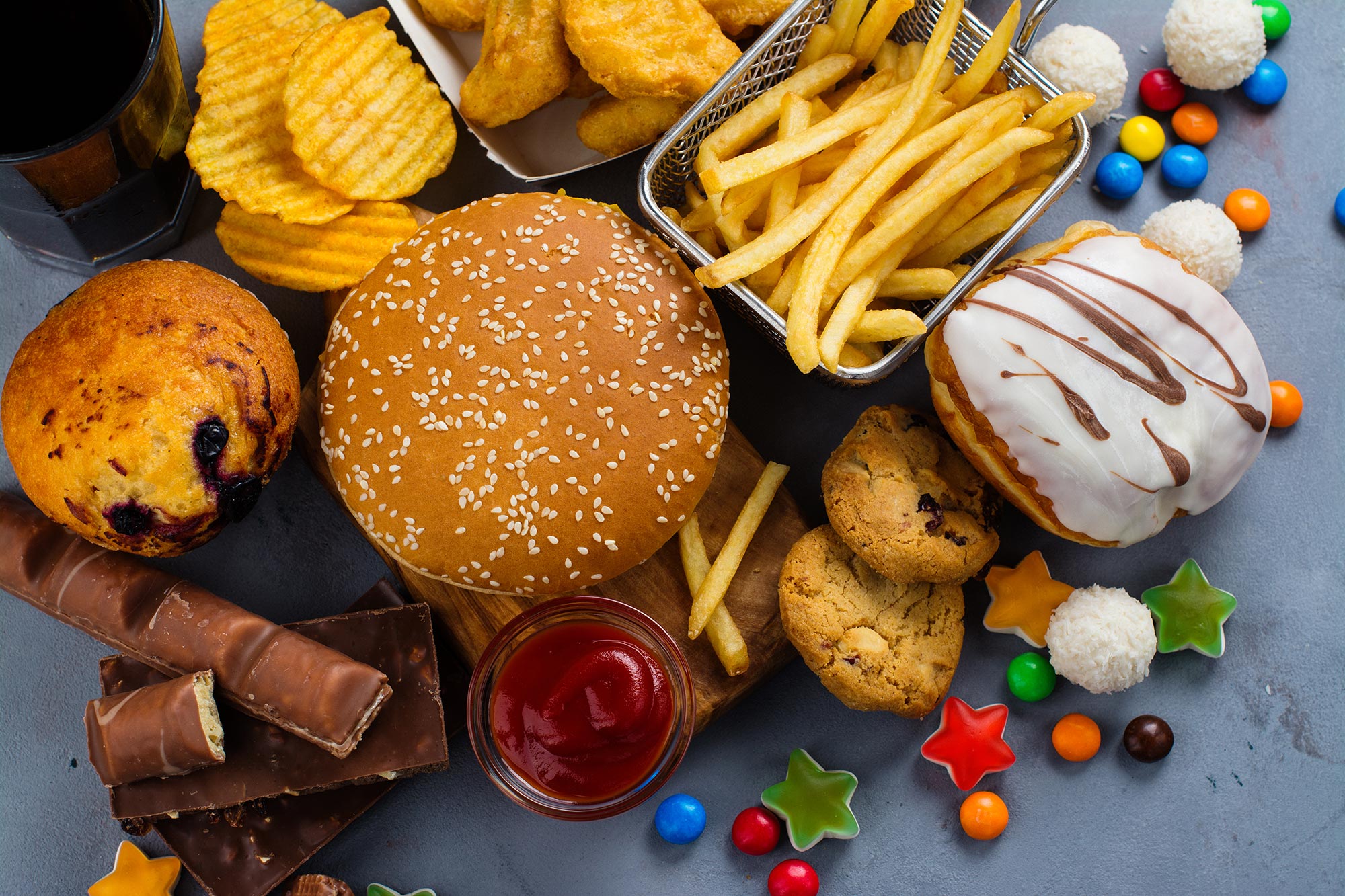
Every extra 100 grams of ultra-processed food eaten daily was linked to higher risks of chronic disease and death, a large analysis found.
Ready-to-eat meals and heat-and-serve snacks have become increasingly common in diets around the world over the past few decades. As people eat more of these heavily processed products, researchers have been trying to work out whether there is a safe amount to consume and where the risks to long-term health might begin.
A large pooled analysis, published in the open access journal Family Medicine and Community Health, found that higher consumption was linked to greater risks of several chronic diseases and death from any cause. Across 51 studies involving 8,819,894 adults, the risks generally rose with the amount eaten.
Higher risks with every extra 100 grams
Ultra-processed foods undergo extensive industrial processing and typically contain a range of additives. They also tend to pack in calories, sugar, and salt while providing relatively little fiber, protein, vitamins, or minerals. But understanding their relationship with health requires more than knowing what is in them. The researchers wanted to examine how the quantity people consumed related to their chances of developing disease over time.
They approached that question in two ways, comparing people with higher and lower intakes and examining how risk changed with each additional amount consumed. For cardiovascular events, higher consumption was associated with a 24% greater risk. Looking at daily amounts, every extra 100 grams, about 3.5 ounces, was linked to a 14% increase in risk. The cardiovascular outcomes included heart attacks, strokes, transient ischemic attacks, sometimes called “mini strokes,” coronary artery disease, and cardiovascular death.
Those percentages describe relative differences between risks. They do not mean that 24% or 14% of the people eating these foods experienced a cardiovascular event.
For cancer, the analysis linked higher consumption to a 12% greater risk, while each additional 100 grams per day was associated with a 4% increase. The cancer outcomes examined included deaths from cancer. Death from any cause was also more likely among people with higher intakes, with an 18% greater risk overall and a 3% increase associated with each extra 100 grams consumed daily.
The findings also connected ultra-processed food intake with problems involving blood sugar, blood pressure, and body weight. Higher consumption was associated with a 24% greater risk of metabolic syndrome or diabetes. Metabolic syndrome describes a group of conditions, including elevated blood pressure and blood sugar, that together increase the risk of heart disease and diabetes. The analysis also found an 11% greater risk of high blood pressure and a 23% greater risk of overweight or obesity among people with higher intakes.
For metabolic syndrome or diabetes, each additional 100 grams eaten daily was associated with a 2% increase in risk. The researchers also examined consumption measured by weight or energy intake, finding a 16% greater risk for every 10% increase in ultra-processed food intake on those measures.
The associations extended to digestive and mental health, with higher consumption linked to a 31% greater risk of digestive diseases and a 27% greater risk of depression or anxiety. Several of the chronic conditions examined can occur together in the same person, known as multimorbidity, which informed the researchers’ discussion of prevention and care.
“Given that UPF-related chronic diseases often cluster as multimorbidity, reducing consumption of UPFs and replacing them with minimally processed alternatives may be relevant for chronic disease prevention and primary care management,” they conclude.
What processing may do to the gut
The analysis could not establish that ultra-processed foods caused these illnesses, although the researchers discussed several biological explanations that might help account for the links. Laboratory studies suggest that extensive processing can alter the physical structure of food in ways that may affect the gut microbiome, the community of microorganisms living in the digestive tract. These changes may also promote inflammation and insulin resistance, which makes it harder for the body to respond to the hormone that regulates blood sugar.
The researchers also pointed to emerging evidence that multiple additives may act together to produce a “cocktail effect” on health. Other potentially relevant substances form during processing itself. Acrylamide, a contaminant that can develop in heat-treated processed foods, and acrolein, generated when fats are heated, have both been associated with a higher incidence of cardiovascular disease.
Diet and lifestyle are hard to separate
To establish how these possibilities relate to people’s long-term health, researchers must contend with the difficulty of measuring diets over many years. The studies included in this analysis followed participants for two to 32 years and assessed their diets through food frequency questionnaires, reports of what they had eaten in the previous 24 hours, or dietary histories. All, therefore, depended on people’s accounts of their eating habits. The researchers converted daily intake in grams into 50-gram servings, about 1.8 ounces, to help compare consumption across studies.
The studies came from the Americas, Europe, Asia, and Oceania and were identified through searches covering research published through the end of April 2026. Average participant ages ranged from 23 to 77, and people younger than 18 were excluded.
Even with years of follow-up, it is difficult to fully separate food choices from the other habits that accompany them. The researchers acknowledged that broader lifestyle and behavioral patterns could influence the risks of chronic disease and death, and that the included studies could not fully account for those influences.
Reference: “Ultra-processed food consumption and risk of multiple chronic diseases among 8,819,894 adults from 51 prospective cohorts: a dose-response meta-analysis” by Xiao Liu, Shengwei Luo, Yunting Zeng, Nanqin Peng, Xinyi Chen, Jianan Tian, Ling Lin, Shan Zeng, Yewei Xie, Zexuan Wang, Jiaxue Xu, Lin Li, Deju Zhang, Wenli Gu, Xiang Gu, Jun Zhang, Menglu Liu, Yujie Zhao, Lihan Zhu, Mir Wajid Majeed, Zhiwei Yan, Wenting Wang and Peng Yu, 22 September 2026, Family Medicine and Community Health.
DOI: 10.1136/fmch-2026-003925
Funding: Natural Science Foundation of China; Natural Science Foundation in Jiangxi Province; Jiangxi Province Thousands of Plan
Meeting: 2025 Annual Meeting of American College of Cardiology Asia
Never miss a breakthrough: Join the SciTechDaily newsletter.
Follow us on Google and Google News.
5 Comments
But to this day, no one has come up with a clear definition of “ultra-processed”. All we get is anecdotal examples like ‘hot dogs’ without bothering to differentiate among how many different kinds and recipes there are. I am beginning to believe this is all click bait.
No. They are explained in different scientific documents and research. The less processing and artificial ingredients, the better. The sausage itself may be prepared in many ways in food processing plants. The same with rolls. The article raises important questions about the population health and it’s very good that these things are discussed more often every year.
And the vast majority of chemicals in the food can be directly traced back to the McGovern Report that, in the name of health, sent the country down the road of obesity, type 2 diabetes and such all in the name of Health. MAHA is just the latest iteration of that gross error.
What are “artificial” ingredients? Does butter qualify? What about adding vitamin D to milk? What about homogenizing or sterilizing milk? What about adding preservatives to baked goods to prevent mold from forming? For that matter, does cooking, particularly when meat gets charred, qualify as “processing?” Is fermentation a form of processing? Definitions are important!
Yup, click bait. You do you.