
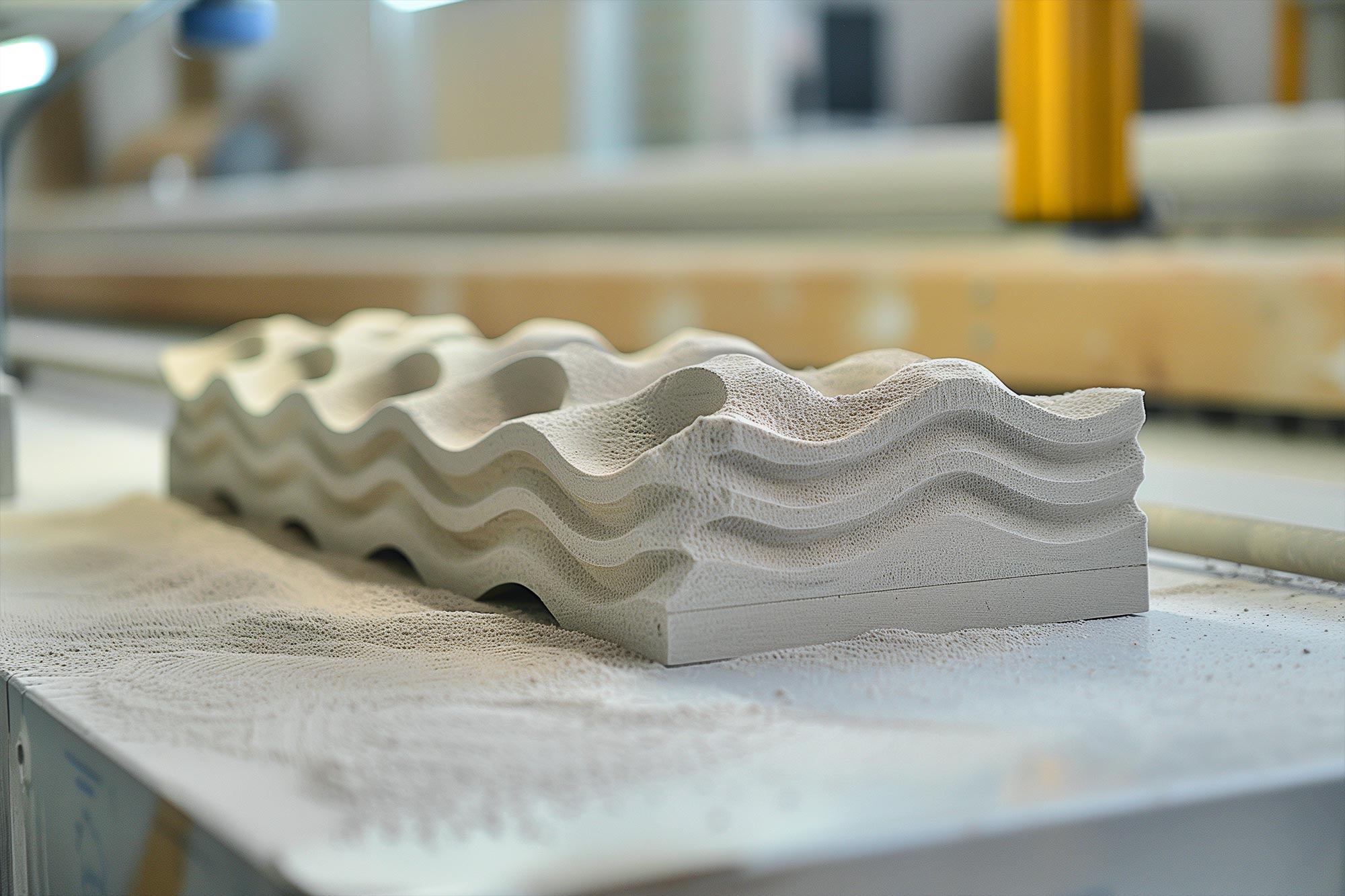
Researchers have grown bacteria in sand-based materials, merging biology and architecture to create sustainable building practices.
Cyanobacteria strengthen materials and aid in CO2 fixation, using innovative manufacturing methods that combine robotics and biological processes.
Innovative Biodesign for Sustainable Construction
Researchers have successfully grown bacterial cells within sand-based construction materials, as reported in Research Directions: Biotechnology Design, a new journal from Cambridge University Press.
This breakthrough represents a significant advance in the field of biodesign, which combines biological and architectural innovations to create more sustainable building materials. By integrating living organisms into construction, this approach aims to transform how structures are designed and built.
Cyanobacteria, known for their unique biological properties, have the potential to solidify inorganic materials like CO2. Their ability to influence their environment highlights the immense value of incorporating living systems into industrial processes, particularly in the construction sector.
Innovative Additive Manufacturing Techniques
The paper capturing this latest research into potential sand-based materials describes the novel development of an additive co-fabrication manufacturing process.
Specifically, the process explored involves the biological deposition of bacteria – such as cyanobacterial calcium carbonate precipitation – and its integration with a robotic deposition, namely a sand-based biomixture, within an architectural biofabrication workflow.
Strengthening Sand-Based Components With Photosynthesis
After successfully growing two bacterial strains in potential sand-based construction materials, the researchers used microbiological protocols, such as optical density and fluorescence measurements, to follow bacterial growth and activity. This was done with the larger goal of harvesting light through photosynthesis and harnessing it to CO2 deposition and the sedimentation of calcium carbonate for strengthening sand-based construction components.
Ultimately, the researchers managed to outline a robotic deposition system for sand-based mixtures.
The paper was co-authored by researchers at the Technion Israel Institute of Technology, in Haifa, Israel, in the Faculty of Architecture and Town Planning and the Faculty of Biotechnology and Food Engineering.
Asst. Prof. Shany Barath, director of Disrupt.Design Lab, and Ph.D. candidate Perla Armaly, of the Faculty of Architecture and Town Planning, further detailed the value and impact of the research.
Toward a Sustainable Construction Future
“The experiments presented in our study offer a novel design approach to producing bio-based architectural components potentially capable of fixating carbon dioxide throughout an additive co-fabrication workflow,” they explained.
“Society needs paths towards more sustainable construction materials – and we hope to develop one of these paths.”
“Our hope is that our study’s findings will encourage further collaboration between architects and biologists, creating and enhancing building materials, and in turn fostering more sustainable construction. By working together across disciplines, we can find innovative, unexpected solutions – and that’s something to get excited about.”
Reference: “Prototyping an additive co-fabrication workflow for architecture: utilizing cyanobacterial MICP in robotic deposition” by Perla Armaly, Lubov Iliassafov, Shay Kirzner, Yechezkel Kashi and Shany Barath, 19 July 2023, Research Directions: Biotechnology Design.
DOI: 10.1017/btd.2023.5
Never miss a breakthrough: Join the SciTechDaily newsletter.
Follow us on Google and Google News.