
Close Menu
    Facebook X (Twitter) Instagram
    SciTechDaily
    • Biology
    • Chemistry
    • Earth
    • Health
    • Physics
    • Science
    • Space
    • Technology
    Facebook X (Twitter) Pinterest YouTube RSS
    SciTechDaily
    Home»Space»NASA’s Cassini Views Saturn’s Moon Tethys
    Space

    NASA’s Cassini Views Saturn’s Moon Tethys

    By SciTechDailyJuly 27, 2015No Comments1 Min Read
    Facebook Twitter Pinterest Telegram LinkedIn WhatsApp Email Reddit
    Share
    Facebook Twitter LinkedIn Pinterest Telegram Email Reddit
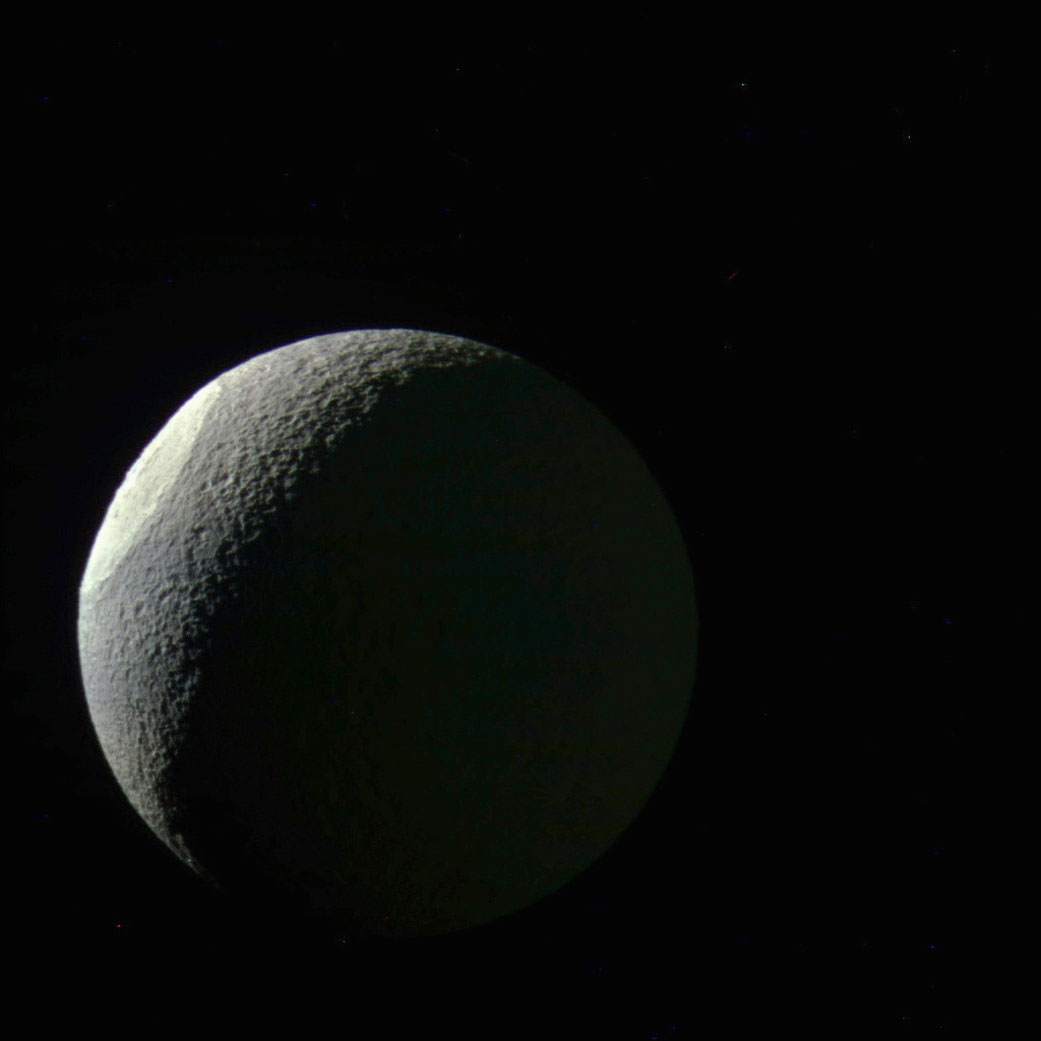
    Cassini Views Saturn's Moon Tethys
    Saturn’s moon Tethys. Credit: NASA/JPL-Caltech/Space Science Institute

    NASA has released a new image of Saturn’s moon Tethys. The image was taken at a distance of approximately 186,000 miles (300,000 kilometers) by NASA’s Cassini Spacecraft.

    With the expanded range of colors visible to Cassini’s cameras, differences in materials and their textures become apparent that are subtle or unseen in natural color views. Here, the giant impact basin Odysseus on Saturn’s moon Tethys stands out brightly from the rest of the illuminated icy crescent. This distinct coloration may result from differences in either the composition or structure of the terrain exposed by the giant impact. Odysseus (280 miles, or 450 kilometers, across) is one of the largest impact craters on Saturn’s icy moons, and may have significantly altered the geologic history of Tethys.

    Tethys’ dark side (at right) is faintly illuminated by reflected light from Saturn.

    Images taken using ultraviolet, green, and infrared spectral filters were combined to create this color view. North on Tethys (660 miles or 1,062 kilometers across) is up in this view.

    The view was acquired on May 9, 2015. The image scale is 1.1 miles (1.8 kilometers) per pixel.

    Never miss a breakthrough: Join the SciTechDaily newsletter.
    Follow us on Google and Google News.

    Astronomy Cassini-Huygens Mission Planetary Science Saturn Tethys
    Share. Facebook Twitter Pinterest LinkedIn Email Reddit

    Related Articles

    NASA’s Cassini Spacecraft Views a Saturn-lit Tethys

    Cassini Views Saturn’s Icy Moon Tethys

    New Cassini Image – Tethys Tops Saturn

    Ices and Shadows – Cassini Views Saturn’s Moon Tethys

    Cassini Spacecraft Image Shows the Difference between Janus and Tethys

    New Cassini View of Saturn and Tethys

    New Cassini Image Shows Tethys Dwarfed by Saturn and Its Rings

    New Cassini Night Side Image of Saturn and Tethys

    Storm Spawns the Largest Tropospheric Vortex Ever Seen on Saturn

    Leave A Reply Cancel Reply

    • Facebook
    • Twitter
    • Pinterest
    • YouTube

    Don't Miss a Discovery

    Subscribe for the Latest in Science & Tech!

    Trending News

    NASA’s Voyager 1 Is About to Become the First Spacecraft One Light-Day From Earth

    A Woman Who Lived 30,000 Years Ago Is Changing What We Know About Ice Age Europe

    A Rare Radioactive Element Reveals a Hidden Secret About the Heaviest Atoms

    Breakthrough Cancer Treatment Wipes Out Deadly Brain Tumors in Every Mouse Tested

    Something Remarkable Is Happening to Dogs Living Near Chernobyl’s Nuclear Plant

    Hubble Uncovers a Mysterious 93-Billion-Mile Structure Hiding in a Nearby Star System

    Earth’s Oceans Were Slowly Suffocating Millions of Years Before a Devastating Mass Extinction

    Why Are Men Twice As Likely To Develop Parkinson’s? Scientists Discover a Hidden Clue in the Brain

    Follow SciTechDaily
    • Facebook
    • Twitter
    • YouTube
    • Pinterest
    • Newsletter
    • RSS
    SciTech News
    • Biology News
    • Chemistry News
    • Earth News
    • Health News
    • Physics News
    • Science News
    • Space News
    • Technology News
    Recent Posts
    • Scientists Find a Clever Way to Read Quantum Information Without Destroying It
    • Chemical Breakthrough Could Unlock the “Holy Grail” of Solid-State Battery Technology
    • Kids Who Learn To Swim Early May Have an Unexpected Advantage in School
    • Could Type 2 Diabetes Be Reversed? 14-Year Study Reveals Remarkable Results
    • The Secret to Saving Shellfish From Acidifying Oceans Could Be Hiding in Crushed Shells
    Copyright © 1998 - 2026 SciTechDaily. All Rights Reserved.
    • Science News
    • About
    • Contact
    • Editorial Board
    • Privacy Policy
    • Terms of Use

    Type above and press Enter to search. Press Esc to cancel.