
Close Menu
    Facebook X (Twitter) Instagram
    SciTechDaily
    • Biology
    • Chemistry
    • Earth
    • Health
    • Physics
    • Science
    • Space
    • Technology
    Facebook X (Twitter) Pinterest YouTube RSS
    SciTechDaily
    Home»Space»Hubble Captures a Super(nova) Spiral: A Galaxy’s Tale of Birth, Beauty, and Explosions
    Space

    Hubble Captures a Super(nova) Spiral: A Galaxy’s Tale of Birth, Beauty, and Explosions

    By ESA/HubbleAugust 19, 2024No Comments2 Mins Read
    Facebook Twitter Pinterest Telegram LinkedIn WhatsApp Email Reddit
    Share
    Facebook Twitter LinkedIn Pinterest Telegram Email Reddit
    Spiral Galaxy UGC 11861
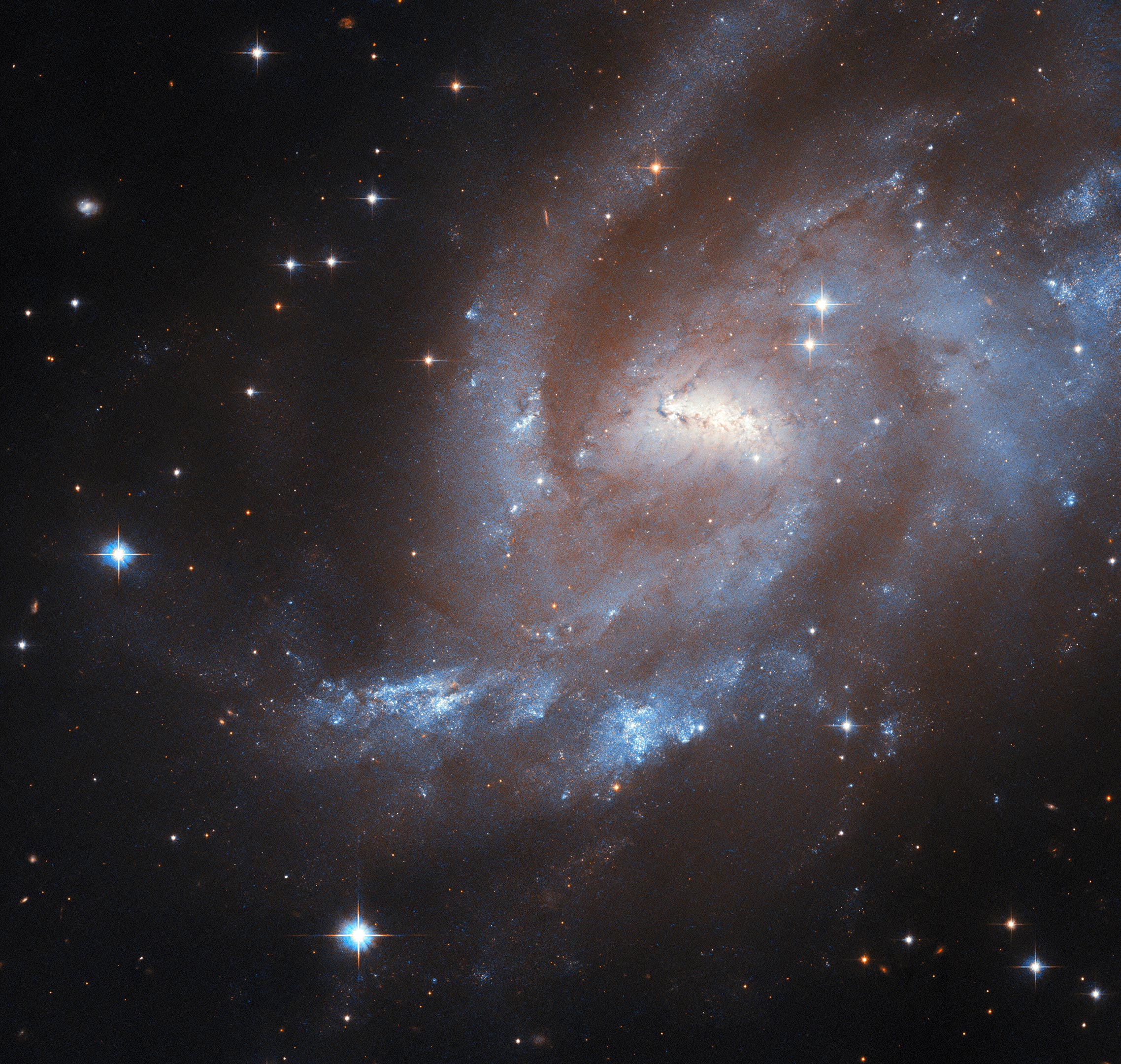
    This Hubble Space Telescope image of UGC 11861 offers a stunning look at a galaxy alive with star formation and supernovae events. Situated 69 million light-years away, its spiral arms and central region shine from ongoing stellar activities. Credit: ESA/Hubble & NASA, C. Kilpatrick

    UGC 11861, a barred spiral galaxy nestled in the constellation Cepheus, lies 69 million light-years from Earth. This galaxy is not only a breathtaking sight captured by the Hubble Space Telescope but also a hotbed of cosmic activity.

    Resting near the center of the northerly constellation Cepheus, high in the northern sky, is the barred spiral galaxy UGC 11861, the subject of the latest Hubble Space Telescope image.

    UGC 11861 is located 69 million light-years away from Earth — which may seem a vast distance, but it’s just right for Hubble to grab this majestic shot of the galaxy’s spiral arms and the short but brightly glowing bar in its center. Among the cloudy gases and the dark wisps of dust, this galaxy is actively forming new stars, visible in the glowing blue patches in its outer arms.

    This activity has resulted in three supernova explosions being spotted in and near UGC 11861, in 1995, 1997, and 2011. The earlier two were both Type II supernovae, a kind that results from the collapse of a massive star at the end of its life. This Hubble image was made from data collected to study Type II supernovae and their environments.

    Never miss a breakthrough: Join the SciTechDaily newsletter.
    Follow us on Google and Google News.

    Astronomy European Space Agency Hubble Space Telescope Supernova
    Share. Facebook Twitter Pinterest LinkedIn Email Reddit

    Related Articles

    A Stellar Explosion 650 Million Light-Years Away Captured by Hubble

    How Hubble Sees Through Cosmic Dust to Map Galaxies

    Galactic Wonders: Hubble Explores a Supernova Factory

    Gone but Not Forgotten: A Supernova 2.5 Billion Times Brighter Than the Sun

    Hubble Observes Spectacular Supernova Time-Lapse – “No Earthly Fireworks Display Can Compete”

    Hubble Views Stellar Explosions in NGC 6984

    A Spiral Within a Spiral, Galaxy ESO 498-G5

    Hubble Captures New Image of Messier 9

    SN Primo Is Farthest Type Ia Supernova Discovered

    Leave A Reply Cancel Reply

    • Facebook
    • Twitter
    • Pinterest
    • YouTube

    Don't Miss a Discovery

    Subscribe for the Latest in Science & Tech!

    Trending News

    Scientists May Have Discovered How To Heal Damaged Kidneys

    Interstellar Visitor 3I/ATLAS Is Bursting With an Unexpected Chemical

    Scientists Just Found All 5 Genetic “Letters” of DNA and RNA on an Asteroid

    The 4,000-Year-Old City That Defied History’s Rules on Wealth and Power

    The World’s Biggest Population Fear Has Flipped – and It Could Change Everything

    This “Fake” Pill Improved Memory and Physical Performance in Just 3 Weeks

    Scientists Say Frequent Ejaculation May Improve Sperm Quality and Fertility

    Scientists Have Found “The Heaven Sword” After Years of Looking

    Follow SciTechDaily
    • Facebook
    • Twitter
    • YouTube
    • Pinterest
    • Newsletter
    • RSS
    SciTech News
    • Biology News
    • Chemistry News
    • Earth News
    • Health News
    • Physics News
    • Science News
    • Space News
    • Technology News
    Recent Posts
    • NASA Moon Base Could Become Earth’s First Defense Against Alien Microbes
    • Europe’s First TES Spectrometer Makes Previously Impossible X-Ray Experiments Possible
    • This Sodium Battery From China Matched Tesla in a Surprising Head-to-Head Test
    • Common Laxative May Help Reverse Depression-Related Brain Fog
    • The Surprising Reason Frozen Fruit May Be Just As Nutritious as Fresh
    Copyright © 1998 - 2026 SciTechDaily. All Rights Reserved.
    • Science News
    • About
    • Contact
    • Editorial Board
    • Privacy Policy
    • Terms of Use

    Type above and press Enter to search. Press Esc to cancel.