
Close Menu
    Facebook X (Twitter) Instagram
    SciTechDaily
    • Biology
    • Chemistry
    • Earth
    • Health
    • Physics
    • Science
    • Space
    • Technology
    Facebook X (Twitter) Pinterest YouTube RSS
    SciTechDaily
    Home»Space»Cosmic Fireworks: NASA’s BurstCube Detects Monumental Space Explosion
    Space

    Cosmic Fireworks: NASA’s BurstCube Detects Monumental Space Explosion

    By Jeanette Kazmierczak, NASA’s Goddard Space Flight CenterSeptember 4, 2024No Comments3 Mins Read
    Facebook Twitter Pinterest Telegram LinkedIn WhatsApp Email Reddit
    Share
    Facebook Twitter LinkedIn Pinterest Telegram Email Reddit
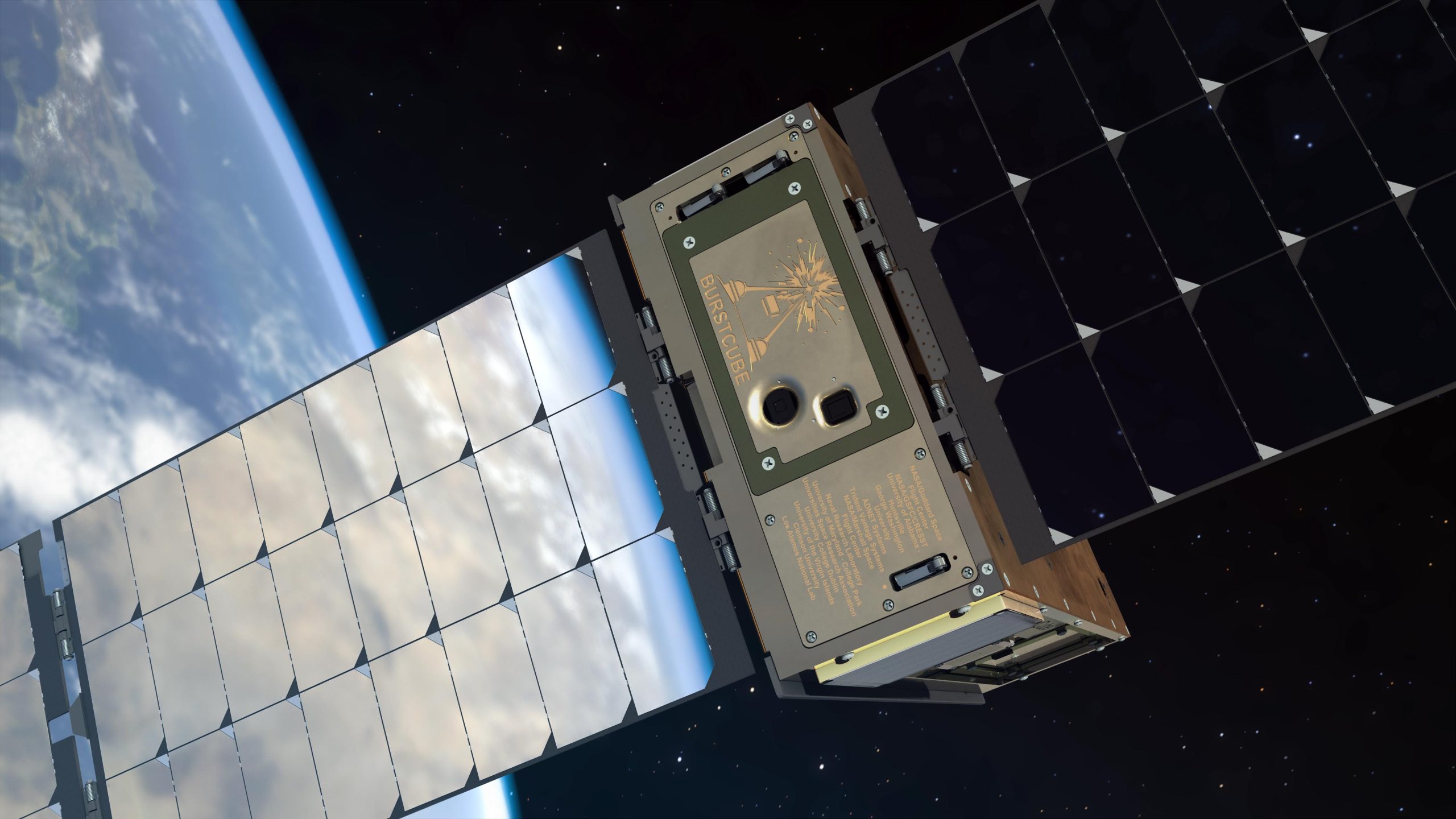
    BurstCube Satellite in Orbit
    BurstCube, shown in this artist’s concept, orbits Earth as it hunts for short gamma-ray bursts. Credit: NASA’s Goddard Space Flight Center Conceptual Image Lab

    BurstCube, a compact satellite, has recently detected its first gamma-ray burst, showcasing the capabilities of CubeSats in observing the universe’s most violent explosions.

    Despite challenges like a malfunctioning solar panel which may shorten its mission, the satellite utilizes advanced communication systems for data relay and offers crucial experience for the next generation of space scientists.

    BurstCube’s First Gamma-Ray Burst

    The shoebox-sized BurstCube satellite has observed its first gamma-ray burst, the most powerful kind of explosion in the universe, according to a recent analysis of observations collected over the last several months.

    “We’re excited to collect science data,” said Sean Semper, BurstCube’s lead engineer at NASA’s Goddard Space Flight Center in Greenbelt, Maryland. “It’s an important milestone for the team and for the many early career engineers and scientists that have been part of the mission.”

    The event, called GRB 240629A, occurred on June 29 in the southern constellation Microscopium. The team announced the discovery in a GCN (General Coordinates Network) circular on August 29.

    BurstCube and SNOOPI Emerge From ISS
    BurstCube, trailed by another CubeSat named SNOOPI (Signals of Opportunity P-band Investigation), emerges from the International Space Station on April 18, 2024. Credit: NASA/Matthew Dominick

    Launch and Mission Objectives

    BurstCube deployed into orbit on April 18 from the International Space Station (ISS), following a March 21 launch.

    The mission was designed to detect, locate, and study short gamma-ray bursts, brief flashes of high-energy light created when superdense objects like neutron stars collide. These collisions also produce heavy elements like gold and iodine, an essential ingredient for life as we know it.

    BurstCube is the first CubeSat to use NASA’s TDRS (Tracking and Data Relay Satellite) system, a constellation of specialized communications spacecraft. Data relayed by TDRS (pronounced “tee-driss”) help coordinate rapid follow-up measurements by other observatories in space and on the ground through NASA’s GCN.

    BurstCube also regularly beams data back to Earth using the Direct to Earth system — both it and TDRS are part of NASA’s Near Space Network.


    BurstCube, illustrated here, will orbit Earth as it hunts for short gamma-ray bursts. Credit: NASA’s Goddard Space Flight Center Conceptual Image Lab

    Challenges and Adaptations in Orbit

    After BurstCube deployed from the space station, the team discovered that one of the two solar panels failed to fully extend. It obscures the view of the mission’s star tracker, which hinders orienting the spacecraft in a way that minimizes drag. The team originally hoped to operate BurstCube for 12-18 months, but now estimates the increased drag will cause the satellite to re-enter the atmosphere in September.

    “I’m proud of how the team responded to the situation and is making the best use of the time we have in orbit,” said Jeremy Perkins, BurstCube’s principal investigator at Goddard. “Small missions like BurstCube not only provide an opportunity to do great science and test new technologies, like our mission’s gamma-ray detector, but also important learning opportunities for the up-and-coming members of the astrophysics community.”

    About BurstCube

    BurstCube is led by Goddard. It’s funded by the Science Mission Directorate’s Astrophysics Division at NASA Headquarters. The BurstCube collaboration includes: the University of Alabama in Huntsville; the University of Maryland, College Park; the Universities Space Research Association in Washington; the Naval Research Laboratory in Washington; and NASA’s Marshall Space Flight Center in Huntsville.

    Never miss a breakthrough: Join the SciTechDaily newsletter.
    Follow us on Google and Google News.

    Gamma Ray NASA NASA Goddard Space Flight Center
    Share. Facebook Twitter Pinterest LinkedIn Email Reddit

    Related Articles

    A Flash Like No Other: NASA’s Fermi Detects Unique Energy Peak in Unprecedented Gamma-Ray Burst

    Defying Expectations: NASA’s Fermi Sees No Gamma Rays From Nearby Supernova

    Solar System Hit by Pulse of Intense Radiation – Incredible 1-in-10,000-Year Gamma-Ray Burst

    NASA’s Fermi Space Telescope Detects First Gamma-Ray Eclipses From “Spider” Star Systems

    Strange Long-Lasting Pulse of High-Energy Radiation Swept Over Earth

    NASA’s Fermi Spots a Weird Pulse of High-Energy Radiation Racing Toward Earth

    Goddard’s Space Weather Laboratory to Use ‘Ensemble Forecasting’

    Scientists Believe Water Ice May Exist on the Giant Asteroid Vesta

    Solar Flare Causes Powerful Solar Radiation Storm

    Leave A Reply Cancel Reply

    • Facebook
    • Twitter
    • Pinterest
    • YouTube

    Don't Miss a Discovery

    Subscribe for the Latest in Science & Tech!

    Trending News

    Scientists Discover Gut Signal That Turns Off Sugar Cravings

    Scientists Discover Rogue Gene That Could Unlock New Cancer Treatments

    Constantly Tired? Scientists Say These Vitamin Deficiencies May Be Why

    A Surprising Discovery Inside Fish Could Change What We Know About the Ocean

    Scientists May Have Finally Solved the Mystery of the Strange Hum Heard Around the World

    A Cannibal Star Finally Solves One of Astronomy’s Biggest Mysteries

    Scientists Finally Uncover How a “Forever Chemical” Causes Birth Defects

    Scientists Uncover the Earliest Brain Changes That May Predict Alzheimer’s Decades Before Symptoms

    Follow SciTechDaily
    • Facebook
    • Twitter
    • YouTube
    • Pinterest
    • Newsletter
    • RSS
    SciTech News
    • Biology News
    • Chemistry News
    • Earth News
    • Health News
    • Physics News
    • Science News
    • Space News
    • Technology News
    Recent Posts
    • These Tiny Gut Particles Could Be Accelerating Aging Throughout the Body
    • Cancer’s “Undruggable” Protein Has a Dangerous New Superpower
    • Doctors Changed One Thing and Weight Gain Stopped
    • NASA’s New Technology Lets Spacecraft Switch Between Networks
    • Magnetic Fields May Solve a Longstanding Binary Star Mystery
    Copyright © 1998 - 2026 SciTechDaily. All Rights Reserved.
    • Science News
    • About
    • Contact
    • Editorial Board
    • Privacy Policy
    • Terms of Use

    Type above and press Enter to search. Press Esc to cancel.