
Close Menu
    Facebook X (Twitter) Instagram
    SciTechDaily
    • Biology
    • Chemistry
    • Earth
    • Health
    • Physics
    • Science
    • Space
    • Technology
    Facebook X (Twitter) Pinterest YouTube RSS
    SciTechDaily
    Home»Space»Strange Long-Lasting Pulse of High-Energy Radiation Swept Over Earth
    Space

    Strange Long-Lasting Pulse of High-Energy Radiation Swept Over Earth

    By Francis Reddy, NASA’s Goddard Space Flight CenterOctober 17, 20221 Comment5 Mins Read
    Facebook Twitter Pinterest Telegram LinkedIn WhatsApp Email Reddit
    Share
    Facebook Twitter LinkedIn Pinterest Telegram Email Reddit
    Record Breaking Gamma Ray Burst
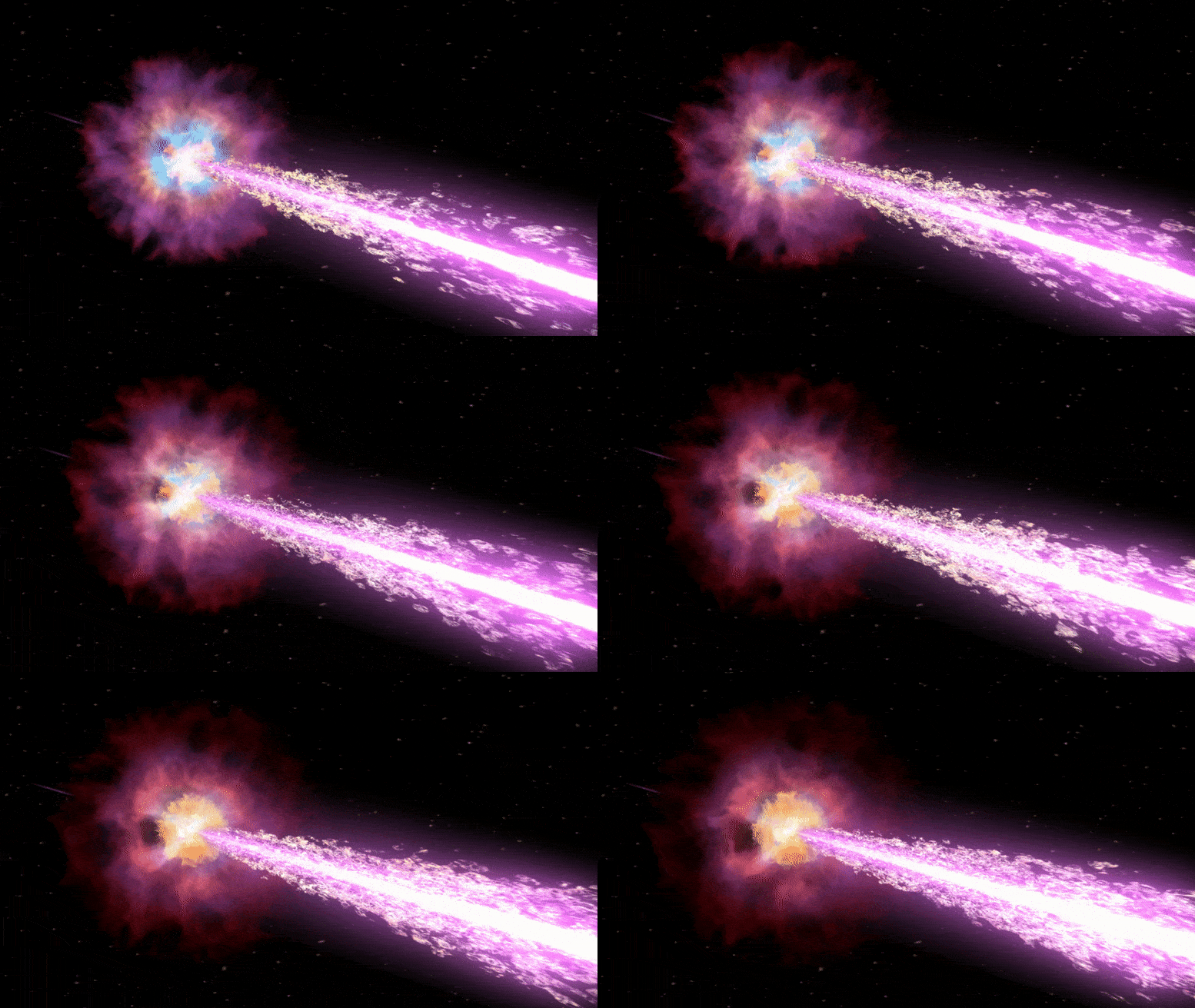
    Astronomers think GRB 221009A represents the birth of a new black hole formed within the heart of a collapsing star. In this illustration, the black hole drives powerful jets of particles traveling near the speed of light. The jets pierce through the star, emitting X-rays and gamma rays as they stream into space. Credit: NASA/Swift/Cruz deWilde

    NASA’s Swift and Fermi Missions Detect Exceptional Cosmic Blast

    An unusually bright and long-lasting pulse of high-energy radiation swept over Earth Sunday, October 9, captivating astronomers around the world. The intense emission came from a gamma-ray burst (GRB) – the most powerful class of explosions in the universe – that ranks among the most luminous events known.

    A week ago, on Sunday morning Eastern time, a wave of X-rays and gamma rays passed through the solar system. It triggered detectors aboard NASA’s Fermi Gamma-ray Space Telescope, Neil Gehrels Swift Observatory, and Wind spacecraft, as well as others. Around the world, telescopes were turned to the site to study the aftermath, and new observations continue.
    GRB 221009A Afterglow
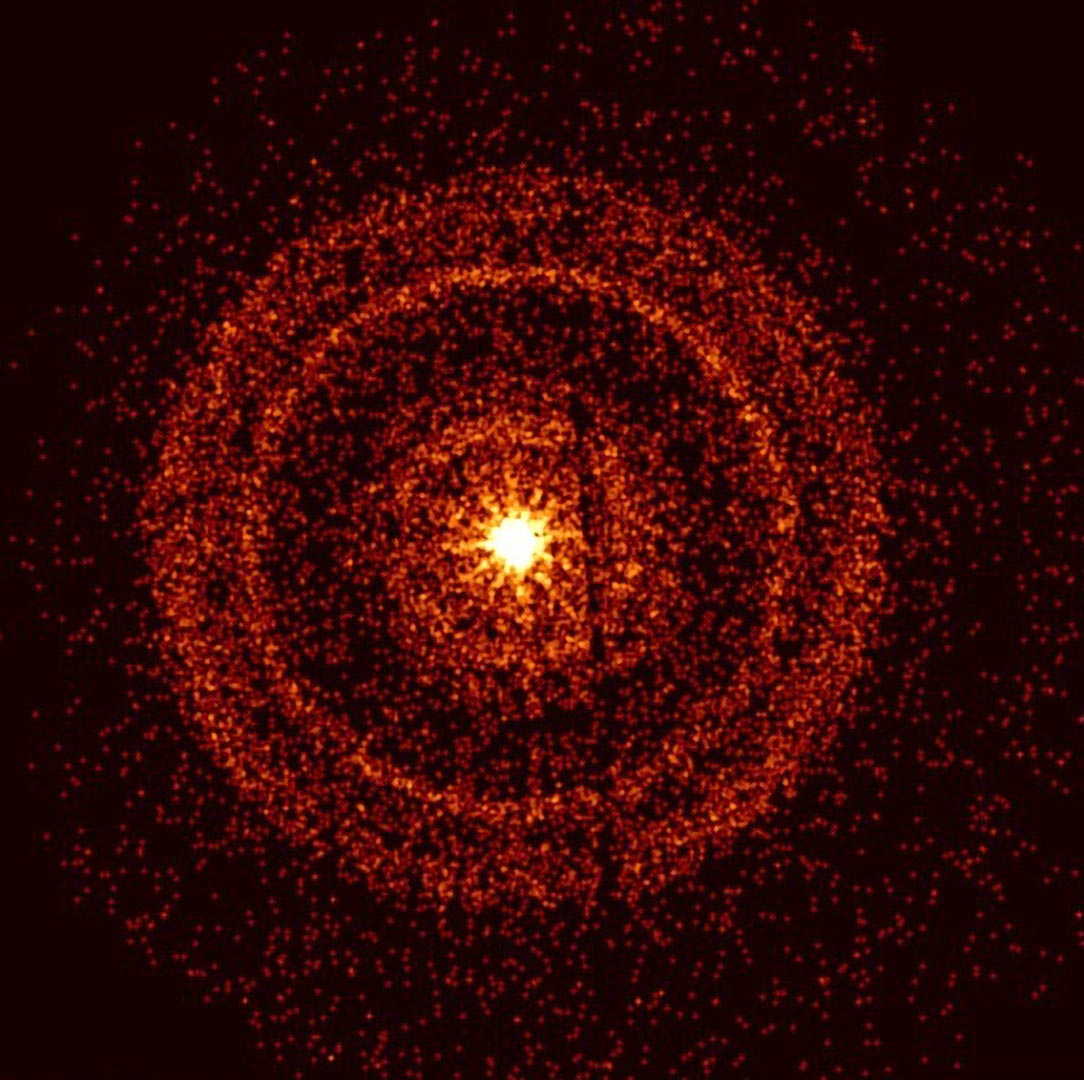
    Swift’s X-Ray Telescope captured the afterglow of GRB 221009A about an hour after it was first detected. The bright rings form as a result of X-rays scattered from otherwise unobservable dust layers within our galaxy that lie in the direction of the burst. Credit: NASA/Swift/A. Beardmore (University of Leicester)

    Called GRB 221009A, the explosion provided an unexpectedly exciting start to the 10th Fermi Symposium, a gathering of gamma-ray astronomers now underway in Johannesburg, South Africa. “It’s safe to say this meeting really kicked off with a bang – everyone’s talking about this,” said Judy Racusin, a Fermi deputy project scientist at NASA’s Goddard Space Flight Center in Greenbelt, Maryland, who is attending the conference.


    Astronomers think GRB 221009A represents the birth of a new black hole formed within the heart of a collapsing star. As illustrated here, the black hole drives powerful jets of particles traveling near the speed of light. The jets pierce through the star, emitting X-rays and gamma rays as they stream into space. Credit: NASA/Swift/Cruz deWilde

    Originating from the direction of the constellation Sagitta, the signal traveled an estimated 1.9 billion years to reach Earth. Many astronomers believe it represents the birth cry of a new black hole, one that formed in the heart of a massive star collapsing under its own weight. In these circumstances, a developing black hole drives powerful jets of particles traveling near the speed of light. The energetic jets pierce through the star, emitting X-rays and gamma rays as they stream into space.
    GRB 221009A Gamma Ray Burst
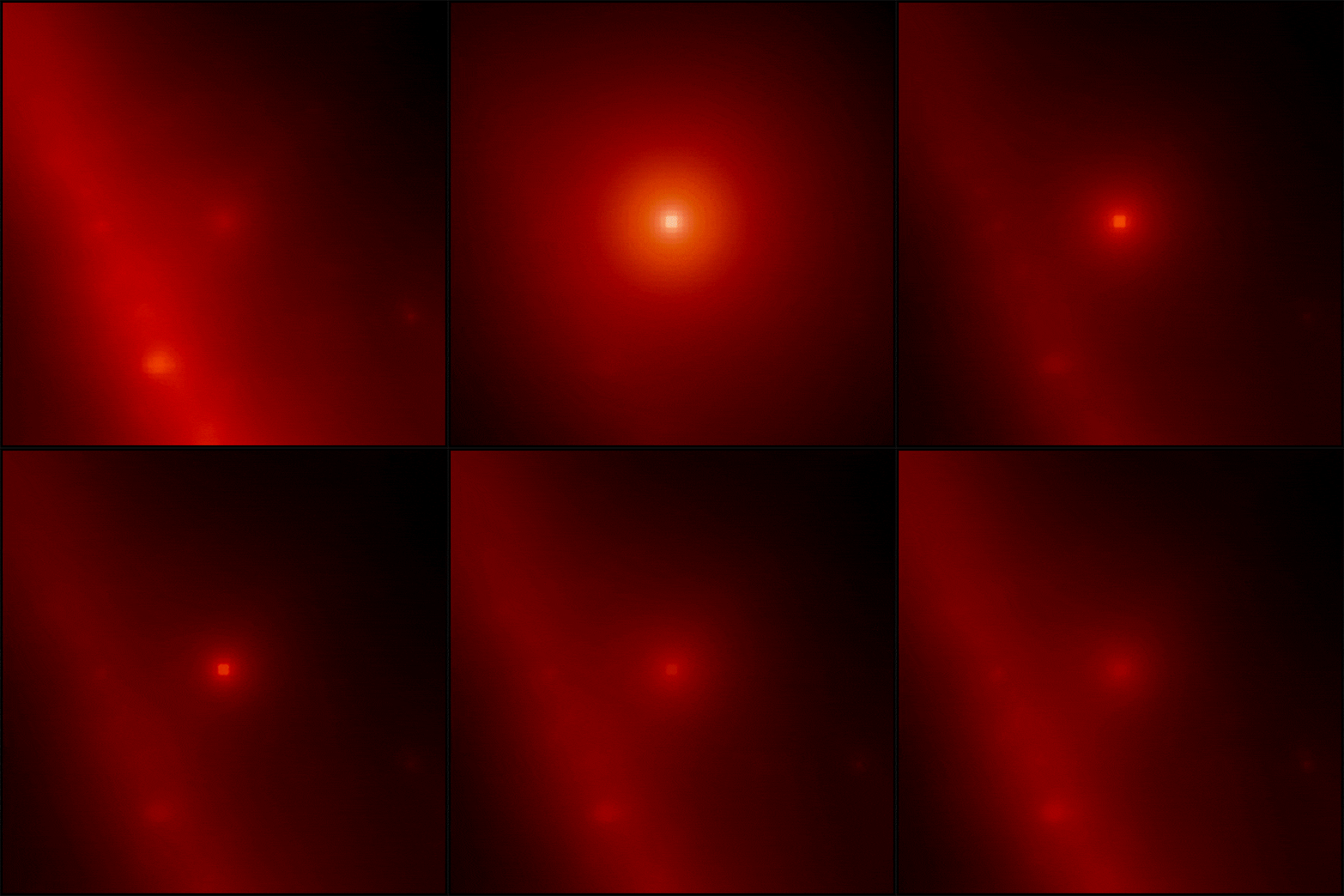
    This sequence constructed from Fermi Large Area Telescope data reveals the sky in gamma rays centered on the location of GRB 221009A. Each frame shows gamma rays with energies greater than 100 million electron volts (MeV), where brighter colors indicate a stronger gamma-ray signal. In total, they represent more than 10 hours of observations. The glow from the midplane of our Milky Way galaxy appears as a wide diagonal band. The image is about 20 degrees across. Credit: NASA/DOE/Fermi LAT Collaboration

    The burst also provided a long-awaited inaugural observing opportunity for a link between two experiments on the International Space Station (ISS) – NASA’s NICER X-ray telescope and a Japanese detector called the Monitor of All-sky X-ray Image (MAXI). Activated in April, the connection is dubbed the Orbiting High-energy Monitor Alert Network (OHMAN). It allows NICER to rapidly turn to outbursts detected by MAXI, actions that previously required intervention by scientists on the ground.

    “OHMAN provided an automated alert that enabled NICER to follow up within three hours, as soon as the source became visible to the telescope,” said Zaven Arzoumanian, the NICER science lead at Goddard. “Future opportunities could result in response times of a few minutes.”
    GRB 221009A Afterglow
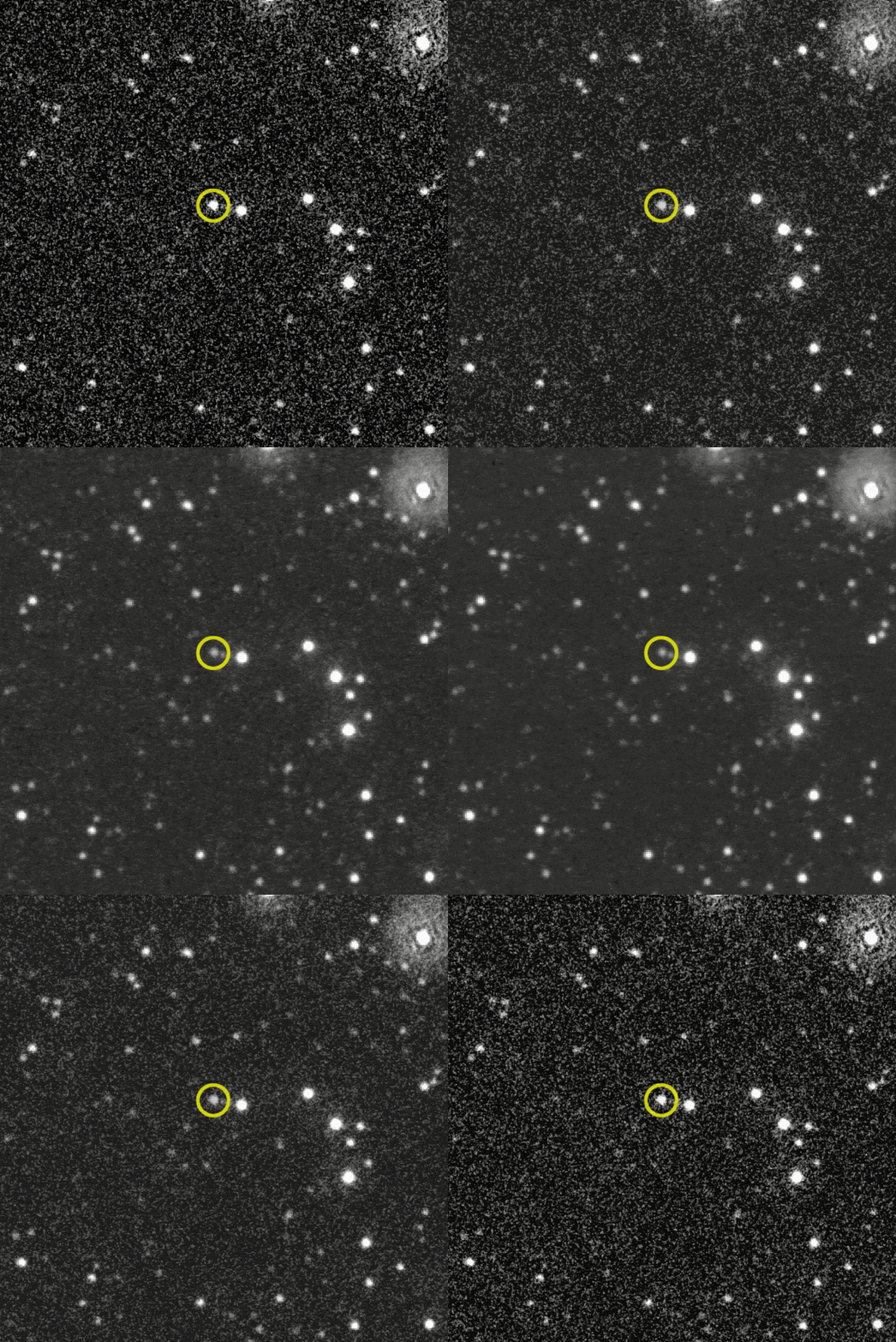
    Images taken in visible light by Swift’s Ultraviolet/Optical Telescope show how the afterglow of GRB 221009A (circled) faded over the course of about 10 hours. The explosion appeared in the constellation Sagitta and occurred 1.9 billion years ago. The image is about 4 arcminutes across. Credit: NASA/Swift/B. Cenko

    The light from this ancient explosion brings with it valuable new insights into stellar collapse, the birth of a black hole, the behavior and interaction of matter near the speed of light, the conditions in a distant galaxy – and much more. Astronomers may not detect another GRB this bright for decades.

    Fermi’s Large Area Telescope (LAT) detected the burst for more than 10 hours, according to a preliminary analysis. One reason for the burst’s exceptional brightness and longevity is that, for a GRB, it lies relatively close to us.

    “This burst is much closer than typical GRBs, which is exciting because it allows us to detect many details that otherwise would be too faint to see,” said Roberta Pillera, a Fermi LAT Collaboration member who led initial communications about the burst and a doctoral student at the Polytechnic University of Bari, Italy. “But it’s also among the most energetic and luminous bursts ever seen regardless of distance, making it doubly exciting.”

    Never miss a breakthrough: Join the SciTechDaily newsletter.
    Follow us on Google and Google News.

    Astronomy Astrophysics Fermi Gamma-ray Space Telescope Gamma Ray NASA NASA Goddard Space Flight Center NASA Swift Satellite Popular Supernova
    Share. Facebook Twitter Pinterest LinkedIn Email Reddit

    Related Articles

    A Flash Like No Other: NASA’s Fermi Detects Unique Energy Peak in Unprecedented Gamma-Ray Burst

    Defying Expectations: NASA’s Fermi Sees No Gamma Rays From Nearby Supernova

    Solar System Hit by Pulse of Intense Radiation – Incredible 1-in-10,000-Year Gamma-Ray Burst

    NASA’s Fermi Space Telescope Captures Cosmic Fireworks in Dynamic Gamma-Ray Sky

    NASA’s Fermi Space Telescope Hunts for Gravitational Waves From Monster Black Holes

    NASA’s Fermi Spots a Weird Pulse of High-Energy Radiation Racing Toward Earth

    NASA’s Roman Mission: Using Exploding Stars to Solve the Biggest Cosmic Mysteries

    NASA Spacecraft Unmask High-Energy Blast That Swept Through the Solar System – Magnetar Eruption in Nearby Galaxy

    Swift Reveals Before and After Images of Supernova SN 2014J

    1 Comment

    1. Joaquin on October 24, 2022 1:14 am

      That’s the shot that kill all men in nothing

      Reply
    Leave A Reply Cancel Reply

    • Facebook
    • Twitter
    • Pinterest
    • YouTube

    Don't Miss a Discovery

    Subscribe for the Latest in Science & Tech!

    Trending News

    The Universe Is Expanding Too Fast and Scientists Can’t Explain Why

    “Like Liquid Metal”: Scientists Create Strange Shape-Shifting Material

    Early Warning Signals of Esophageal Cancer May Be Hiding in Plain Sight

    Common Blood Pressure Drug Shows Surprising Power Against Deadly Antibiotic-Resistant Superbug

    Scientists Uncover Dangerous Connection Between Serotonin and Heart Valve Disease

    Scientists Discover a “Protector” Protein That Could Help Reverse Hair Loss

    Bone-Strengthening Discovery Could Reverse Osteoporosis

    Scientists Uncover Hidden Trigger Behind Stem Cell Aging

    Follow SciTechDaily
    • Facebook
    • Twitter
    • YouTube
    • Pinterest
    • Newsletter
    • RSS
    SciTech News
    • Biology News
    • Chemistry News
    • Earth News
    • Health News
    • Physics News
    • Science News
    • Space News
    • Technology News
    Recent Posts
    • A Common Diabetes Drug May Hold the Key to Stopping HIV From Coming Back
    • Ancient “Syphilis-Like” Disease in Vietnam Challenges Key Scientific Assumptions
    • Drinking Alcohol To Cope in Your 20s Could Damage Your Brain for Life
    • Scientists Crack Alfalfa’s Chromosome Mystery After Decades of Debate
    • Ancient Ant-Plant Alliance Collapses As Predatory Wasps Move In
    Copyright © 1998 - 2026 SciTechDaily. All Rights Reserved.
    • Science News
    • About
    • Contact
    • Editorial Board
    • Privacy Policy
    • Terms of Use

    Type above and press Enter to search. Press Esc to cancel.