
Close Menu
    Facebook X (Twitter) Instagram
    SciTechDaily
    • Biology
    • Chemistry
    • Earth
    • Health
    • Physics
    • Science
    • Space
    • Technology
    Facebook X (Twitter) Pinterest YouTube RSS
    SciTechDaily
    Home»Science»Stay Cool in the City: New Fabric Coating Drops Temps by 15°F on Hot Days
    Science

    Stay Cool in the City: New Fabric Coating Drops Temps by 15°F on Hot Days

    By American Chemical SocietyNovember 14, 20241 Comment3 Mins Read
    Facebook Twitter Pinterest Telegram LinkedIn WhatsApp Email Reddit
    Share
    Facebook Twitter LinkedIn Pinterest Telegram Email Reddit
    Chalk Based Coating Textiles
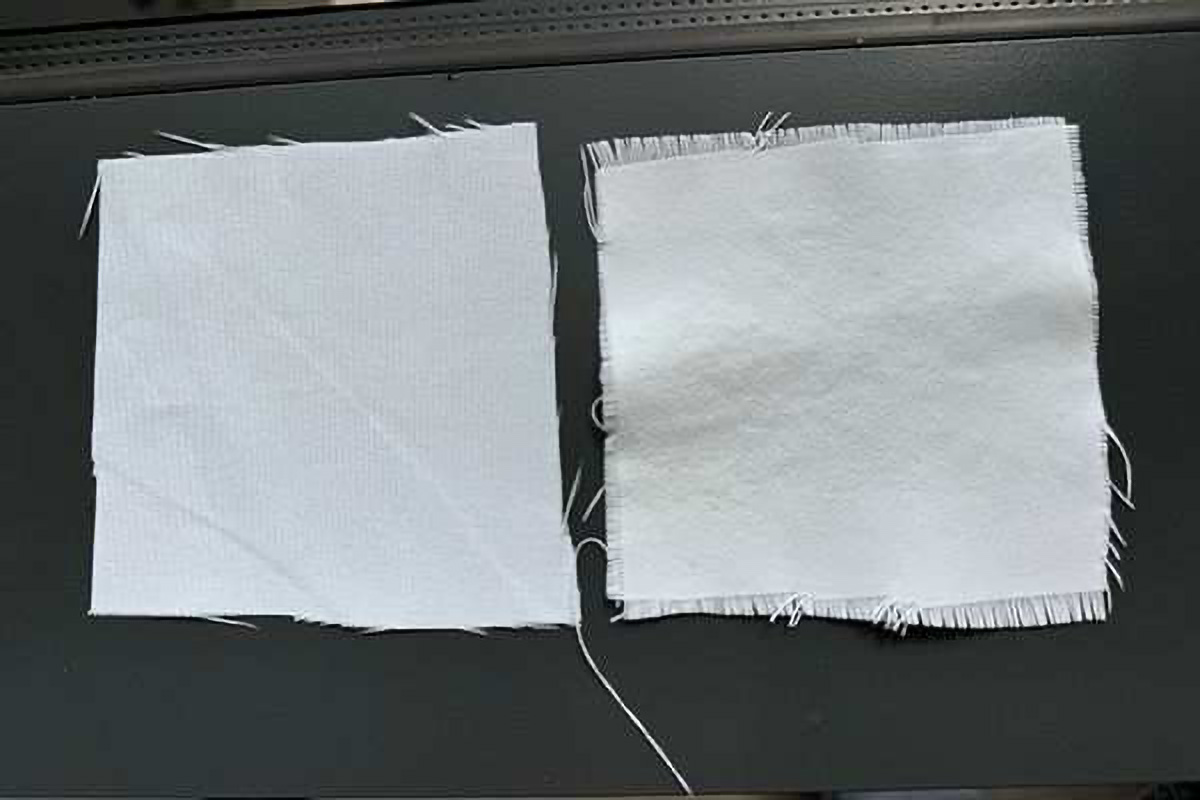
    A chalk-based coating attaches to various commercially available textiles, including cotton and synthetic fiber, to create cooling fabrics, such as the treated synthetic material (right) that’s brighter than the untreated fabric (left). Credit: Evan D. Patamia

    Researchers developed a chalk-based coating for polyester fabric that can cool the air underneath by up to 15°F, offering relief in hot urban settings.

    With air temperatures remaining high throughout the fall, people may still seek clothing that keeps them cool outdoors, particularly in cities where temperatures tend to be warmer than in rural areas.

    Researchers who previously demonstrated a cooling fabric coating now report on additional tests of a treated polyester fabric in ACS Applied Materials & Interfaces. Fabric treated with the team’s chalk-based coating kept the air underneath up to 6 degrees Fahrenheit cooler in warmer urban environments.

    Researchers Evan D. Patamia, Megan K. Yee, and Trisha L. Andrew created a polymer-mineral coating for commercial fabrics and presented preliminary assessments of the coating’s cooling effect at ACS Fall 2024, a meeting of the American Chemical Society.
    Chalk Coated Textiles Cool in Urban Environments
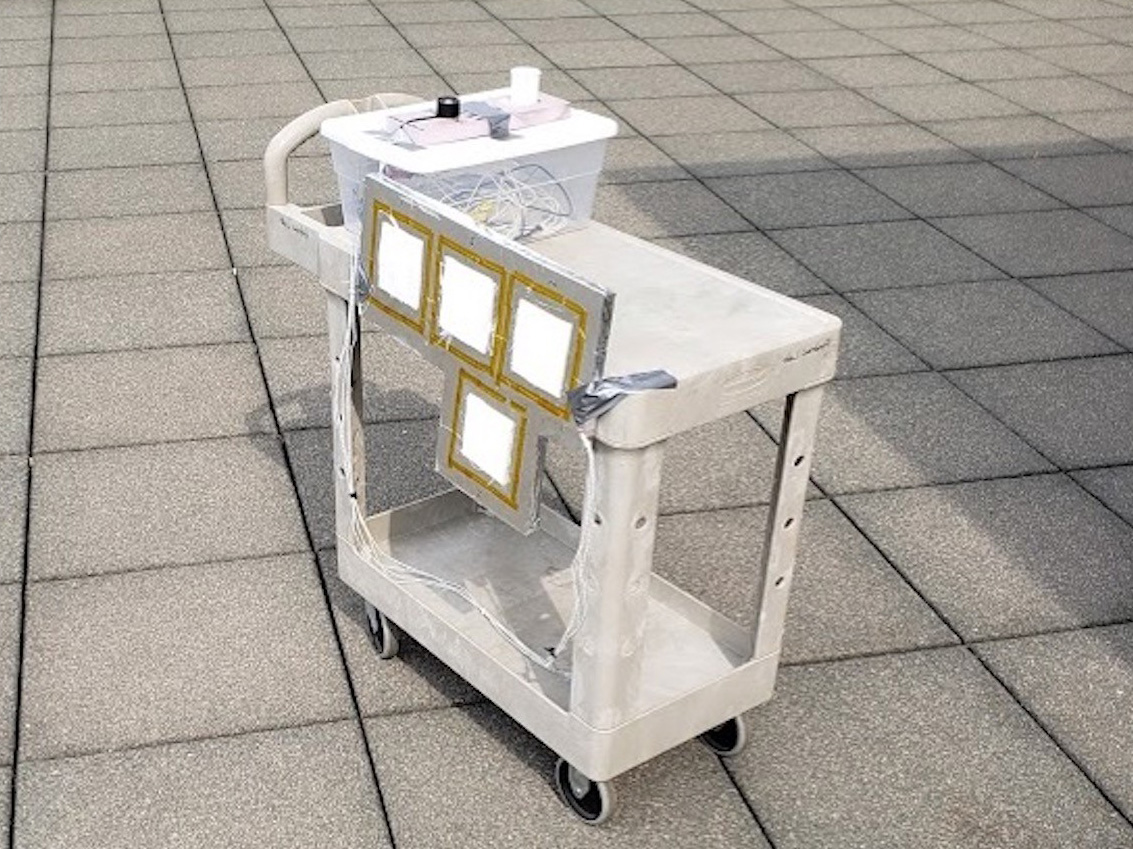
    On this outdoor testing station, the cooling ability of fabric squares treated with a chalk-based coating was tested in multiple urban environments, such as this open concrete veranda next to a building. Credit: Adapted from Applied Materials & Interfaces 2024, DOI: 10.1021/acsami.4c15984

    Now, the researchers confirm that their treated polyester poplin fabric could keep a person up to 15 F cooler than untreated polyester. Additionally, they have expanded the testing environments to four outdoor urban settings, including areas with materials that absorb and emit the sun’s heat. Observations made during hot, cloudless days indicate that treated polyester cooled the air underneath the fabric regardless of the environment:

    • Open grass field: averaging 6 F below ambient air temperature.
    • Concrete-paved alley between buildings: averaging 3 F below ambient.
    • Asphalt-paved parking lot: averaging 1 F below ambient.
    • Open concrete veranda: averaging 3 F below ambient.

    The researchers say their expanded results show the potential of their coated fabrics to provide energy-free cooling for pedestrians and cyclists in urban environments.

    Reference: “Microstructured Reflective Coatings on Commodity Textiles for Passive Personal Cooling” by Evan D. Patamia, Megan K. Yee and Trisha L. Andrew, 18 October 2024, ACS Applied Materials & Interfaces.
    DOI: 10.1021/acsami.4c15984

    The authors acknowledge support from an Interdisciplinary Research Grant from the College of Natural Sciences at the University of Massachusetts Amherst.

    Never miss a breakthrough: Join the SciTechDaily newsletter.
    Follow us on Google and Google News.

    American Chemical Society
    Share. Facebook Twitter Pinterest LinkedIn Email Reddit

    Related Articles

    Smartwatch Shock: Study Finds Harmful Forever Chemicals in Wristbands

    Concerning Findings: New Research Reveals That Washing Your Fruit Doesn’t Remove All Pesticides

    Alzheimer’s Imaging Breakthrough: Fluorescent Sensors Penetrate Blood-Brain Barrier

    Why Is an Espresso So Good? Food Chemists Unravel Hidden Dynamics of Milk in Coffee

    Superfood in a Glass: The Surprising Health Benefits of Blueberry Wine

    New Research Reveals That Some Plant-Based Steaks and Cold Cuts Are Lacking in Protein

    Science’s Latest Marvel: Electronic Material That Grows Tougher on Impact

    Out of This World Nutrition: Designing the “Perfect” Meal To Feed Long-Term Space Travelers

    Real vs. Fake Wasabi: The Surprising Truth on Your Sushi Plate

    1 Comment

    1. stephen schaffer on November 15, 2024 9:56 am

      we need fewer polyester materials even though it’s probably too late to save us from nanoparticles of. plastic.

      Reply
    Leave A Reply Cancel Reply

    • Facebook
    • Twitter
    • Pinterest
    • YouTube

    Don't Miss a Discovery

    Subscribe for the Latest in Science & Tech!

    Trending News

    Breakthrough Bowel Cancer Trial Leaves Patients Cancer-Free for Nearly 3 Years

    Natural Compound Shows Powerful Potential Against Rheumatoid Arthritis

    100,000-Year-Old Neanderthal Fossils in Poland Reveal Unexpected Genetic Connections

    Simple “Gut Reset” May Prevent Weight Gain After Ozempic or Wegovy

    2.8 Days to Disaster: Scientists Warn Low Earth Orbit Could Suddenly Collapse

    Common Food Compound Shows Surprising Power Against Superbugs

    5 Simple Ways To Remember More and Forget Less

    The Atomic Gap That Could Cost the Semiconductor Industry Billions

    Follow SciTechDaily
    • Facebook
    • Twitter
    • YouTube
    • Pinterest
    • Newsletter
    • RSS
    SciTech News
    • Biology News
    • Chemistry News
    • Earth News
    • Health News
    • Physics News
    • Science News
    • Space News
    • Technology News
    Recent Posts
    • Scientists Discover Natural Molecule That Stops Alzheimer’s Protein Clumps From Forming
    • Early Cannabis Use May Stall Key Brain Skills in Teens
    • Popular Vitamin D Supplement Has “Previously Unknown” Negative Effect, Study Finds
    • Powerful Antioxidant Found To Play a Key Role in Proper Protein Folding
    • MIT Laser Breakthrough Lets Scientists Watch Drugs Enter the Brain in Real Time
    Copyright © 1998 - 2026 SciTechDaily. All Rights Reserved.
    • Science News
    • About
    • Contact
    • Editorial Board
    • Privacy Policy
    • Terms of Use

    Type above and press Enter to search. Press Esc to cancel.