
Close Menu
    Facebook X (Twitter) Instagram
    SciTechDaily
    • Biology
    • Chemistry
    • Earth
    • Health
    • Physics
    • Science
    • Space
    • Technology
    Facebook X (Twitter) Pinterest YouTube RSS
    SciTechDaily
    Home»Earth»NASA’s Atmospheric Probe Soars in Game-Changing Test Flight
    Earth

    NASA’s Atmospheric Probe Soars in Game-Changing Test Flight

    By NASADecember 17, 2024No Comments5 Mins Read
    Facebook Twitter Pinterest Telegram LinkedIn WhatsApp Email Reddit
    Share
    Facebook Twitter LinkedIn Pinterest Telegram Email Reddit
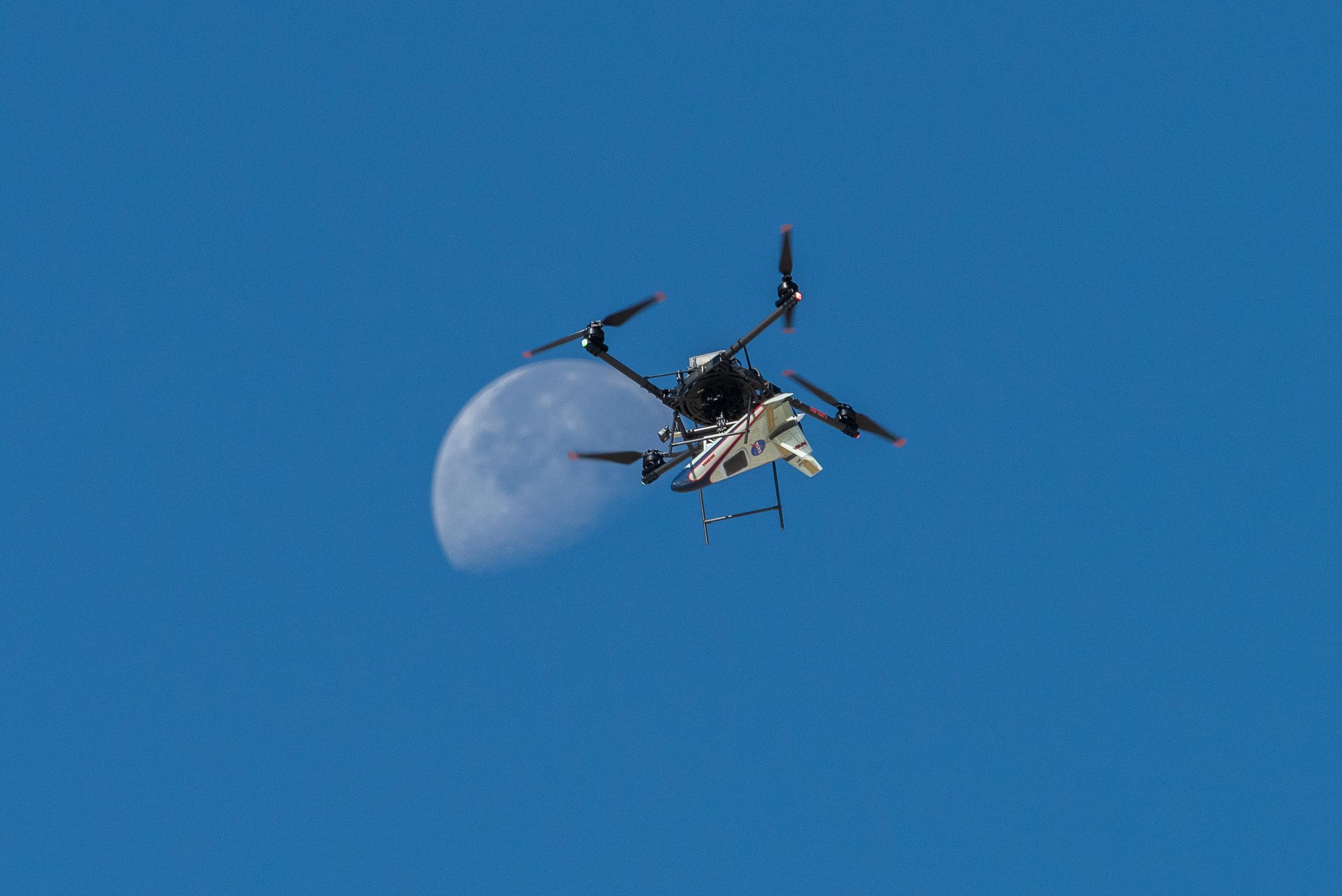
    NASA Atmospheric Probe Moon
    An atmospheric probe model attached upside down to a quad rotor remotely piloted aircraft ascends with the Moon visible on October 22, 2024. The quad rotor aircraft released the probe above Rogers Dry Lake, a flight area adjacent NASA’s Armstrong Flight Research Center in Edwards, California. The probe was designed and built at the center. Credit: NASA/Steve Freeman

    Researchers at NASA’s Armstrong Center are advancing an atmospheric probe for potential space missions.

    Utilizing innovative designs based on past aircraft research, the team has successfully tested the probe, planning further improvements to increase its functionality and data-gathering capabilities.

    NASA’s Innovative Atmospheric Probe

    The best way to validate a new idea is to start small, test, learn, and refine through repeated testing. Researchers at NASA’s Armstrong Flight Research Center in Edwards, California, are applying this method as they develop a new atmospheric probe. Their work could provide future scientists with a more efficient and cost-effective way to gather data from other planets.

    Justin Link, John Bodylski, and Justin Hall
    Justin Link, left, small unmanned aircraft systems pilot; John Bodylski, atmospheric probe principal investigator; and Justin Hall, chief pilot of small unmanned aircraft systems, discuss details of the atmospheric probe flight plan on October 22, 2024. A quad rotor remotely piloted aircraft released the probe above Rogers Dry Lake, a flight area adjacent NASA’s Armstrong Flight Research Center in Edwards, California. The probe was designed and built at the center. Credit: NASA/Steve Freeman

    On October 22, the latest version of the atmospheric probe successfully flew after being released from a quad-rotor remotely piloted aircraft over Rogers Dry Lake near NASA Armstrong. The probe’s design draws inspiration from NASA’s 1960s research on lifting body aircraft, which generate lift using the aircraft’s shape instead of wings. Recent tests confirmed that the probe’s aerodynamic shape functions as intended.

    “I’m ecstatic,” said John Bodylski, atmospheric probe principal investigator at NASA Armstrong. “It was completely stable in flight. We will be looking at releasing it from a higher altitude to keep it flying longer and demonstrate more maneuvers.”

    Enhancements and Future Plans

    Starting with a Center Innovation Fund award in 2023, Bodylski worked closely with the center’s Dale Reed Subscale Flight Research Laboratory to design and build three atmospheric probe models, each vehicle 28 inches long from nose to tail. One model is a visual to show what the concept looks like, while two additional prototypes improved the technology’s readiness.

    The road to the successful flight wasn’t smooth, which is expected with any new flight idea. The first flight on August 1 didn’t go as planned. The release mechanism didn’t work as expected and air movement from the quad rotor aircraft was greater than anticipated. It was that failure that inspired the research team to take another look at everything about the vehicle, leading to many improvements, said Justin Hall, NASA Armstrong chief pilot of small, unmanned aircraft systems.

    Justin Hall and Justin Link

    Justin Hall, chief pilot of small unmanned aircraft systems, prepares the atmospheric probe for flight above Rogers Dry Lake, a flight area adjacent NASA’s Armstrong Flight Research Center in Edwards, California. At right, Justin Link, small unmanned aircraft systems pilot, assists. The probe, designed and built at the center, flew after release from a quad rotor remotely piloted aircraft on October 22, 2024. Credit: NASA/Steve Freeman

    Results and Next Steps for the Atmospheric Probe

    Fast forward to October 22, where the redesign of the release mechanism, in addition to an upside-down release and modified flight control surfaces, led to a stable and level flight. “Everything we learned from the first vehicle failing and integrating what we learned into this one seemed to work well,” Hall said. “This is a win for us. We have a good place to go from here and there’s some more changes we can make to improve it.”

    Bodylski added, “We are going to focus on getting the aircraft to pull up sooner to give us more flight time to learn more about the prototype. We will go to a higher altitude [this flight started at 560 feet altitude] on the next flight because we are not worried about the aircraft’s stability.”

    Derek Abramson and Justin Link
    Derek Abramson, left, chief engineer for the Dale Reed Subscale Flight Research Laboratory, and Justin Link, small unmanned aircraft system pilot, carry the atmospheric probe model and a quad rotor remotely piloted aircraft to position it for flight on October 24, 2024. John Bodylski, probe principal investigator, right, and videographer Jacob Shaw watch the preparations. Once at altitude, the quad rotor aircraft released the probe above Rogers Dry Lake, a flight area adjacent to NASA’s Armstrong Flight Research Center in Edwards, California. The probe was designed and built at the center. Credit: NASA/Steve Freeman

    Long-Term Vision for Space Exploration

    When the team reviewed flight photos and video from the October 22 flight they identified additional areas for improvement. Another atmospheric probe will be built with enhancements and flown. Following another successful flight, the team plans to instrument a future atmospheric probe that will gather data and improve computer models. Data gathering is the main goal for the current flights to give scientists confidence in additional probe shapes for atmospheric missions on other planets.

    NASA Atmospheric Probe Released
    A quad rotor remotely piloted aircraft releases the atmospheric probe model above Rogers Dry Lake, a flight area adjacent NASA’s Armstrong Flight Research Center in Edwards, California, on October 22, 2024. The probe was designed and built at the center. Credit: NASA/Carla Thomas

    If this concept is eventually chosen for a mission, it would ride on a satellite to its destination. From there, the probe would separate as the parent satellite orbits around a planet, then enter and dive through the atmosphere as it gathers information for clues of how the solar system formed.

    Never miss a breakthrough: Join the SciTechDaily newsletter.
    Follow us on Google and Google News.

    Atmospheric Science Drones NASA
    Share. Facebook Twitter Pinterest LinkedIn Email Reddit

    Related Articles

    NASA Monitors Atmospheric Carbon Monoxide From California Wildfires

    Aurora, Meet Airglow: Two of Earth’s Most Colorful Atmospheric Phenomena Meet in Stunning Photo From Space Station

    Breathtaking Night-Shining Clouds: Electric Blue Streaks Form High in the Atmosphere

    NASA Reports Arctic Ozone Depletion Hit Record Low in March

    Global Airborne Mission Finds Tiny Particles Lead to Brighter Clouds in the Tropics

    Two New NASA Missions Team Up To Explore Earth’s Ionosphere

    Total and Spectral Solar Irradiance Sensor Measures Solar Energy Input to Earth

    Initial SAGE III Atmospheric Data Released for Public Use

    New NASA Study Shows That Hydrofluorocarbons Contribute to Ozone Depletion

    Leave A Reply Cancel Reply

    • Facebook
    • Twitter
    • Pinterest
    • YouTube

    Don't Miss a Discovery

    Subscribe for the Latest in Science & Tech!

    Trending News

    Scientists Discover How Coffee Impacts Memory, Mood, and Gut Health

    Why Did the Neanderthals Disappear? Scientists Reveal Humans Had a Hidden Advantage

    Physicists Propose Strange Experiment Where Time Goes Quantum

    Magnesium Magic: New Drug Melts Fat Even on a High-Fat, High-Sugar Diet

    Weight-Loss Drugs Like Ozempic May Come With an Unexpected Cost

    Mezcal “Worm” in a Bottle Mystery: DNA Testing Reveals a Surprise

    New Research Reveals That Your Morning Coffee Activates an Ancient Longevity Switch

    This Is What Makes You Irresistible to Mosquitoes

    Follow SciTechDaily
    • Facebook
    • Twitter
    • YouTube
    • Pinterest
    • Newsletter
    • RSS
    SciTech News
    • Biology News
    • Chemistry News
    • Earth News
    • Health News
    • Physics News
    • Science News
    • Space News
    • Technology News
    Recent Posts
    • Harvard Scientists Reveal Secret Structure Behind How You Smell
    • Scientists Just Discovered the Hidden Trick That Keeps Your Cells Alive
    • This Simple Movement Could Be Secretly Cleaning Your Brain
    • Male Birth Control Breakthrough: Scientists Find Way To Turn Sperm Production Off and Back On
    • A Common Vitamin Could Hold the Key to Treating Fatty Liver Disease
    Copyright © 1998 - 2026 SciTechDaily. All Rights Reserved.
    • Science News
    • About
    • Contact
    • Editorial Board
    • Privacy Policy
    • Terms of Use

    Type above and press Enter to search. Press Esc to cancel.