
A study finds that diet can cause brain inflammation even without any metabolic changes.
A new study in rats suggests that just a few days of consuming a diet high in saturated fat may be enough to trigger memory problems and brain inflammation in older adults.
Researchers fed groups of young and old rats a high-fat diet for either three days or three months to examine how quickly the brain responds to an unhealthy diet compared to the rest of the body.
As expected based on prior research on diabetes and obesity, rats that consumed the high-fat diet for three months developed metabolic issues, gut inflammation, and significant changes in gut bacteria. In contrast, rats on the high-fat diet for only three days showed no major metabolic or gastrointestinal changes.
However, when examining the brain, the researchers found that only the older rats, regardless of whether they were on the diet for three days or three months, performed poorly on memory tests and exhibited signs of brain inflammation.
Diet Effects Beyond Obesity
The results dispel the idea that diet-related inflammation in the aging brain is driven by obesity, said senior study author Ruth Barrientos, an investigator in the Institute for Behavioral Medicine Research at The Ohio State University. Most research on the effects of fatty and processed foods on the brain has focused on obesity, yet the impact of unhealthy eating, independent of obesity, remains largely unexplored.
“Unhealthy diets and obesity are linked, but they are not inseparable. We’re really looking for the effects of the diet directly on the brain. And we showed that within three days, long before obesity sets in, tremendous neuroinflammatory shifts are occurring,” said Barrientos, also an associate professor of psychiatry and behavioral health and neuroscience in Ohio State’s College of Medicine.
“Changes in the body in all animals are happening more slowly and aren’t actually necessary to cause the memory impairments and changes in the brain. We never would have known that brain inflammation is the primary cause of high-fat diet-induced memory impairments without comparing the two timelines.”
The research was published recently in the journal Immunity & Ageing.
Why Older Brains Are More Vulnerable
Years of research in Barrientos’ lab has suggested that aging brings on long-term “priming” of the brain’s inflammatory profile coupled with a loss of brain-cell reserve to bounce back, and that an unhealthy diet can make matters worse for the brain in older adults.
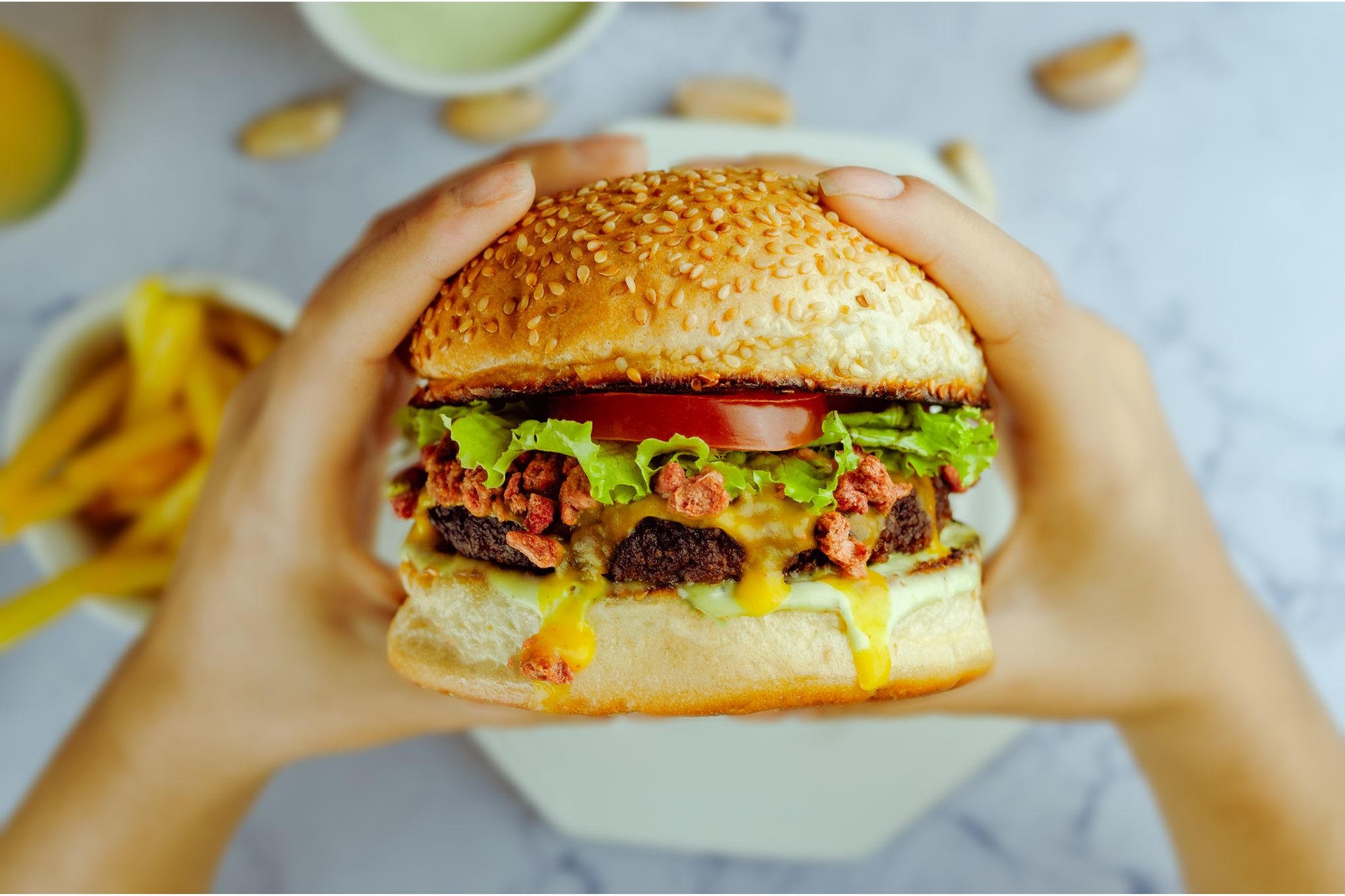
Fat constitutes 60% of calories in the high-fat diet used in the study, which could equate to a range of common fast-food options: For example, nutrition data shows that fat makes up about 60% of calories in a McDonald’s double smoky BLT quarter pounder with cheese or a Burger King double whopper with cheese.
After the animals were on high-fat diets for three days or three months, researchers ran tests assessing two types of memory problems common in older people with dementia that are based in separate regions of the brain: contextual memory mediated by the hippocampus (the primary memory center of the brain), and cued-fear memory that originates in the amygdala (the fear and danger center of the brain).
Compared to control animals eating chow and young rats on the high-fat diet, aged rats showed behaviors indicating both types of memory were impaired after only three days of fatty food – and the behaviors persisted as they continued on the high-fat diet for three months.
Brain Inflammation and Cytokine Imbalance
Researchers also saw changes in levels of a range of proteins called cytokines in the brains of aged rats after three days of fatty food, which signaled a dysregulated inflammatory response. Three months after being on the high-fat diet, some of the cytokine levels had shifted but remained dysregulated, and the cognitive problems persisted in behavior tests.
“A departure from baseline inflammatory markers is a negative response and has been shown to impair learning and memory functions,” Barrientos said.
Compared to rats eating normal chow, young and old animals gained more weight and showed signs of metabolic dysfunction – poor insulin and blood sugar control, inflammatory proteins in fat (adipose) tissue, and gut microbiome alterations – after three months on the high-fat diet. Young rats’ memory and behavior and brain tissue remained unaffected by the fatty food.
“These diets lead to obesity-related changes in both young and old animals, yet young animals appear more resilient to the high-fat diet’s effects on memory. We think it is likely due to their ability to activate compensatory anti-inflammatory responses, which the aged animals lack,” Barrientos said.
“Also, with glucose, insulin, and adipose inflammation all increased in both young and old animals, there’s no way to distinguish what is causing memory impairment in only old animals if you look only at what’s happening in the body. It’s what is happening in the brain that’s important for the memory response.”
Reference: “Obesity-associated memory impairment and neuroinflammation precede widespread peripheral perturbations in aged rats” by Michael J. Butler, Stephanie M. Muscat, Maria Elisa Caetano-Silva, Akriti Shrestha, Brigitte M. González Olmo, Sabrina E. Mackey-Alfonso, Nashali Massa, Bryan D. Alvarez, Jade A. Blackwell, Menaz N. Bettes, James W. DeMarsh, Robert H. McCusker, Jacob M. Allen and Ruth M. Barrientos, 3 January 2025, Immunity & Ageing.
DOI: 10.1186/s12979-024-00496-3
This work was supported by grants from the National Institute on Aging.
Never miss a breakthrough: Join the SciTechDaily newsletter.
Follow us on Google and Google News.
1 Comment
There is a basic flaw in this study. Different diets were used, comparing a grain-based chow with a purified diet that is high fat. Grain based diets introduce contaminants that are not in the purified feed, like mycotoxins, phytoestrogen, heavy metals, and other contaminants that have metabolic effects. This invalidates this study. See the article, Choice of Laboratory Rodent Diet May Confound Data Interpretation and Reproducibility. https://pubmed.ncbi.nlm.nih.gov/32258990/
In addition, old mice are about 1-2 years old. That’s a poor analogy to an elderly, 80- year old person. Rodents are not good models of human disease. See my article, Of Mice and Men: The Problem with Studying Mice to Learn about Men. https://www.academia.edu/127948044/Of_Mice_and_Men_The_Problems_with_Studying_Mice_to_Learn_about_Men