
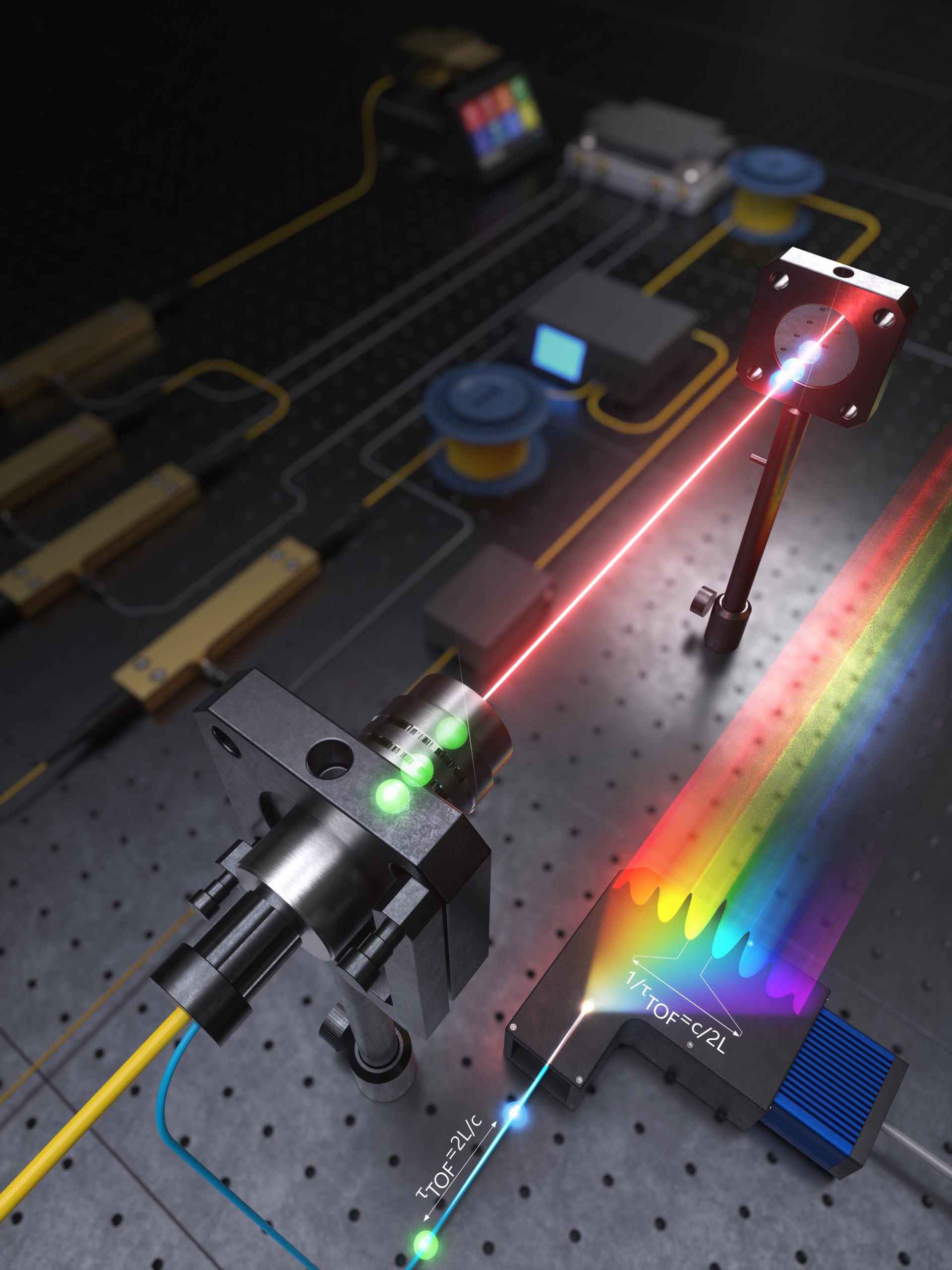
Fast, precise, and ready for use in the field: a quantum-level optical frequency comb system capable of measuring 0.34 nanometers in just 25 microseconds.
The Korea Research Institute of Standards and Science has developed a cutting-edge system for measuring length with a level of precision that comes remarkably close to the fundamental quantum limit.
This new system delivers exceptional measurement accuracy and is built to be both compact and durable, making it well-suited for use outside of laboratory settings. Its performance positions it as a promising candidate for establishing the next standard in advanced length metrology.
At present, the highest-precision tools for measuring length are known as national length measurement standards, which define the meter. These instruments, managed by top metrology organizations such as KRISS, rely on interferometers that use single-wavelength lasers to achieve nanometer-scale precision.
The problem with single-wavelength lasers
Single-wavelength lasers produce highly consistent wave patterns—much like the evenly spaced lines on a ruler—which enables them to measure distances with nanometer-level precision (1–10 nm, or one-billionth of a meter).
Despite their accuracy, these systems are constrained in how far they can measure at one time. Because single-wavelength lasers operate within a narrow spectral range, their “ruler” may be finely marked but is effectively very short.
To measure longer distances, the system must take multiple measurements and piece them together, a process that not only increases the total time required but also demands highly stable mechanical components to maintain precise alignment of the interferometer. These factors introduce both time and spatial limitations.
Alternatively, absolute distance measurement systems are designed to assess long distances in a single measurement, although with reduced accuracy. These systems work by sending a light pulse from a known origin to a target and recording how long it takes for the light to return.
Their simplicity allows for compact designs and rapid measurements over large distances, making them common in industrial applications. However, their precision is typically limited to a few micrometers (µm), as current technology struggles to detect the time of flight (ToF) of light with the resolution needed for higher accuracy.
Quantum-enhanced absolute distance measurement
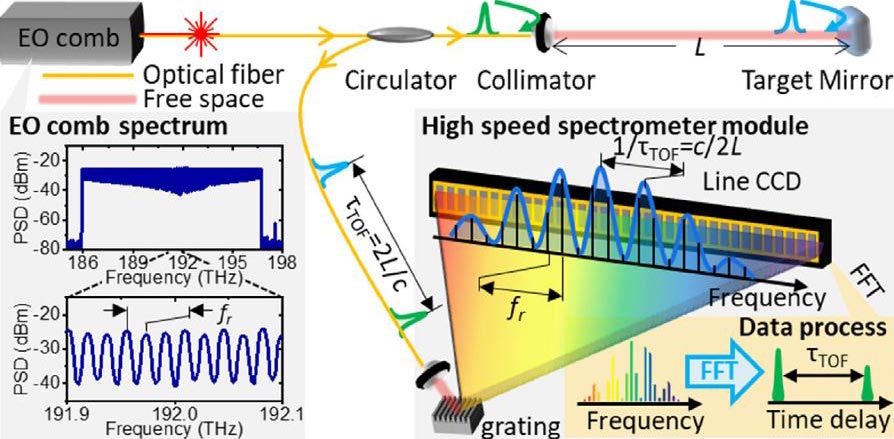
The Length and Dimensional Metrology Group at KRISS has successfully enhanced the precision of absolute distance measurement systems to the level of national length standards by employing an interferometer based on an optical frequency comb (OFC). The research team devised a method to integrate an OFC into an spectral interferometry based absolute distance measurement setup.
An optical frequency comb is a spectrum composed of thousands of discrete, evenly spaced frequency lines—similar to the keys of a piano. Unlike conventional interferometric light sources, optical frequency combs feature both a broad spectral bandwidth and precisely spaced wavelengths, enabling simultaneous high-precision measurement over long distances.
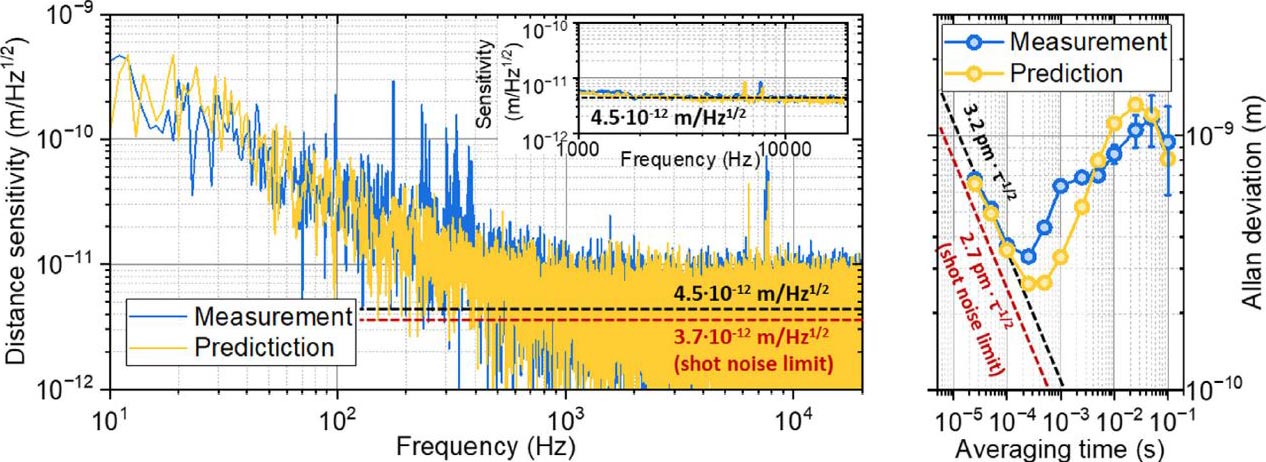
The absolute distance measurement system based on optical frequency comb spectral interferometry, developed by the KRISS research team, combines the precision of national length standards with the convenience of absolute measurement systems.
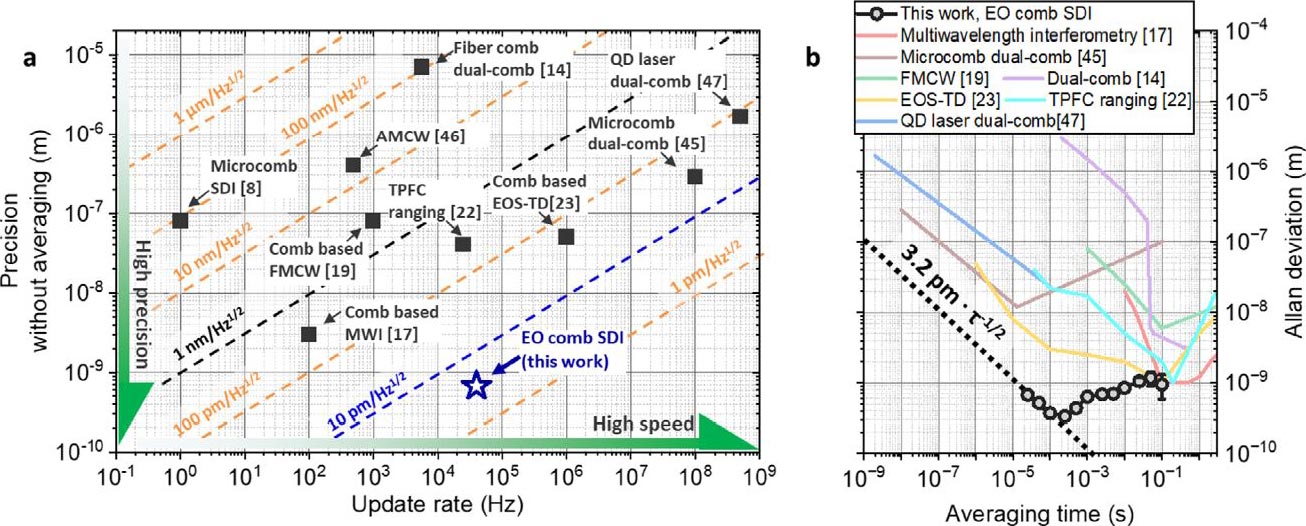
The system achieves a precision of 0.34 nanometers, representing one of the highest levels of accuracy among existing technologies, and approaching the quantum-limited precision defined by the laws of quantum physics. With a measurement speed of 25 microseconds (μs), it operates rapidly and reliably enough for field deployment, offering significant potential to enhance precision metrology in high-tech industries.
Future development and national impact
The research team plans to continue developing the system by evaluating its measurement uncertainty and refining its performance, with the goal of establishing it as a next-generation national length standard.
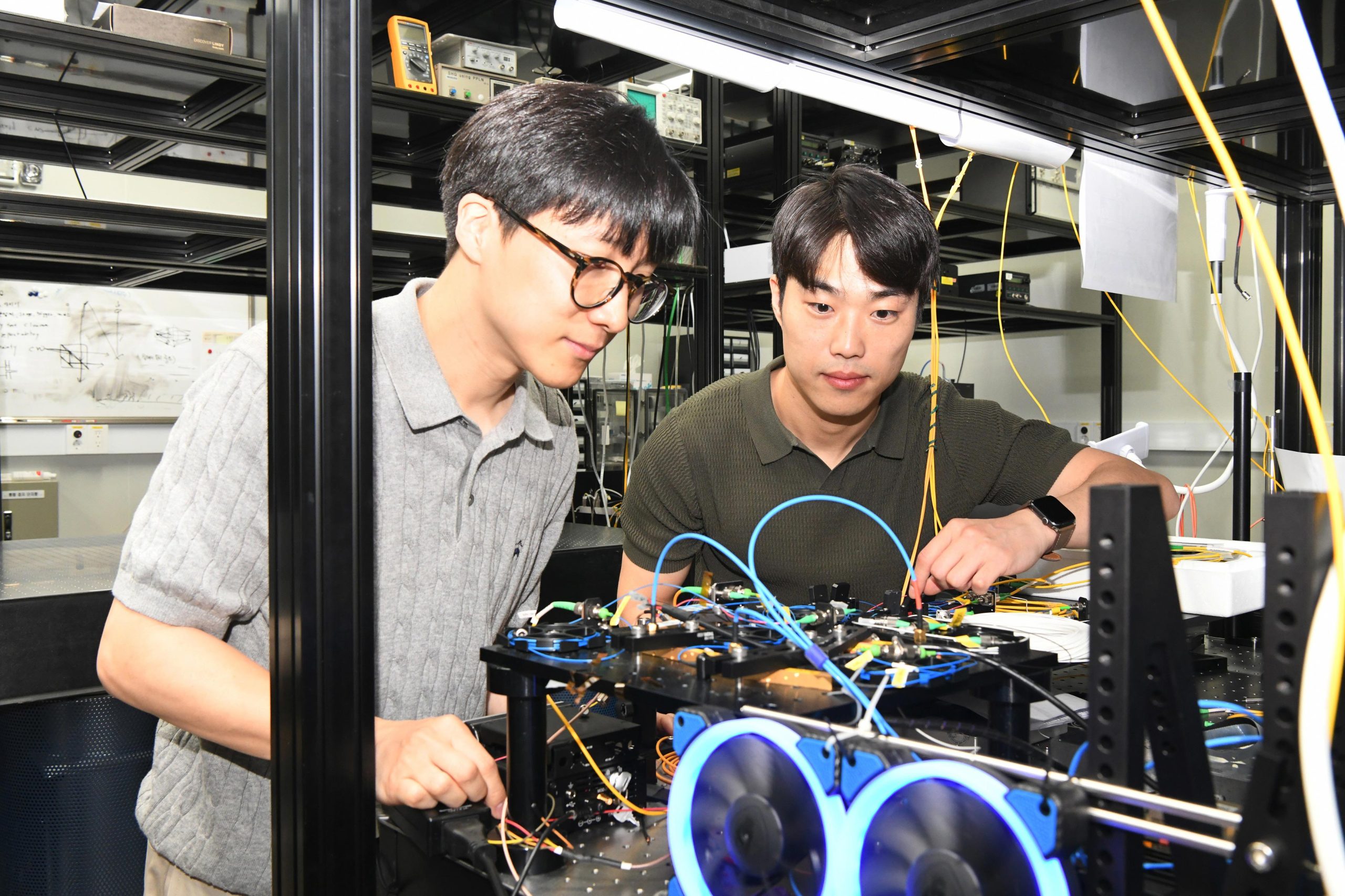
Dr. Jang Yoon-Soo, senior researcher at the Length and Dimensional Metrology Group at KRISS, emphasized,
“The competitiveness of future industries such as AI semiconductors and quantum technologies hinges on the ability to accurately measure and control distances at the nanometer scale. This achievement marks a significant step for Korea toward becoming a leading country in establishing next-generation length standards.”
Reference: “Approaching the Quantum-Limited Precision in Frequency-Comb-Based Spectral Interferometric Ranging” by Yoon-Soo Jang, Heulbi Ahn, Sunghoon Eom, Jungjae Park and Jonghan Jin, 28 January 2025, Laser & Photonics Reviews.
DOI: 10.1002/lpor.202401995
This research was supported by KRISS’s Basic Research Program.
Never miss a breakthrough: Join the SciTechDaily newsletter.
Follow us on Google and Google News.
2 Comments
Quantum Leap in Measurement: New System Nears the Theoretical Limit of Physics.
good.
Ask the researchers:
How do you understand the theoretical limit of physics?
Topology provides stability blueprints, but specific physics (gravitational collapse, fluid viscosity, quantum measurement) dictates vortex generation, evolution, and decay. If researchers are interested in this, please visit https://zhuanlan.zhihu.com/p/1933484562941457487.
I think in order to understand the absence of light on the ground from the sun this experience may prove beneficial. When they get results will they apply it to our own solar system? The electromagnetic force of our core, the electromagnetic force of the sun and the moon? The current energy for grain mill brings white light, crop rot, moisture, water usage with plastics into the environment.