
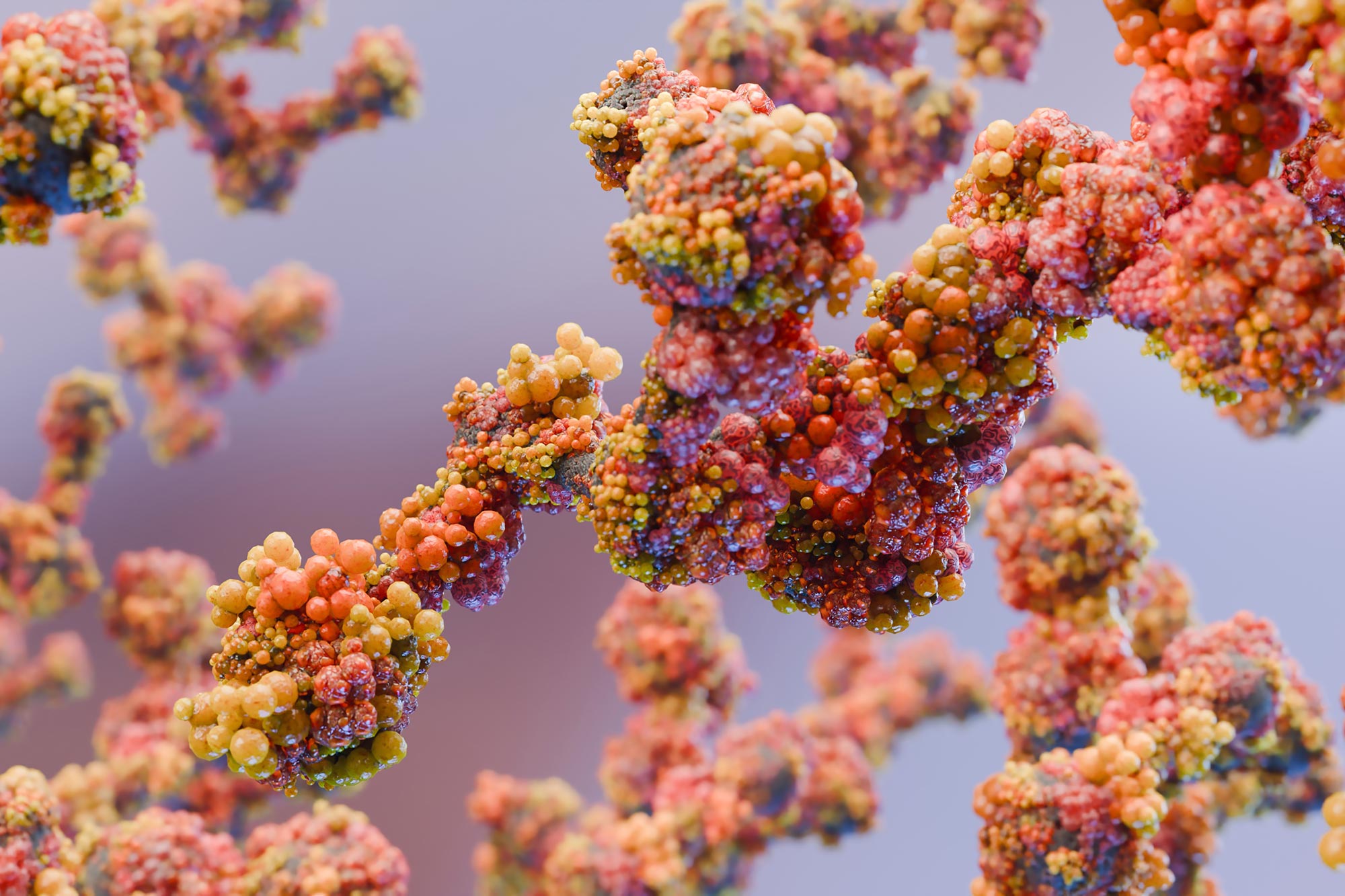
Scientists created a definitive E3 ligase atlas, resolving inconsistencies and enabling better disease research and drug design.
Researchers at WEHI have led a large international effort to produce the first comprehensive atlas of a group of enzymes that regulate nearly every process inside human cells.
Published in Cell, the study delivers the first reliable reference for all human E3 ligases, resolving more than 15 years of inconsistencies in how these enzymes have been defined.
This new resource allows scientists to examine E3 ligases in far greater detail and could support the development of improved treatments for conditions such as cancer, immune disorders, and neurological diseases.
E3 Ligases: Cellular Gatekeepers Explained
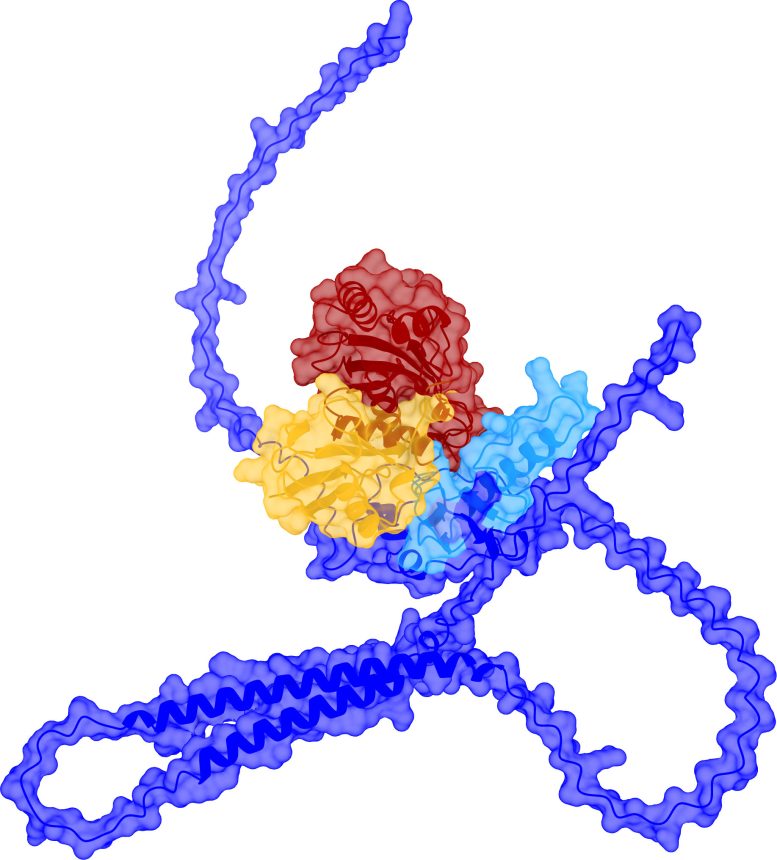
E3 ligases are enzymes that determine how proteins behave and are processed in nearly all cellular activities.
They function as cellular “gatekeepers,” deciding which proteins should be activated, suppressed, or broken down.
They carry out this role by attaching a small molecule called ubiquitin to proteins, effectively tagging them so the cell can control whether they are repaired, relocated, or destroyed.
When these systems fail, damaged or outdated proteins can build up, contributing to a wide range of diseases.
Longstanding Confusion in E3 Ligase Classification
Although E3 ligases have long been linked to human health, scientists have not agreed on a consistent definition, making it difficult to fully understand their roles in health and disease.
The new atlas, called the human E3-ome, addresses this issue by providing a unified classification system.
Dr Rebecca Feltham, a WEHI laboratory head and corresponding author, said this marks the first time experts have reached agreement on the composition of the human E3 ligase family since it was first identified in the 1980s.
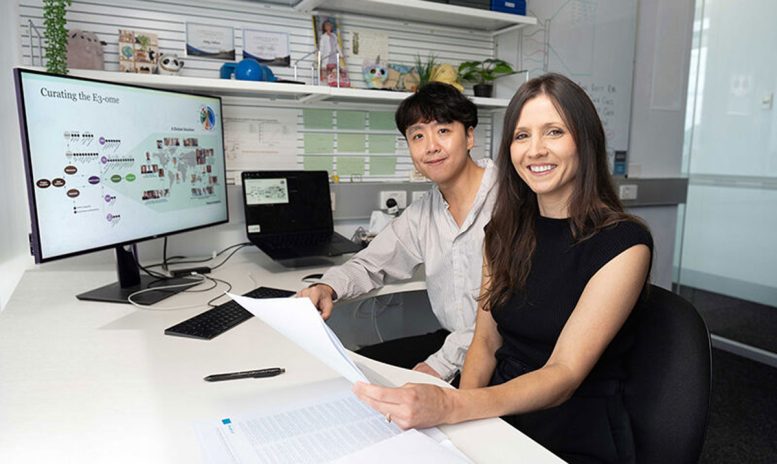
“This is a major advance in a field where information has been spread across many different studies, making it difficult to see the full picture,” Dr. Feltham said.
“The lack of a unified E3 ligase compendium has been one of the most persistent blind spots in human biology.”
“We now have a gold-standard reference for the field that will enable discoveries for a wide spectrum of diseases that simply weren’t possible before.”
Rigorous Review Defines 672 High-Confidence Enzymes
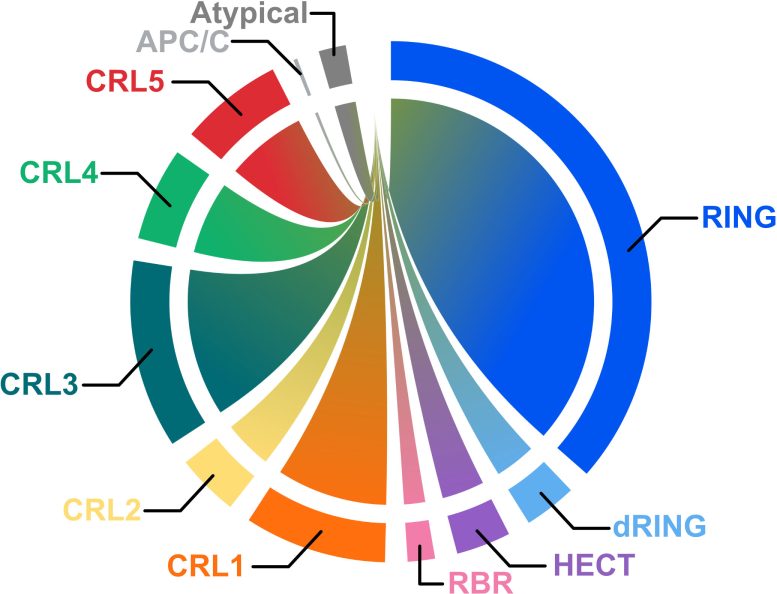
Over four years, researchers and international collaborators reviewed more than 1,100 previously proposed E3 genes, analyzing structural features, protein domains, and interaction data to assess the strength of evidence for each.
Of these, 672 met the highest confidence standards.
Earlier estimates of the total number of E3 ligases varied widely, ranging from about 300 to more than 1,000.
Transforming Research Accuracy and Opportunities
“When researchers analyze E3 ligases now, their findings will be more accurate and comparable because of the E3-ome,” Dr. Feltham said.
“This will open the field wide open in terms of what research questions can be explored and transform our understanding of this field for years to come.”
Foundations and Emerging Therapeutic Technologies
The work builds on earlier research from 2008 by scientists at The Scripps Research Institute, who first developed a human E3 ligase annotation.
Modern approaches such as PROTACs, molecular glues, and emerging E3 inhibitors depend on manipulating E3 ligase activity to remove harmful proteins.
New Drug Targets and Disease Insights
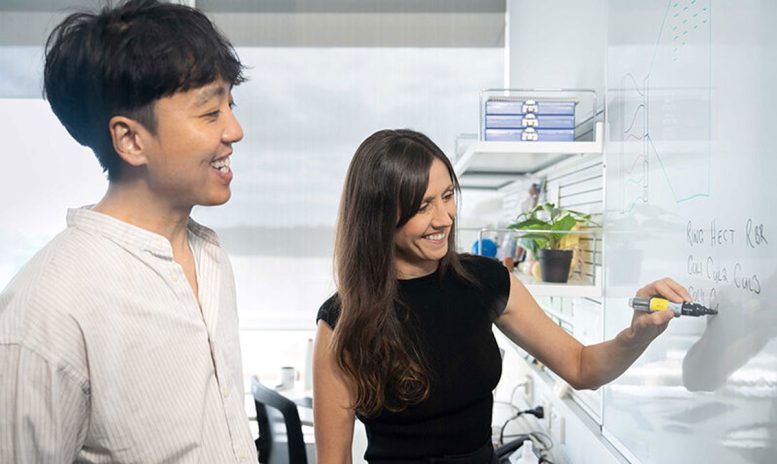
Dr. Ngee Kiat (Jake) Chua, a WEHI postdoctoral researcher and first author, said the E3-ome provides a valuable framework for identifying new drug targets and treatment strategies while also revealing previously overlooked enzymes with potential clinical importance.
“E3 ligases are at the center of a rapidly expanding therapeutic frontier, becoming central to how we design medicines,” Dr. Chua said.
“Our study systematically analyzed genetic and disease association data across the E3 ligase family, providing a clearer view of E3 ligases across select disease contexts.
“We also mapped where E3 ligases reside inside cells and across the human body, making it easier for researchers to understand how these regulatory systems fail in disease and how they can be corrected.
“The unprecedented insight provided by the E3-ome will support the development of more precise medicines to target disease mechanisms directly.”
Global Collaboration and Advanced Technologies
The project is one of the largest collaborations in ubiquitin research, involving institutions across Australia, New Zealand, Canada, Germany, Switzerland, the UK, and the United States.
More than 40 experts in fields including ubiquitin biology, structural biology, genetics, and computational analysis contributed to the effort.
Advances in technology, such as artificial intelligence-driven analysis and large-scale human genetics datasets, made it possible to evaluate E3 ligases with unprecedented precision.
A Growing Resource for Future Discoveries
Although the E3-ome represents a major step forward, researchers note that the current total of 672 enzymes is not fixed.
The number is expected to increase as new structural, biochemical, and genetic data become available.
To encourage further research, the full E3 ligase dataset has been released publicly, allowing scientists to expand on its classification and explore new functional insights.
Reference: “The E3-ome gene-centric compendium reveals the human E3 ligase landscape” by Ngee Kiat Chua, Tania J. González-Robles, Cameron J. Reddington, Jane Dudley-Fraser, Richard W. Birkinshaw, Jiru Han, Ashleigh Solano, Soon Wei Wong, Tomasz Kochańczyk, Joshua J. Peter, Mark A. Nakasone, Florian Aust, Jacob Munro, Yeh Huei Tong, Julie Iskander, Waruni Abeysekera, Alex Garnham, Hannah Huckstep, Matthew E. Ritchie, Ingrid Wertz, Sarah Hymowitz, Sharad Kumar, Ron C. Conaway, Gilbert G. Privé, Alex N. Bullock, Jeffrey J. Babon, Rachel E. Klevit, Sonja Lorenz, Alessio Ciulli, Eric S. Fischer, Nicolas H. Thomä, Radosław P. Nowak, Brenda A. Schulman, Michael Rapé, Katrin Rittinger, Julia K. Pagan, Melanie Bahlo, Joel P. Mackay, Peter D. Mace, Christopher D. Lima, Ronald T. Hay, David Komander, Bernhard C. Lechtenberg, Claudio A.P. Joazeiro, Michele Pagano, Kay Hofmann and Rebecca Feltham, 20 March 2026, Cell.
DOI: 10.1016/j.cell.2026.01.029
This research is supported by the Galbraith Family Charitable Trust, the National Health and Medical Research Council, Wellcome, the Marian and E.H. Flack Fellowship, and the Australian Government.
Never miss a breakthrough: Join the SciTechDaily newsletter.
Follow us on Google and Google News.
4 Comments
thanks
Parasite
Get rid of parasites
Those are nerds gummy clusters