
Close Menu
    Facebook X (Twitter) Instagram
    SciTechDaily
    • Biology
    • Chemistry
    • Earth
    • Health
    • Physics
    • Science
    • Space
    • Technology
    Facebook X (Twitter) Pinterest YouTube RSS
    SciTechDaily
    Home»Biology»New Design Makes Previously Inaccessible Proteins Vulnerable to Drugs
    Biology

    New Design Makes Previously Inaccessible Proteins Vulnerable to Drugs

    By Bill Hathaway, Yale UniversityJuly 27, 2012No Comments3 Mins Read
    Facebook Twitter Pinterest Telegram LinkedIn WhatsApp Email Reddit
    Share
    Facebook Twitter LinkedIn Pinterest Telegram Email Reddit
    Proteins Drug Targets
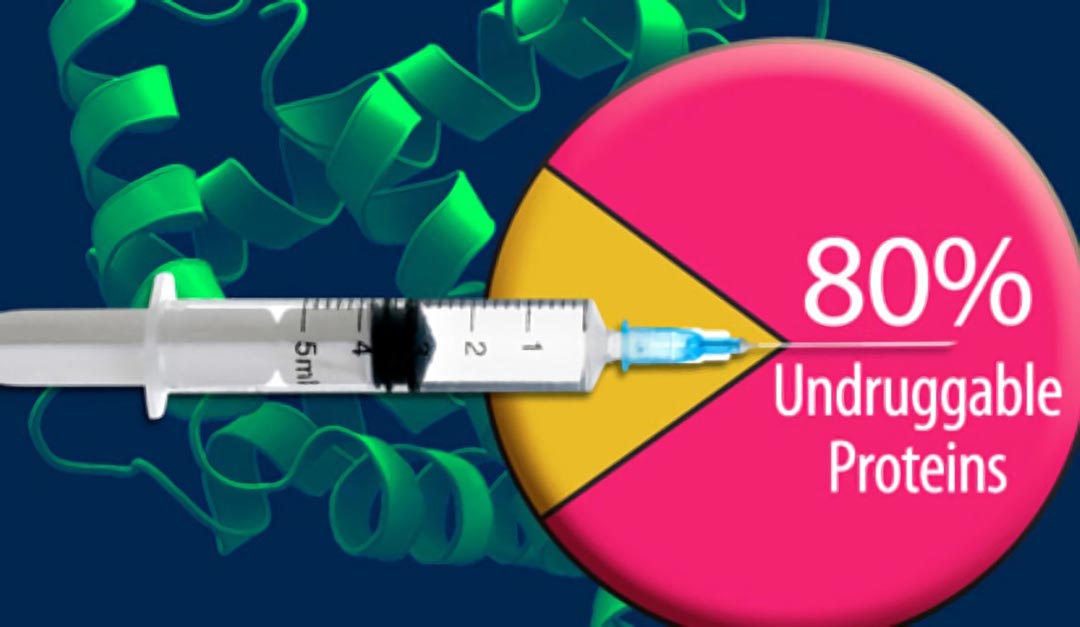
    Yale researchers have identified a novel way to design drugs for these previously inaccessible proteins. Credit: Illustration by Michael Helfenbein

    A team of researchers at Yale University has identified a molecular signal that allows potentially therapeutic proteins to hitch a ride into cells using vesicles, possibly making previously inaccessible proteins vulnerable to drugs.

    One of the most daunting challenges facing pharmaceutical scientists today are “undruggable proteins” – the approximately 80% of proteins involved in human disease that do not interact with current drugs.

    Yale researchers have identified a novel way to design drugs for these previously inaccessible proteins. The research was published on July 26 in the journal Chemistry & Biology.

    “There is enormous interest in molecules that can both traverse cell membranes and inhibit interactions between proteins,” said Alanna Schepartz, the Milton Harris ’29 Ph.D. Professor of Chemistry, director of the Yale Chemical Biology Institute, and senior author of the paper. “Proteins and polypeptides are very good at inhibiting interactions between proteins in a test tube. We have identified a signal that helps these proteins enter the cell.”

    Most drugs today are very small molecules and fit snuggly into relatively deep pockets in a protein, usually to inhibit a chemical reaction. But many proteins involved in disease do not perform chemical reactions. Instead, they bind to other proteins, or DNA, or RNA. It has proven extremely difficult to design small molecules that inhibit these binding interactions.

    Although proteins are used as drugs today, they operate almost exclusively in areas outside the cell, not within the cells where many disease processes originate.

    Schepartz and her team identified a molecular signal that allows potentially therapeutic proteins to hitch a ride into cells using vesicles, or small packets of molecular information that fuse with membranes of cells in a process called endocytosis. The signal helps the protein escape from the vesicle to reach the interior of the cell.

    “We are very interested to understand how this release signal works, as it may allow researchers to engineer molecules to follow a prescribed pathway into cell,” Schepartz said.

    Reference: “Arginine Topology Controls Escape of Minimally Cationic Proteins from Early Endosomes to the Cytoplasm” by Jacob S. Appelbaum, Jonathan R. LaRochelle, Betsy A. Smith, Daniel M. Balkin, Justin M. Holub and Alanna Schepartz, 26 July 2012, Chemistry & Biology.
    DOI: 10.1016/j.chembiol.2012.05.022

    Other Yale authors are Jacob S. Appelbaum, Jonathan R. LaRochelle, Betsy A. Smith, Daniel M. Balkin and Justin M. Holub.

    The research was funded by the National Institutes of Health.

    Never miss a breakthrough: Join the SciTechDaily newsletter.
    Follow us on Google and Google News.

    Disease Drugs Molecular Biology Protein Yale University
    Share. Facebook Twitter Pinterest LinkedIn Email Reddit

    Related Articles

    Scientists Provide New Insights Into the Origins of Genetic Diseases

    ‘NoBody’ – A Microprotein on a Mission

    Yale Researchers Create a 21st Amino Acid

    New Research Changes the View about the Genetics of Leukemia Risk

    Researchers Solve Biological Mystery about the Common Genesis of Many Serious Diseases

    A Closer Look at the Antifreeze Protein That Allows Siberian Beetles to Survive

    SSRL Validates Anti-Flu Protein Design

    Chitinase 3-like-1, A Key to Fighting Pneumonia

    Evolution Helps Deduce the Shape of 18 Families of Transmembrane Proteins

    Leave A Reply Cancel Reply

    • Facebook
    • Twitter
    • Pinterest
    • YouTube

    Don't Miss a Discovery

    Subscribe for the Latest in Science & Tech!

    Trending News

    Largest-Ever Study Finds Medicinal Cannabis Ineffective for Anxiety, Depression, PTSD

    250-Million-Year-Old Egg Solves One of Evolution’s Biggest Mysteries

    Living With Roommates Might Be Changing Your Gut Microbiome Without You Knowing

    Century-Old Cleaning Chemical Linked to 500% Increased Risk of Parkinson’s Disease

    What if Your Memories Never Happened? Physicists Take a New Look at the Boltzmann Brain Paradox

    One of the Universe’s Largest Stars May Be Getting Ready To Explode

    Scientists Discover Enzyme That Could Supercharge Ozempic-Like Weight Loss Drugs

    Popular Sweetener Linked to DNA Damage – “It’s Something You Should Not Be Eating”

    Follow SciTechDaily
    • Facebook
    • Twitter
    • YouTube
    • Pinterest
    • Newsletter
    • RSS
    SciTech News
    • Biology News
    • Chemistry News
    • Earth News
    • Health News
    • Physics News
    • Science News
    • Space News
    • Technology News
    Recent Posts
    • What Did Prehistoric Europeans Eat? Scientists Uncover Surprising Answers
    • Scientists Say This Overlooked Organ Could Hold the Key to Longer Life
    • Want Less Stress? Landmark Study Points to a Simple Habit
    • Scientists Reveal Eating Fruits and Vegetables May Increase Your Risk of Lung Cancer
    • AI Reveals Explosive Growth of Floating Algae Across the World’s Oceans
    Copyright © 1998 - 2026 SciTechDaily. All Rights Reserved.
    • Science News
    • About
    • Contact
    • Editorial Board
    • Privacy Policy
    • Terms of Use

    Type above and press Enter to search. Press Esc to cancel.