
Close Menu
    Facebook X (Twitter) Instagram
    SciTechDaily
    • Biology
    • Chemistry
    • Earth
    • Health
    • Physics
    • Science
    • Space
    • Technology
    Facebook X (Twitter) Pinterest YouTube RSS
    SciTechDaily
    Home»Biology»New Research Changes the View about the Genetics of Leukemia Risk
    Biology

    New Research Changes the View about the Genetics of Leukemia Risk

    By Bill Hathaway, Yale UniversityOctober 14, 2013No Comments3 Mins Read
    Facebook Twitter Pinterest Telegram LinkedIn WhatsApp Email Reddit
    Share
    Facebook Twitter LinkedIn Pinterest Telegram Email Reddit
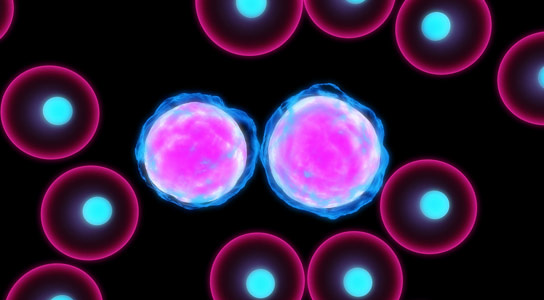
    New Research Changes View about the Genetics of Leukemia Risk
    A gene responsible for maintaining cancer-free blood is regulated by small RNA molecules.

    In a new study, researchers identified the agents that could be responsible for many leukemias without TET2 mutation. This finding could help doctors develop a course of treatment for leukemia patients.

    A gene that helps keep blood free of cancer is controlled by tiny pieces of RNA, a finding that may lead to better ways to diagnose blood cancers and even lead to new forms of treatment, Yale School of Medicine researchers report online October 10 in the journal Cell Reports.

    In the past few years researchers have identified the crucial role of the gene TET2 in keeping blood cells healthy. Mutations of the gene have been found in about 20% of leukemias and indicate a poor prognosis for patients. However, the gene was thought to be irrelevant in 80% of leukemia cases.

    The new study changes this view. The researchers identified the agents that could be responsible for many leukemias without TET2 mutation — a host of microRNAs from the large expanse of DNA that do not code for proteins. They found that patients with large numbers of these microRNAs are more likely to have impaired TET2 function, even without a known mutation, and are thus likely to have aggressive forms of cancer.

    This knowledge could help doctors develop a course of treatment for leukemia patients, said Jun Lu, assistant professor of genetics, researcher in the Yale Stem Cell Center and Yale Cancer Center, and senior author of the paper.

    Lu points out that half of leukemia patients who lack these markers may be spared side effects of aggressive treatments.

    “If these markers are absent and TET2 gene is not mutated, then the 50% of leukemia patients without this marker would be spared harsher treatment such as high-dose chemotherapy or bone marrow transplants,” Lu said.

    New therapies that could block these microRNAs could in theory help treat blood cancers, he said.

    “However, there is currently no good way to do that, but it is a problem I am very hopeful will be resolved,” Lu said.

    Reference: “An Extensive Network of TET2-Targeting MicroRNAs Regulates Malignant Hematopoiesis” by Jijun Cheng, Shangqin Guo, Suning Chen, Stephen J. Mastriano, Chaochun Liu, Ana C. D’Alessio, Eriona Hysolli, Yanwen Guo, Hong Yao, Cynthia M. Megyola, Dan Li, Jun Liu, Wen Pan, Christine A. Roden, Xiao-Ling Zhou, Kartoosh Heydari, Jianjun Chen, In-Hyun Park, Ye Ding, Yi Zhang and Jun Lu, 10 October 2013, Cell Reports.
    DOI: 10.1016/j.celrep.2013.08.050

    Never miss a breakthrough: Join the SciTechDaily newsletter.
    Follow us on Google and Google News.

    Cell Biology Disease Leukemia Molecular Biology RNA Yale University
    Share. Facebook Twitter Pinterest LinkedIn Email Reddit

    Related Articles

    Scientists Provide New Insights Into the Origins of Genetic Diseases

    Biologists Develop Breakthrough RNA-Based Therapy to Target West Nile Virus

    Increased Parkin Gene Levels Can Delay the Aging Process

    A Closer Look at the Antifreeze Protein That Allows Siberian Beetles to Survive

    Key Differences in Seemingly Synonymous Parts of the Genetic Code

    Atomic Level Splicing Further Establishes RNA’s Chemical and Structural Complexity

    SSRL Validates Anti-Flu Protein Design

    Optogenetics Regulates Metabolic Activity in the Membranes of Cells

    New Design Makes Previously Inaccessible Proteins Vulnerable to Drugs

    Leave A Reply Cancel Reply

    • Facebook
    • Twitter
    • Pinterest
    • YouTube

    Don't Miss a Discovery

    Subscribe for the Latest in Science & Tech!

    Trending News

    The Universe Is Expanding Too Fast and Scientists Can’t Explain Why

    “Like Liquid Metal”: Scientists Create Strange Shape-Shifting Material

    Early Warning Signals of Esophageal Cancer May Be Hiding in Plain Sight

    Common Blood Pressure Drug Shows Surprising Power Against Deadly Antibiotic-Resistant Superbug

    Scientists Uncover Dangerous Connection Between Serotonin and Heart Valve Disease

    Scientists Discover a “Protector” Protein That Could Help Reverse Hair Loss

    Bone-Strengthening Discovery Could Reverse Osteoporosis

    Scientists Uncover Hidden Trigger Behind Stem Cell Aging

    Follow SciTechDaily
    • Facebook
    • Twitter
    • YouTube
    • Pinterest
    • Newsletter
    • RSS
    SciTech News
    • Biology News
    • Chemistry News
    • Earth News
    • Health News
    • Physics News
    • Science News
    • Space News
    • Technology News
    Recent Posts
    • Scientists Overcome Major Quantum Bottleneck, Potentially Transforming Teleportation and Computing
    • Quantum Physics’ Strangest Problem May Hold the Key to Time Itself
    • Scientists Create “Liquid Gears” That Spin Without Touching
    • The Simple Habit That Could Help Prevent Cancer
    • Forgotten Medicinal Plant Shows Promise in Fighting Dangerous Superbugs
    Copyright © 1998 - 2026 SciTechDaily. All Rights Reserved.
    • Science News
    • About
    • Contact
    • Editorial Board
    • Privacy Policy
    • Terms of Use

    Type above and press Enter to search. Press Esc to cancel.